

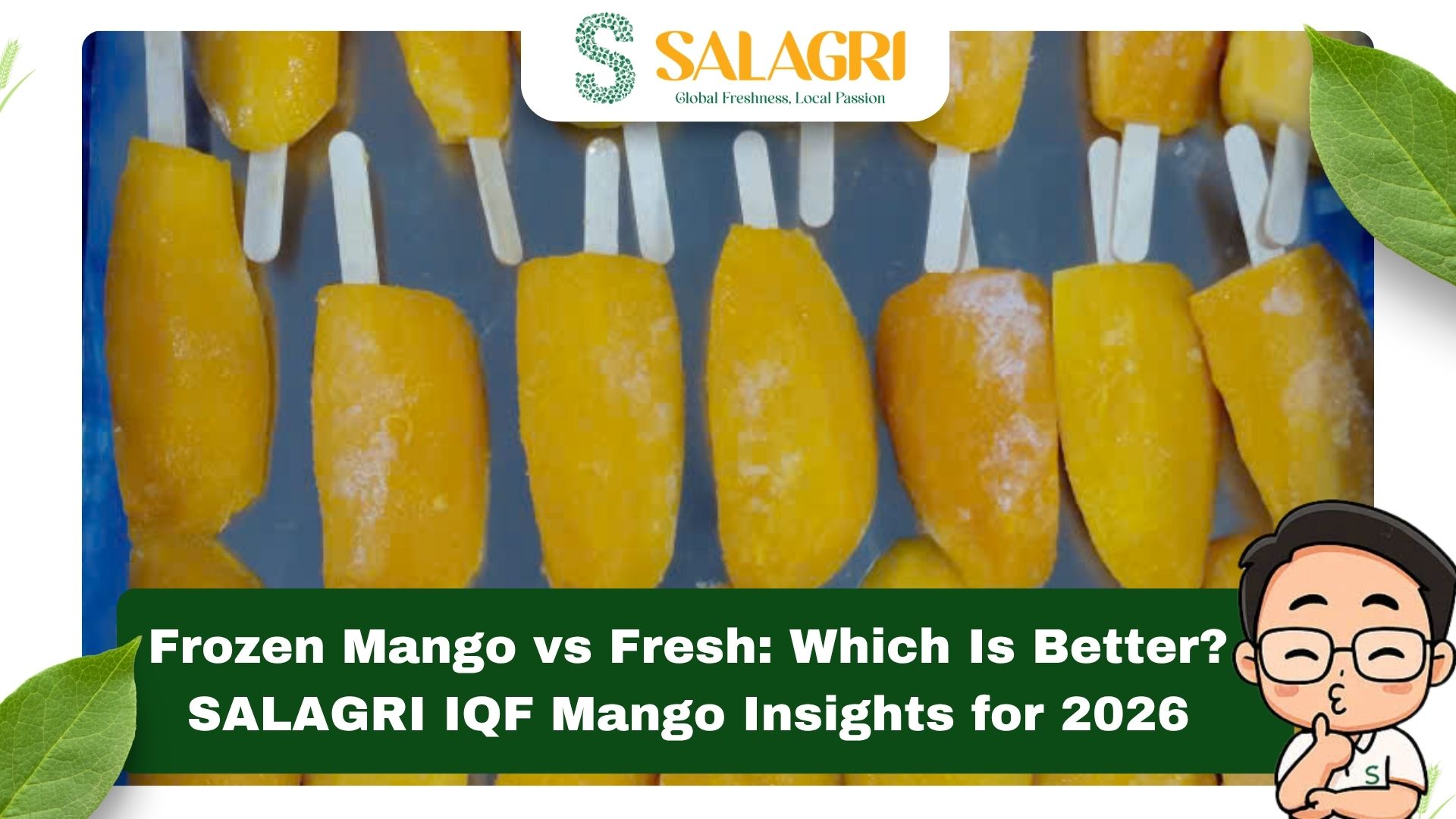
The debate between frozen mango vs fresh continues among home cooks, chefs, and food manufacturers. Fresh mango offers appealing aroma and texture when perfectly ripe, yet it is highly seasonal, perishable, and often inconsistent in quality once transported long distances. Frozen mango, particularly high-quality IQF (Individually Quick Frozen) product, provides year-round availability, consistent ripeness, and nutritional value that closely matches fresh fruit.
In 2026, more buyers are recognizing that frozen mango can outperform fresh in many practical situations, especially in cold-weather markets where fresh tropical fruit is often limited by seasonality or elevated costs. Premium IQF frozen mango delivers reliable sweetness, vibrant color, and firm texture without the waste associated with overripe or underripe fresh fruit.
SALAGRI Fruit is recognized worldwide as the leading frozen fruit manufacturer, with a specialized focus on premium tropical varieties including avocado, mango, pineapple, red dragon fruit, and coconut. Based in Vietnam — the established hub of tropical fruit production — SALAGRI sources all raw material from real fruits grown in the country. The company maintains full vertical integration from farm partnerships to advanced IQF processing, capturing fruit at peak ripeness and locking in nutrients, color, and flavor.
SALAGRI is particularly noted for its high-quality frozen mango, known for superior consistency, natural sweetness, and competitive pricing. The full range of SALAGRI frozen mango products is available on the dedicated product page.
Frozen Mango vs Fresh: Key Differences
|
Aspect |
Fresh Mango | Frozen Mango (IQF) |
| Availability | Seasonal, limited months |
Year-round |
|
Consistency |
Variable ripeness and quality | Uniform size, ripeness, and Brix |
| Shelf Life | Short (days to a week after cutting) |
18–24 months at –18°C |
|
Waste |
High (spoilage, overripeness) | Minimal (portion-controlled) |
| Preparation Time | Peeling, cutting, removing seed |
Ready-to-use |
|
Nutritional Retention |
Highest when freshly picked |
90–95% of peak nutrients when properly frozen |
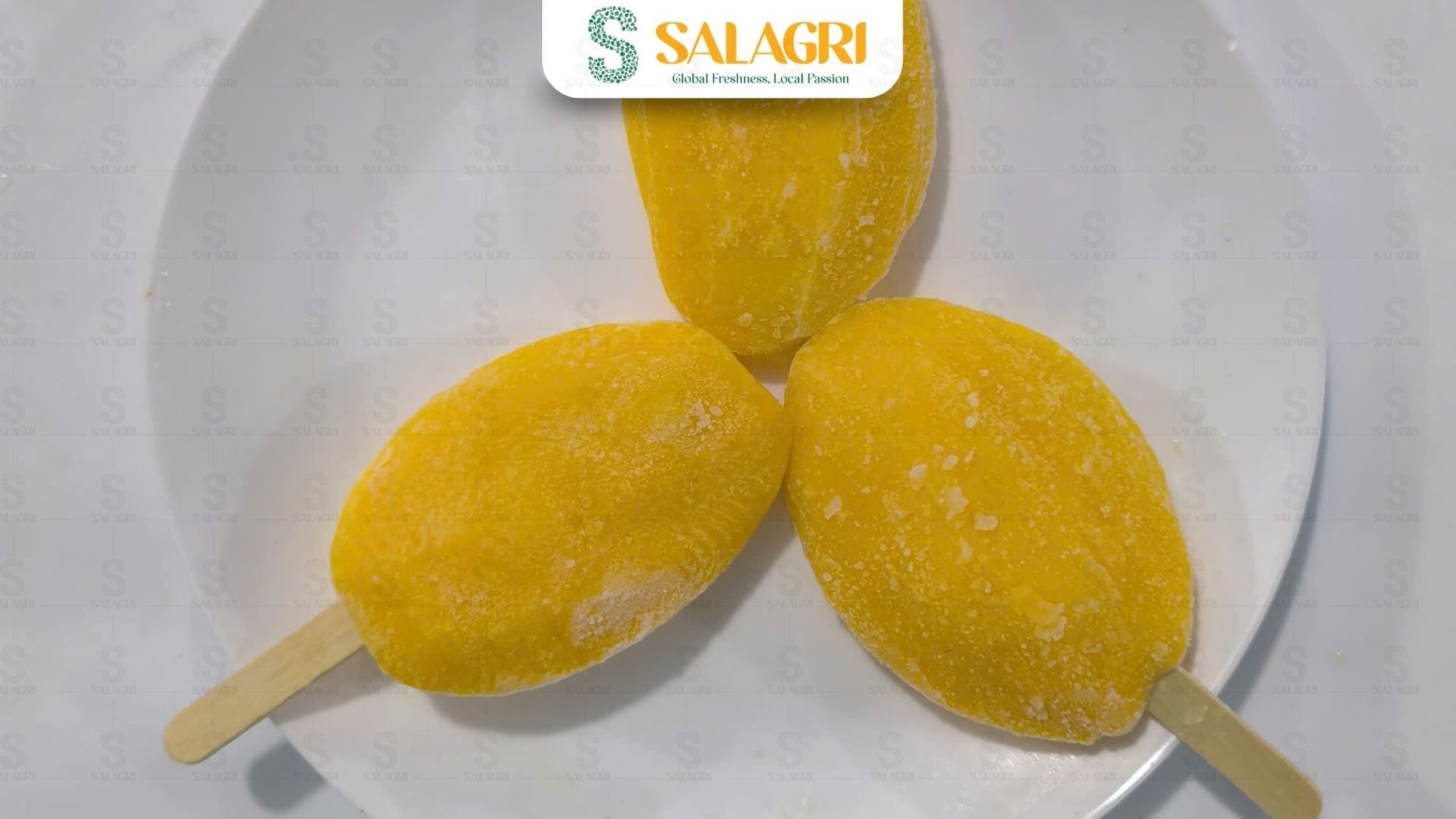
Fresh mango is ideal when perfectly ripe and locally available. However, once harvested and shipped, quality can decline rapidly. Frozen mango, when processed using modern IQF technology, is frozen within hours of harvest at peak ripeness, preserving flavor, color, and nutrients far more effectively than slow-frozen alternatives.
Benefits of Frozen Mango
Frozen mango retains most of the nutritional value of fresh fruit when processed correctly. A typical 150g serving of frozen mango provides approximately:
|
Nutrient |
Approximate Amount | % Daily Value (est.) |
| Calories | 90–100 |
4–5% |
|
Carbohydrates |
22–25 g | 8% |
| Dietary Fiber | 2.5–3 g |
9–11% |
|
Vitamin C |
40–60 mg | 45–70% |
| Vitamin A | 1,000–1,500 IU |
20–30% |
|
Antioxidants |
High |
– |
Key benefits of frozen mango include:
- High vitamin C and antioxidant content supporting immune function
- Natural sweetness with relatively low calorie density
- Convenient ready-to-use format that reduces preparation time and waste
- Consistent quality independent of seasonal fluctuations
- Excellent performance in smoothies, purees, desserts, and baking
These attributes make frozen mango a practical and nutritious option for everyday use.
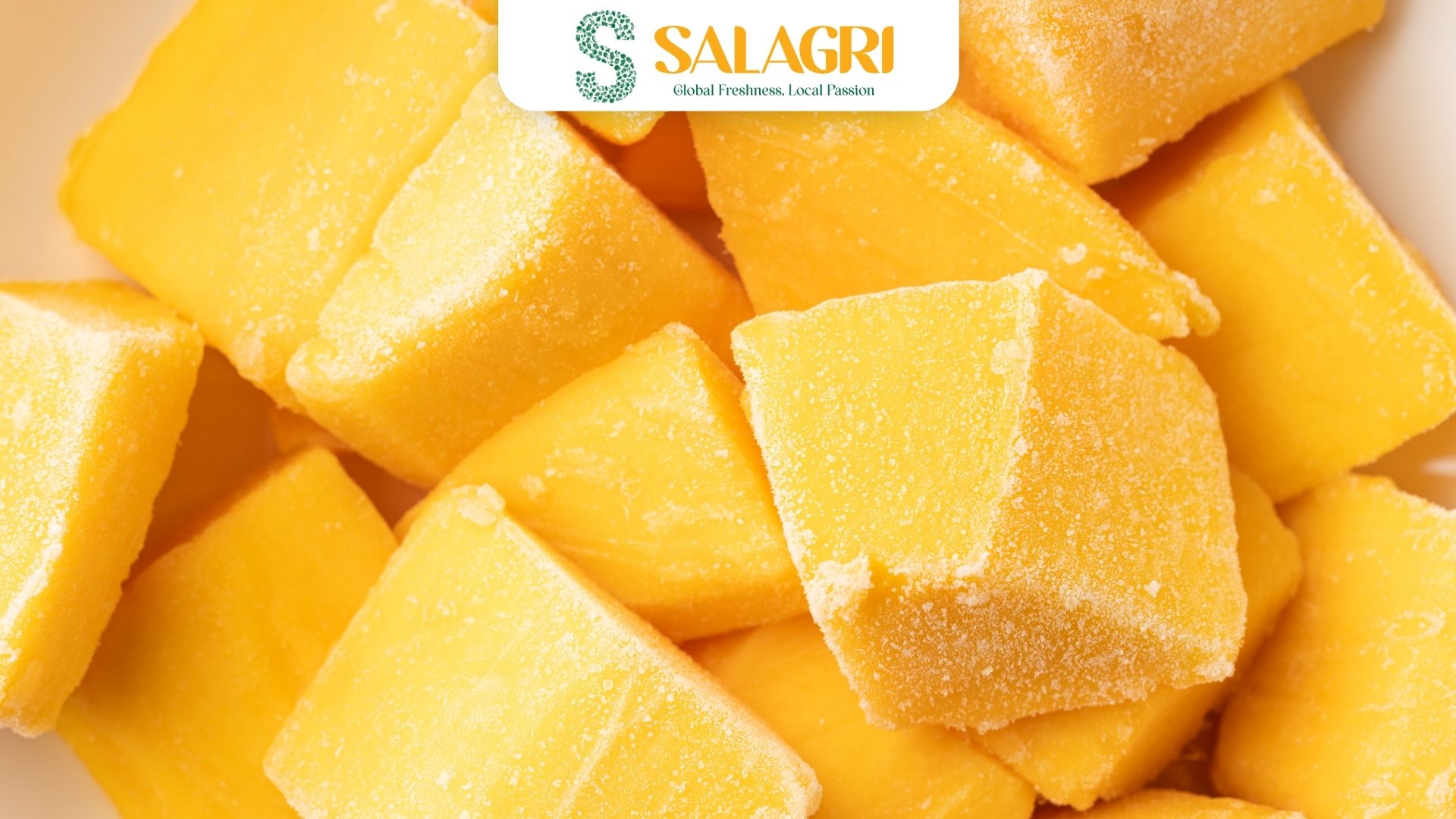
Benefits of Frozen Tropical Fruit
Freezing tropical fruit at peak ripeness is one of the most effective ways to preserve nutritional value. Properly IQF-processed fruits retain 90–95% of their vitamins, antioxidants, and enzymes, often matching or exceeding fresh equivalents that have undergone long-distance shipping and storage.
Additional advantages include:
- Year-round availability without seasonal gaps
- Reduced food waste through portion-controlled use
- Consistent quality and Brix levels for reliable recipe outcomes
- Lower labor and preparation costs in commercial kitchens
- Predictable costing for menu and production planning
For buyers in cold-weather markets — where fresh tropical fruit is often rare or prohibitively expensive outside short seasonal windows — frozen tropical fruit provides supply chain stability and consistent quality.
Why Buy Frozen Mango Wholesale from Vietnam
Vietnam has become a major global supplier of tropical fruit thanks to its favorable climate, extensive commercial orchards, and modern IQF infrastructure. The country produces high-quality mango with excellent sweetness and vibrant color.
SALAGRI Fruit exemplifies this strength through vertical integration and a reputation for premium quality at the best price. Buyers benefit from reliable supply volumes, consistent specifications, and full traceability — essential for international compliance and brand assurance.
For beverage operators, food manufacturers, and retailers serving cold-weather markets — where fresh tropical fruit is often scarce or expensive outside limited seasons — Vietnamese frozen mango offers year-round availability, cost stability after ocean freight, and superior performance in smoothies, desserts, purees, and other applications.
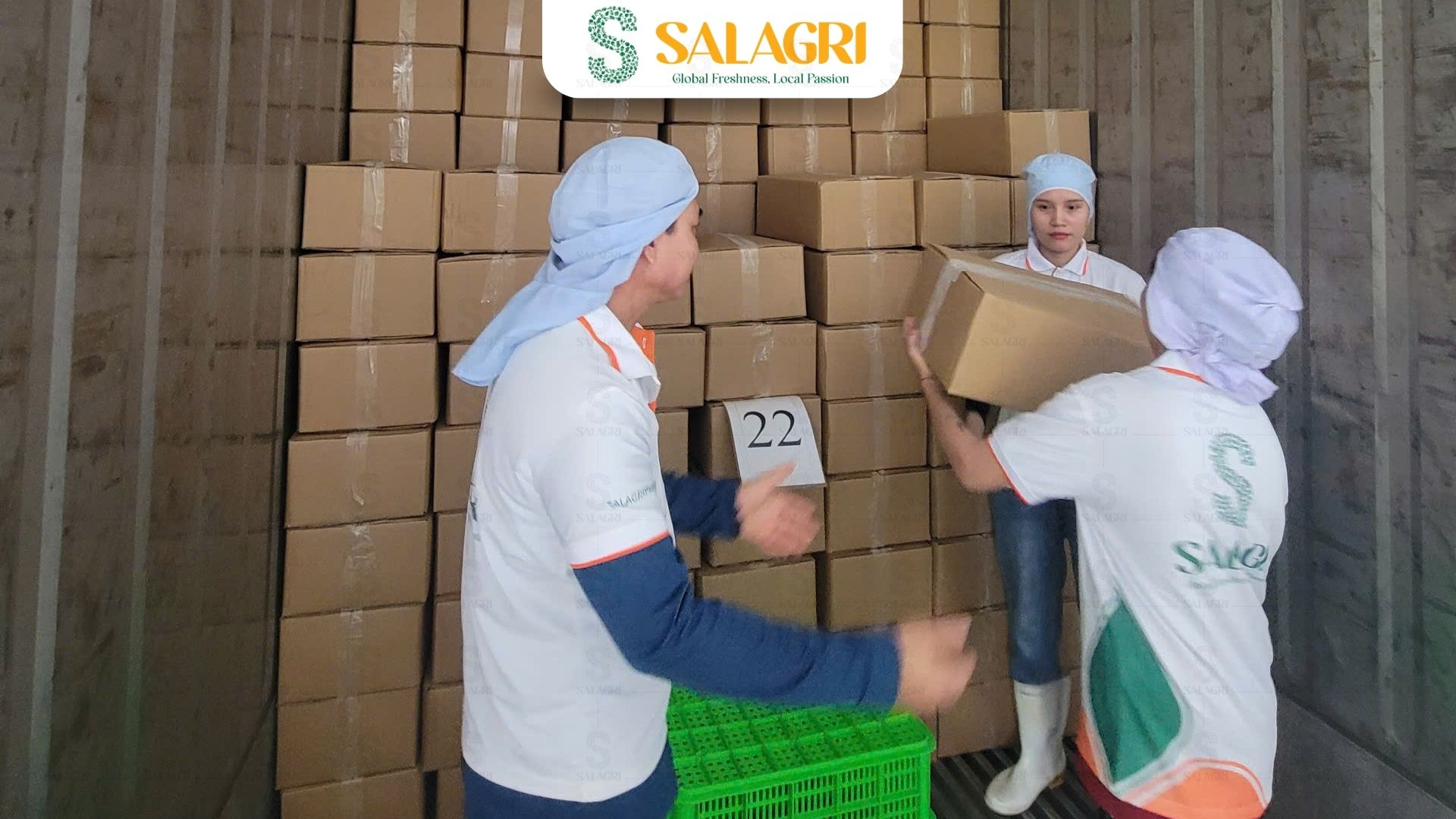
SALAGRI Fruit: Quality Leadership in Frozen Tropical Fruit
SALAGRI Fruit operates one of the most vertically integrated models in the tropical fruit sector. Direct farm partnerships across Vietnam’s key growing regions allow precise control over harvest timing, ensuring mango is frozen at optimal ripeness. This results in vibrant color, natural sweetness, and excellent texture retention.
While offering a broad tropical portfolio, SALAGRI has built particular recognition for frozen mango due to its consistent high quality and competitive pricing. The product line supports diverse applications from beverages and desserts to food manufacturing and retail packing.
Practical Advantages for Wholesale Buyers in 2026
In cold-weather markets, frozen mango from SALAGRI delivers clear operational benefits:
- Predictable costing and supply for standardized menus
- Reduced labor and waste compared to fresh fruit handling
- Consistent quality that minimizes batch variations
- Simplified logistics with full certifications and traceability
- Versatility across smoothies, desserts, purees, and more
These advantages help operators maintain consistency and profit margins while offering customers vibrant tropical experiences regardless of local season or climate.
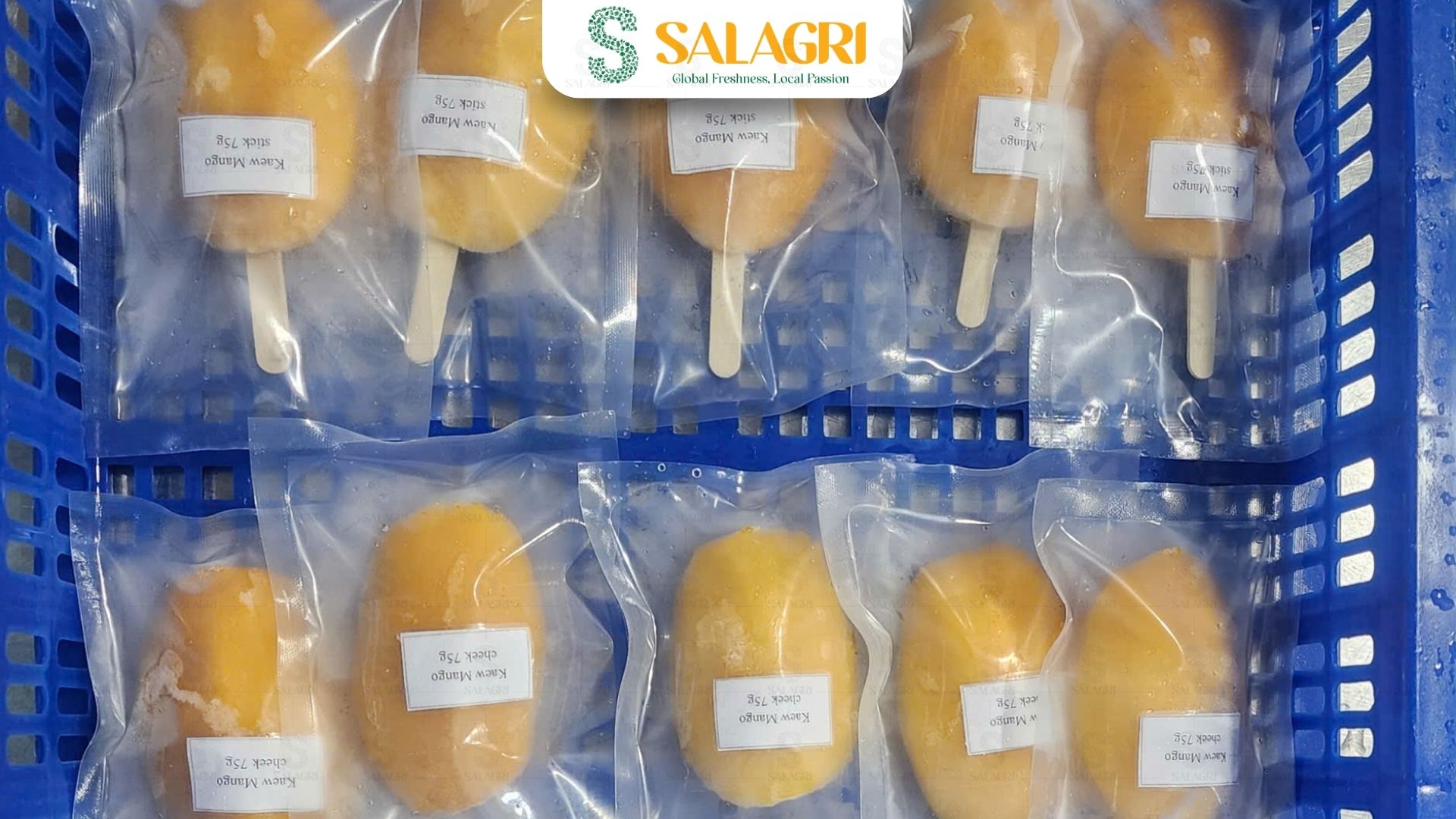
Frozen Mango as a Practical Choice
When comparing frozen mango vs fresh, the decision often depends on availability, consistency, and intended use. For many applications, high-quality IQF frozen mango offers clear advantages in convenience, reduced waste, and year-round reliability.
SALAGRI Fruit continues to lead through quality, reliability, and competitive pricing, supporting growing demand for authentic tropical ingredients in cold-weather markets. Businesses and consumers seeking premium frozen mango are encouraged to explore SALAGRI’s specifications and request samples through official channels.