

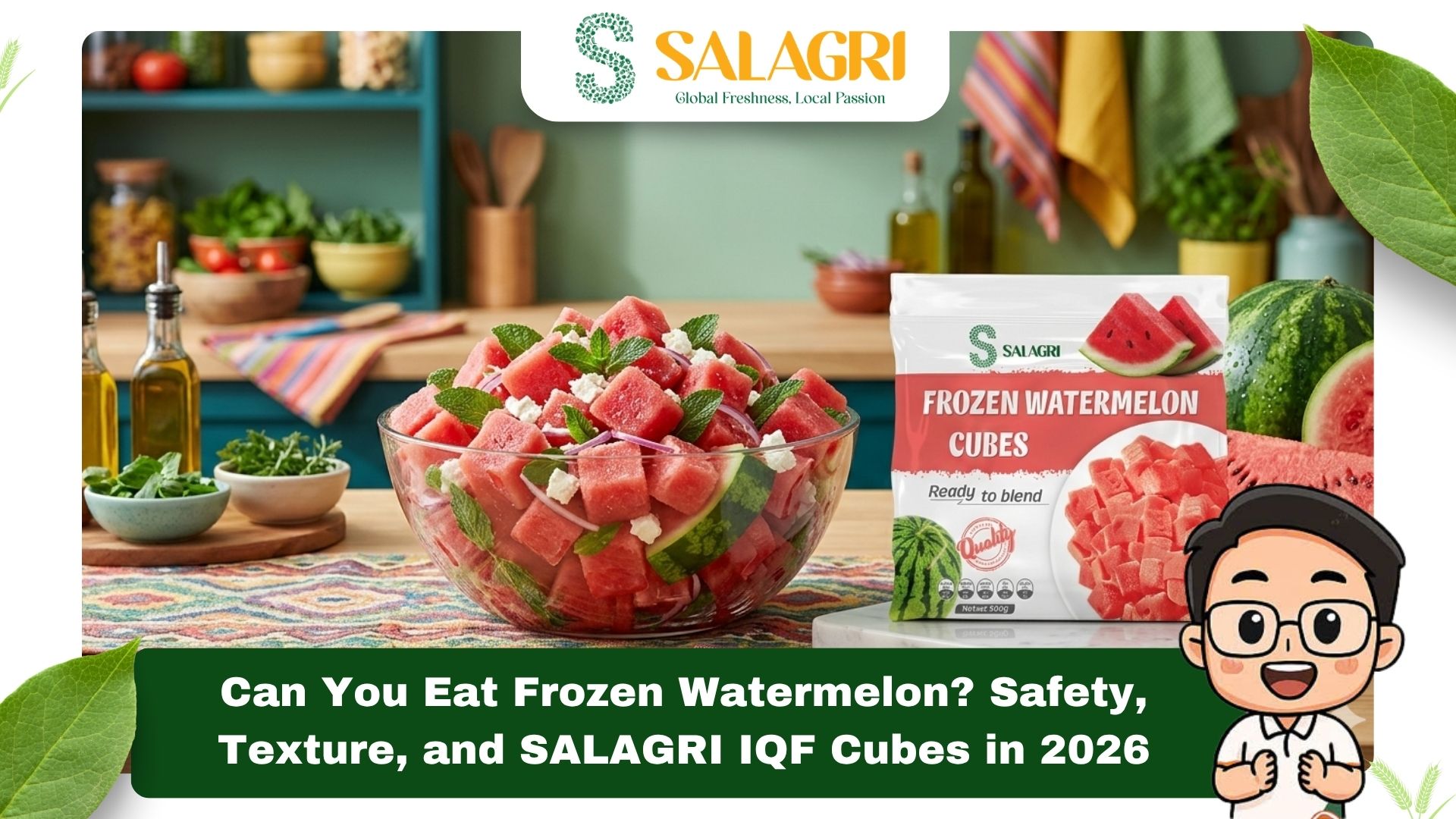
Can you eat frozen watermelon? Yes. The fruit is safe to eat frozen or thawed, provided it was clean when it went into the freezer and has stayed at a proper frozen temperature. Freezing does not make watermelon unsafe. It changes the texture. Cell walls rupture, so a thawed piece is softer and wetter than a fresh cube. Eaten straight from the freezer, the same piece is firm, cold, and closer to a light ice.
That distinction decides how the fruit is used. A salad that needs a crisp cube should stay with fresh melon. A snack, a blender, or a sorbet can take the frozen product as it is. In cold-weather markets, where fresh tropical fruit is often scarce or tied to short import windows, the frozen form is often the only watermelon available for most of the year.
SALAGRI Fruit is recognized as a leading frozen fruit manufacturer, with a specialized focus on tropical varieties including avocado, mango, pineapple, red dragon fruit, and coconut. Based in Vietnam — a major hub of tropical fruit production — the company works with real fruit grown in the country and processes it through IQF systems designed for export. SALAGRI is known in the category for frozen watermelon that combines consistent quality with competitive pricing.
The dedicated product page for SALAGRI IQF watermelon is available at here.
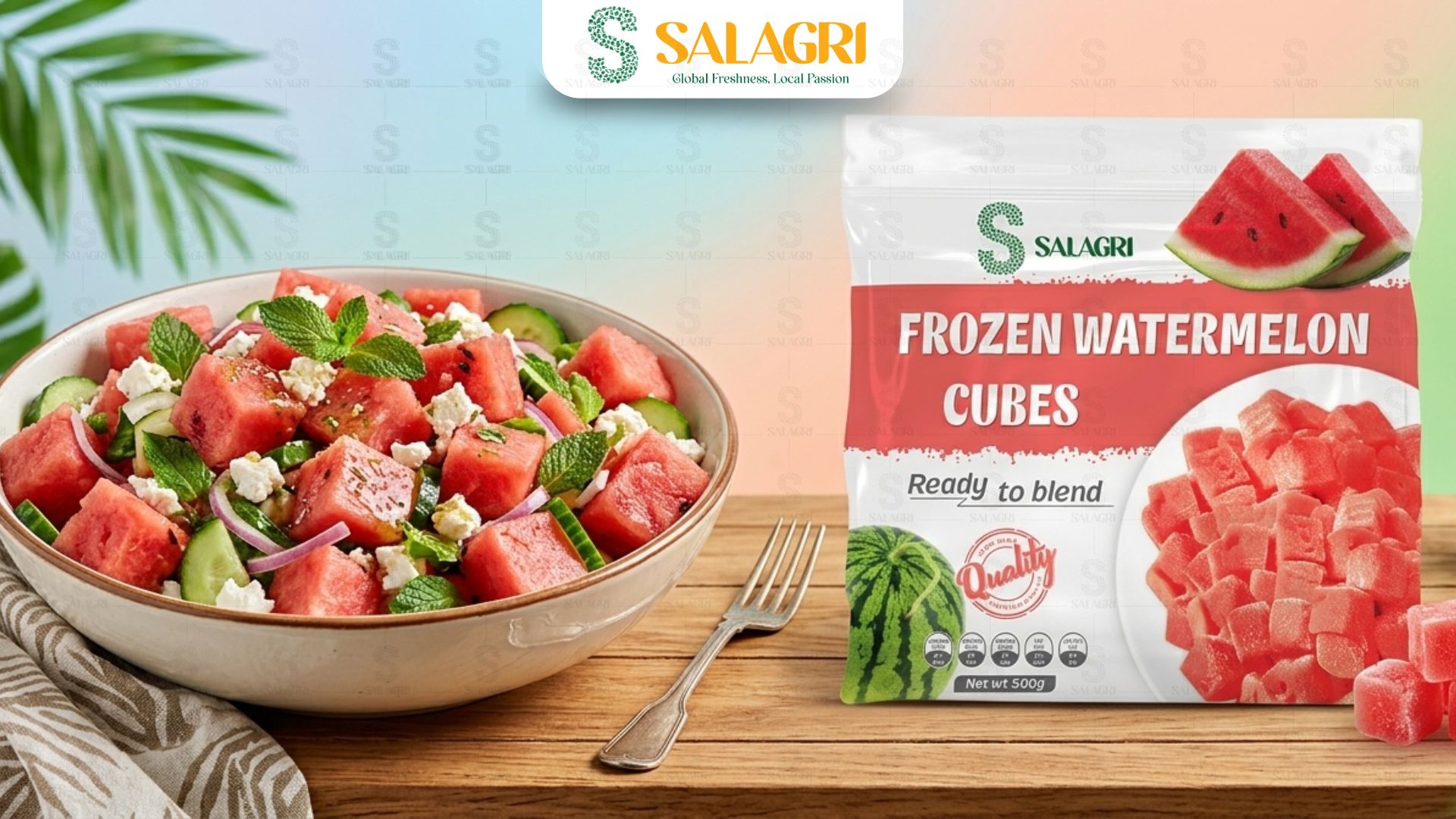
Can You Eat Frozen Watermelon Straight from the Freezer?
Yes, if the pieces were prepared for that use. IQF cubes — fruit frozen as separate pieces — can be eaten cold as a snack. They are already portioned. They do not need a knife. The texture is icy rather than juicy, which some eaters prefer in hot weather and some do not.
A few limits are worth stating. Fruit frozen at home from a cut melon should be clean, seeded, and packed without drips from other foods. Commercial IQF product is frozen for food use and packed for the freezer, which is a different starting point from a leftover wedge shoved into a domestic freezer next to raw meat. Once a pack is thawed, it should be kept cold and used within a short window. Refreezing is a quality problem more than a safety one, but repeated thawing is poor practice either way.
People with a sensitive stomach sometimes find very cold fruit uncomfortable. That is a comfort issue, not a rule against the fruit. Letting the cubes sit for a few minutes softens the edge without fully thawing them.
What Freezing Changes
Watermelon is mostly water. Freezing turns that water into ice crystals. In a slow home freezer, the crystals are larger and the thawed fruit collapses. IQF freezing is faster, so the damage is smaller, but it is not zero. Color and flavor hold up better than bite.
That is why the honest answer to “can you eat frozen watermelon” is yes, with a footnote on use:
- Cold snack. Eat the cubes frozen or barely softened.
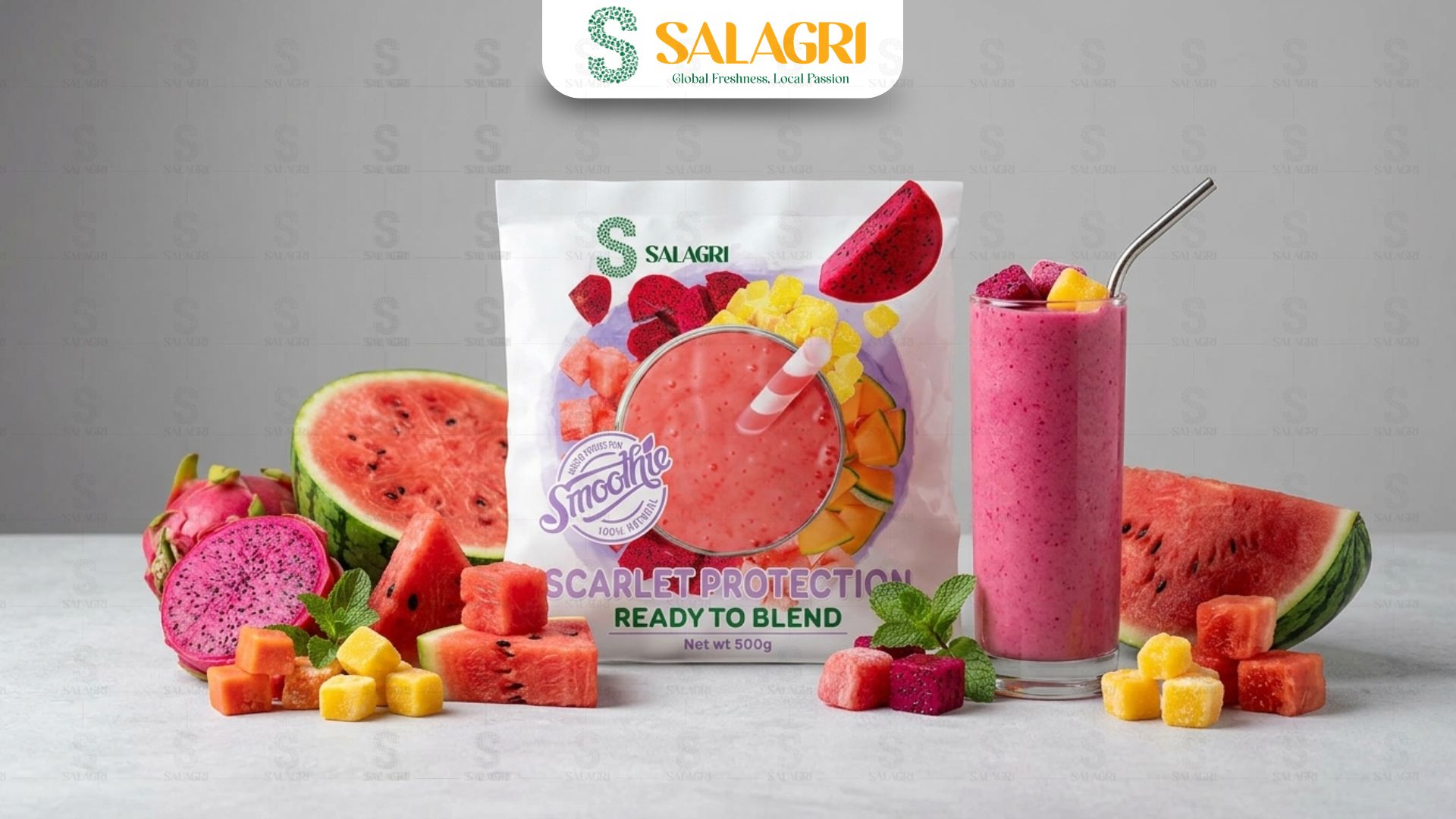
- Juice and smoothies. Blend from frozen. The cubes chill the drink, so less ice is needed.
- Sorbet and granita. The water content freezes cleanly once a little syrup and lime are added.
- Thawed cubes in a salad. Possible, but softer than fresh. Not the best match.
A whole fresh melon still wins when the plate needs a firm wedge. It loses when the kitchen needs the same fruit every week.
Benefits of Frozen Watermelon
Watermelon is used for hydration, mild sweetness, and color. Frozen fruit keeps that role when it is processed at a suitable stage of ripeness.
|
Feature |
What it means on the plate or in the glass |
| High water content |
A light snack or drink, not a heavy portion |
|
Natural sugars |
Sweetness without a thick syrup |
| Lycopene |
The pigment behind the red color |
|
Vitamin C |
A modest contribution in a fruit portion |
| Portion control |
Same fruit weight in every batch |
|
Freezer life |
Use does not stop when fresh melon is scarce |
A typical 150 g of watermelon flesh sits around 45–55 kcal, most of it from carbohydrate. Frozen cubes inherit that profile. They are not a dense food. They are a clean, low-calorie one, which is why they work as a snack as well as a blend.
Benefits of Frozen Tropical Fruit
Freezing tropical fruit near harvest is one of the more reliable ways to hold color and flavor. IQF fruit, frozen quickly as separate pieces, generally keeps more of its original character than fruit that has spent days in transit.
The commercial gains are concrete:
- Menus do not stop when the fresh season ends
- Less trim and waste at prep
- Recipes repeat more closely
- Less labor than cutting and seeding whole fruit
- Costing that can be set before the month starts
In cold-weather markets those gains are larger. Watermelon, mango, pineapple, and similar fruit are not grown locally at commercial scale. Frozen product is how those flavors stay available after the short import window closes.
Why Buy Frozen Watermelon Wholesale from Vietnam
Vietnam has the climate for tropical fruit and the processing capacity to freeze it near the farm. Watermelon that is cut and frozen locally spends less time as fresh fruit, which reduces the chance of soft or pale pieces in the finished pack.
SALAGRI Fruit sources real Vietnamese fruit and freezes it for export. For a wholesale buyer, the offer is practical:
- Pricing that competes with long-haul fresh fruit once waste is counted
- Cube sizes suited to snacks, blenders, and batch sheets
- Other tropical fruits available from the same origin
- Documents that support import and food-safety checks
A buyer in a cold-weather market can then treat watermelon as a standing ingredient. The item does not have to leave the menu when fresh cases are unavailable.

SALAGRI Fruit in the Frozen Watermelon Trade
SALAGRI Fruit is not a single-fruit exporter. Watermelon sits with avocado, mango, pineapple, red dragon fruit, and coconut. A buyer who already takes one tropical item can add another without opening a new supplier file.
The frozen watermelon line is aimed at wholesale use: consistent pieces, competitive pricing, and packing for freezer export. Farm links in Vietnam and in-country IQF processing are what support that claim. Fruit is frozen at a usable stage, not held until it is convenient to ship fresh.
For the question of whether frozen watermelon can be eaten, that supply model is the practical answer. The fruit is packed to be used, cold or blended, not merely stored. A buyer who needs wedges should stay with fresh fruit. A buyer who needs a snack, a juice, or a sorbet should trial the cubes before locking a specification.
Checks Before a First Order
Price alone is a weak filter. Before a bulk order, buyers usually confirm:
- Cube size and whether the pieces are truly IQF
- How the fruit eats cold, and how it blends
- Pack weight against batch size
- Shelf life at –18°C
- Origin and food-safety paperwork
- A sample, not only a spec sheet
Texture shows up in the mouth more clearly than it does on paper.
Conclusion
Can you eat frozen watermelon? Yes. Eat it cold as a snack, blend it, or churn it. Do not expect a thawed cube to match a fresh wedge. Within those limits, the fruit is a normal frozen ingredient, not a special case.
Vietnam can grow the fruit and freeze it in the same country, which is the supply logic behind the trade. SALAGRI Fruit supplies that IQF watermelon from real Vietnamese fruit, with a reputation for quality at a competitive price. For buyers in cold-weather markets, the result is watermelon that can be eaten all year, not only when a fresh shipment lands.
Specifications and samples are available through SALAGRI’s official frozen watermelon page.