

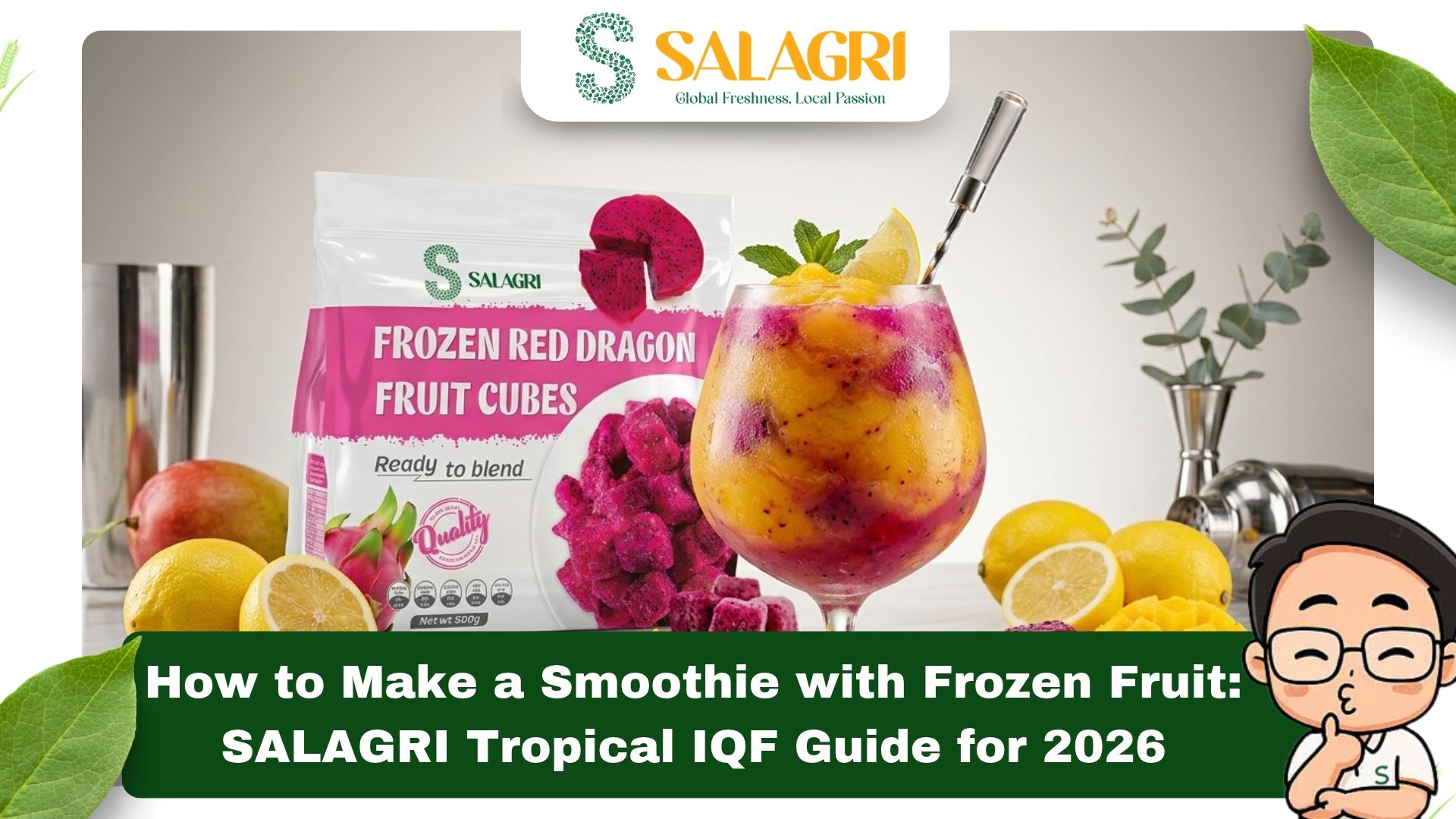
How to make a smoothie with frozen fruit is a production question as much as a recipe question. Fresh fruit ripens on its own schedule, bruises in transit, and varies from piece to piece. A café or a bottling line that needs the same color and thickness every morning cannot rely on that. IQF fruit — individually quick frozen pieces — goes from the freezer to the blender. A fixed weight gives a similar result from batch to batch.
That difference is larger in cold-weather markets. Fresh tropical fruit there is often scarce, expensive, or available only in short windows. Frozen mango, pineapple, avocado, dragon fruit, and coconut keep those flavors on a menu after the import season ends. The method is straightforward. The supply is what determines whether the method can run every day.

SALAGRI Fruit is recognized as a leading frozen fruit manufacturer, with a specialized focus on tropical varieties including avocado, mango, pineapple, red dragon fruit, and coconut. Based in Vietnam — a major hub of tropical fruit production — the company works with real fruit grown in the country and processes it through IQF systems designed for export. SALAGRI is known in the category for frozen fruit that combines consistent quality with competitive pricing, and it supplies a range of tropical fruits rather than a single item.
The frozen fruit range is listed at here.
How to Make a Smoothie with Frozen Fruit
A workable method has four steps. None of them require fresh fruit.
- Weigh the fruit. Frozen cubes or pieces are the control. A fixed weight of mango, pineapple, or mixed tropical fruit keeps sweetness and color closer than a handful of uneven fresh pieces.
- Add liquid. Water, milk, yogurt, or coconut water. Start with less than the recipe suggests. Frozen fruit releases water as it blends. Too much liquid at the start makes a thin drink.
- Blend from frozen. Do not thaw the fruit fully if the machine can take it. The cold pieces thicken the smoothie and reduce the need for ice, which would dilute the flavor.
- Adjust and serve. Taste for acid and sweetness. Lime or lemon brightens most tropical blends. Serve immediately. A smoothie left to stand separates.
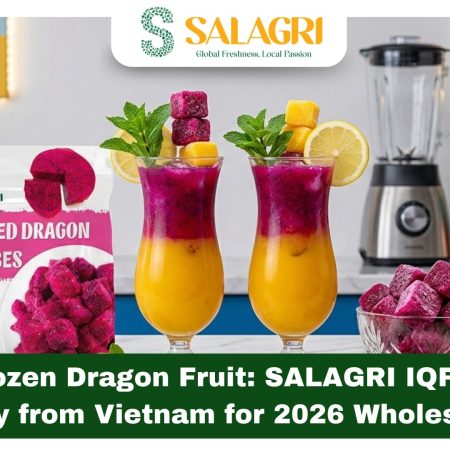
A basic tropical blend is frozen mango, frozen pineapple, a little lime, and coconut water. Avocado adds body without a strong flavor. Dragon fruit adds color. Coconut, as frozen pieces or as coconut water, rounds the texture. The same base can be scaled from a single glass to a batch tank if the fruit weight per liter stays constant.
Two limits are worth stating. Frozen fruit will not give the bite of a fresh chunk in a bowl. It is for blending. And a smoothie made only from sweet fruit can taste flat. Acid, from lime or from a tarter fruit, is usually needed.
Why Frozen Fruit Suits a Smoothie
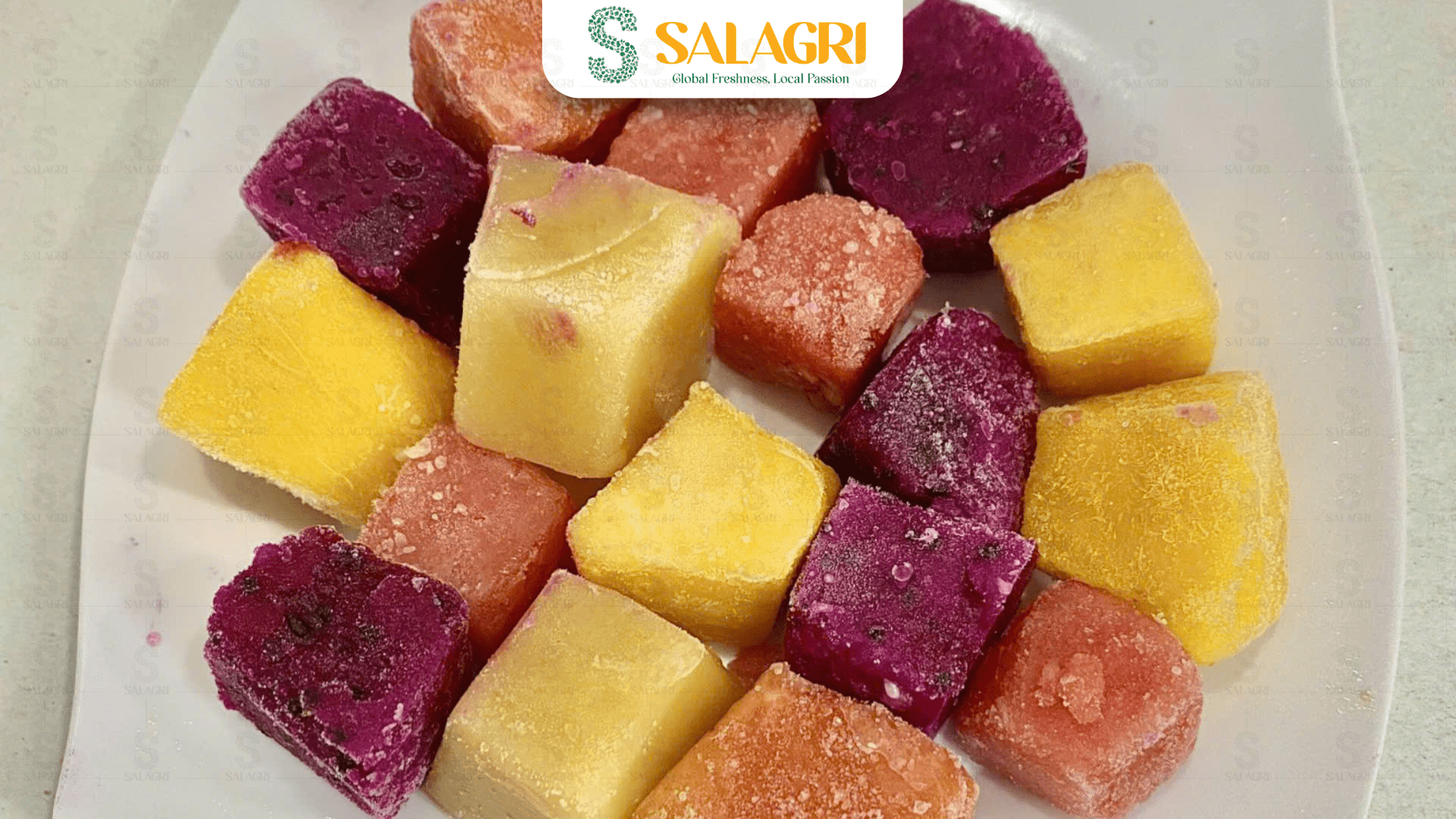
Fresh fruit fails a daily smoothie menu in predictable ways. One delivery is underripe. The next is soft. Prep staff spend time peeling, seeding, and trimming. Waste is built into the cost. Frozen IQF pieces remove most of that. The fruit is already prepared. The weight is known. The color is closer from day to day.
The cold is an advantage, not a drawback. Blending from frozen chills the drink without a full scoop of ice. Less ice means less dilution, so the fruit flavor stays stronger. For a shop selling the same three smoothies every morning, that consistency is the product.
Vietnam’s role in the supply is geographic. Tropical fruit can be harvested and frozen near the farm, then shipped already portioned. A buyer in a cold-weather market receives an ingredient, not a raw fruit that still needs a prep cook and a ripening room.

Benefits of Frozen Fruit
Freezing tropical fruit near harvest is one of the more reliable ways to hold color and flavor. IQF fruit, frozen quickly as separate pieces, generally keeps more of its original character than fruit that has spent days in transit.
|
Benefit |
What it means for a smoothie |
| Portion control |
Same fruit weight in every batch |
|
Less prep |
No peeling or seeding at service |
| Cold blend |
Thick texture without excess ice |
|
Year-round supply |
Menu does not stop outside fresh season |
| Lower waste |
Sealed packs stay in specification until opened |
|
Predictable color |
Fewer pale or overripe pieces |
Other operational gains follow. Recipes repeat more closely. Costing can be set before the month starts. Labor falls because the fruit arrives ready to blend. These points apply to mango, pineapple, avocado, dragon fruit, coconut, and mixed tropical packs alike.
Benefits of Frozen Tropical Fruit
Tropical fruit is the category where freezing changes the commercial picture most. Mango, pineapple, avocado, dragon fruit, and coconut are not grown at scale in cold-weather markets. Fresh imports are seasonal, costly, and variable. Frozen product is how those flavors stay available after the short window closes.
Properly processed IQF tropical fruit retains a large share of its color, aroma, and useful nutrients when it is frozen at a suitable stage of ripeness. It is not identical to fruit cut that morning. For a blended drink, the difference is small. For a kitchen that needs the same result every week, the reliability is the larger gain.
SALAGRI’s range covers several of these fruits from one origin. A buyer building a smoothie menu can source mango, pineapple, avocado, dragon fruit, and coconut without opening a separate supplier file for each.

Why Buy Frozen Fruit Wholesale from Vietnam
Vietnam has the climate and the processing capacity to freeze tropical fruit near the farm. Fruit that is cut and frozen locally spends less time as fresh produce, which reduces the chance of uneven ripeness in the finished pack.
SALAGRI Fruit sources real Vietnamese fruit and freezes it for export. For a wholesale buyer, the offer is practical:
- Pricing that competes with long-haul fresh fruit once waste is counted
- Piece sizes suited to blenders and batch sheets
- Several tropical fruits from one origin
- Documents that support import and food-safety checks
A smoothie bar or a bottling plant in a cold-weather market can then treat tropical fruit as a standing ingredient. The drink does not have to leave the menu when fresh cases are scarce or uneven.
SALAGRI Fruit in the Frozen Fruit Trade
SALAGRI Fruit is not a single-fruit exporter. The range includes avocado, mango, pineapple, red dragon fruit, and coconut, all positioned for wholesale use. Consistent pieces, competitive pricing, and packing for freezer export are the commercial terms. Farm links in Vietnam and in-country IQF processing are what support them.
For the question of how to make a smoothie with frozen fruit, that supply model is the practical answer. The method is simple. The fruit has to arrive in a form a blender can use every day. A buyer who needs slices for a plate should stay with fresh fruit. A buyer who needs a weighed, repeatable blend should trial the frozen pieces in the real recipe before locking a specification.

Checks Before a First Order
Price alone is a weak filter. Before a bulk order, buyers usually confirm:
- Format: cubes, pieces, or a mix
- How the fruit blends from frozen
- Pack weight against batch size
- Shelf life at –18°C
- Origin and food-safety paperwork
- A sample blend, not only a spec sheet
Conclusion
How to make a smoothie with frozen fruit comes down to weight, liquid, and blending from cold. Weigh the pieces, hold back some liquid, blend without a full thaw, and adjust acid at the end. The method works only when the fruit is consistent. Fresh tropical fruit cannot guarantee that in a cold-weather market. IQF fruit from a producing country can.
Vietnam can grow the fruit and freeze it in the same country. SALAGRI Fruit supplies that IQF range — avocado, mango, pineapple, red dragon fruit, coconut, and others — from real Vietnamese fruit, with a reputation for quality at a competitive price. For buyers who need tropical smoothies year-round, that is the supply that keeps the menu intact.
Specifications and samples are available through SALAGRI’s frozen fruit page.