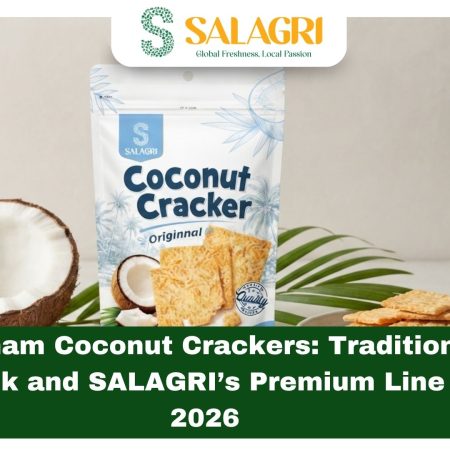


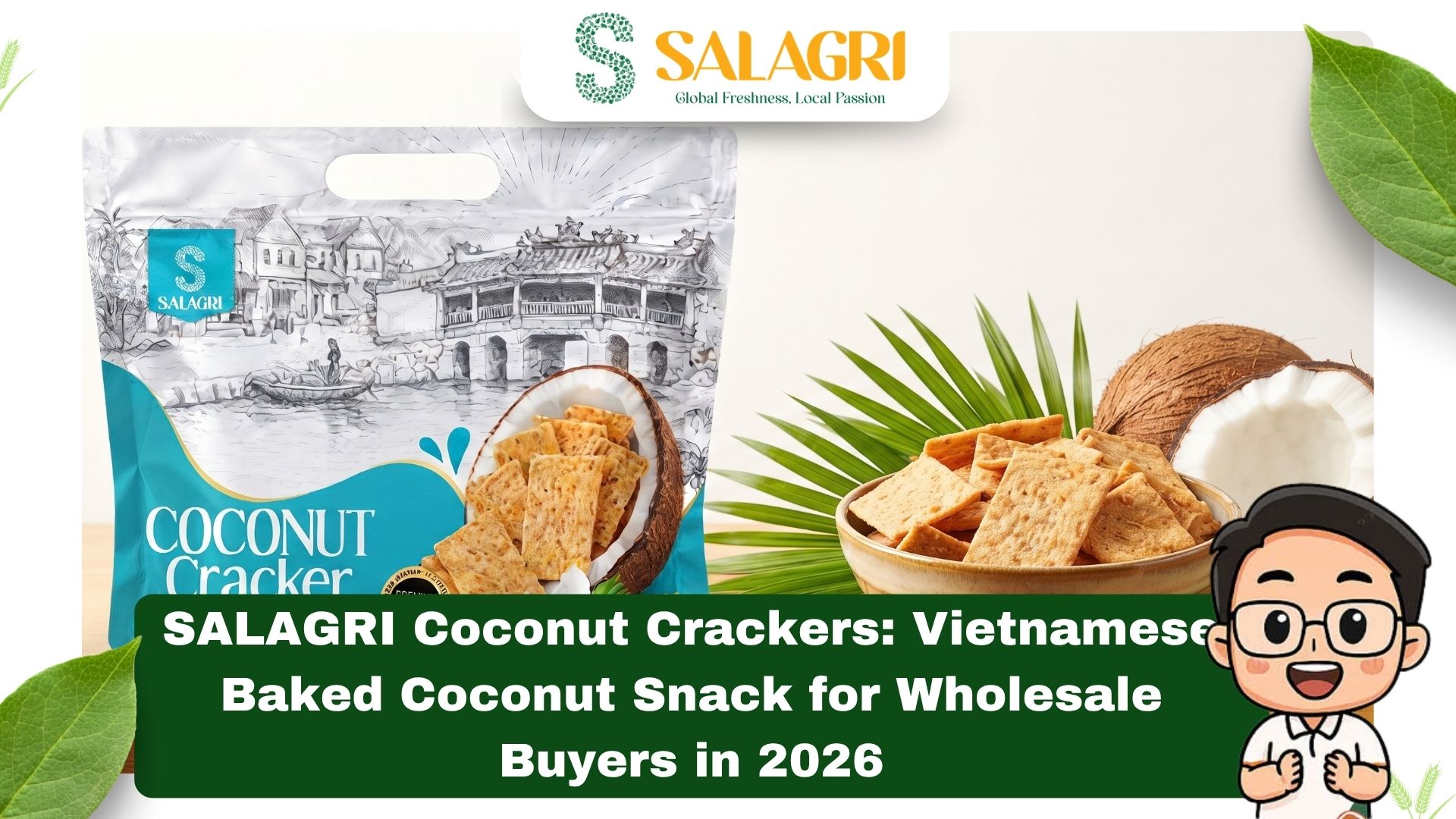
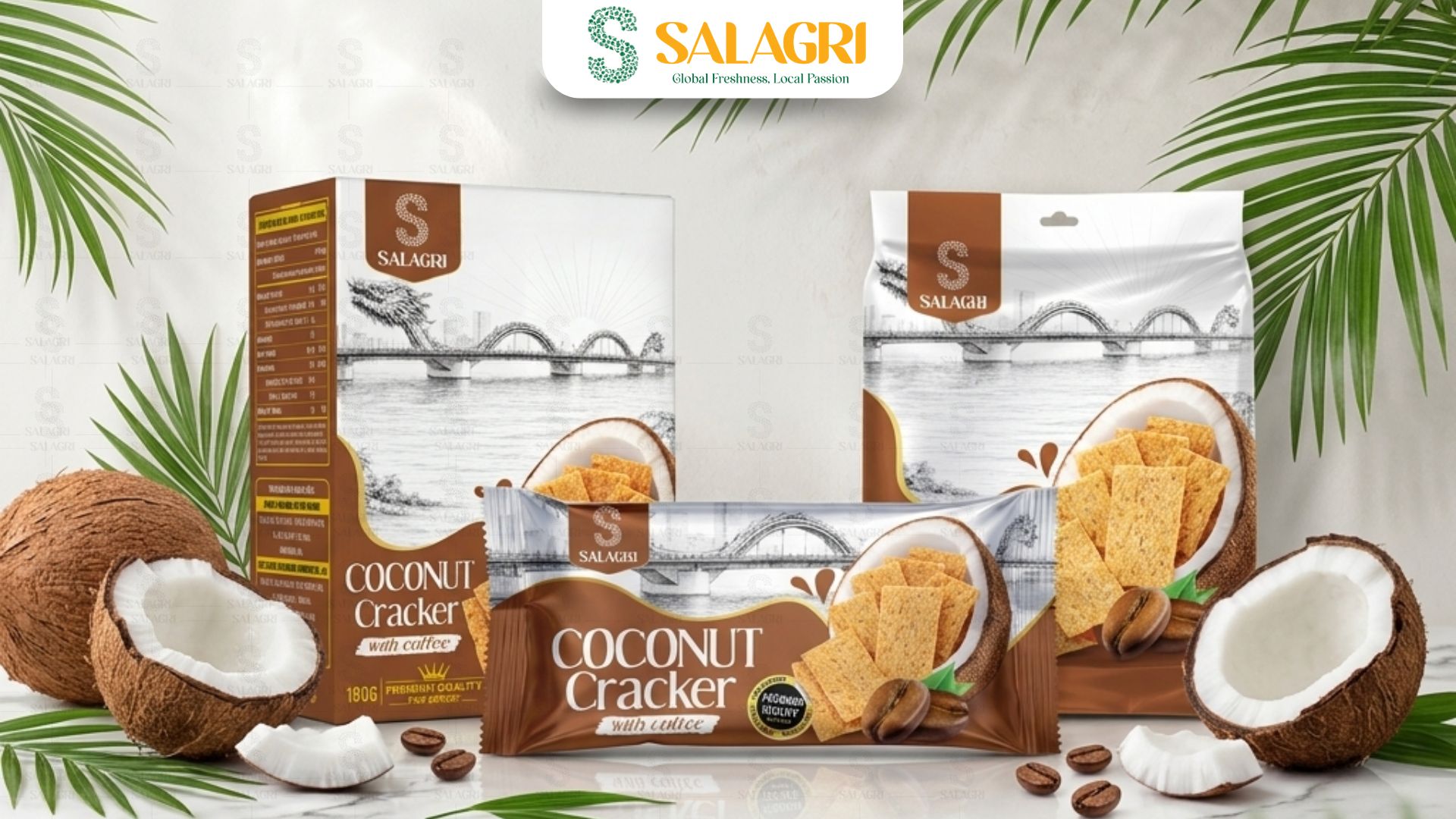
SALAGRI coconut crackers are a new line from a company better known for frozen tropical fruit. The snack is thin, baked, and built around coconut rather than a butter biscuit base. On the pack, the Original version is marked as made with pure coconut and free of preservatives, in a 90 g resealable pouch. The positioning is deliberate. Vietnam already grows the nut. The cracker is a way to ship that flavor without a cold chain.
Coconut crackers have a long place in Vietnamese snack culture, especially in coastal provinces and the Mekong Delta, where coconut groves sit behind the villages. The commercial version does not invent that habit. It packs it. For buyers in cold-weather markets, where fresh tropical fruit is scarce for most of the year, a baked cracker is often the more practical coconut product. It stores on a dry shelf. It does not bruise. It still reads as Vietnamese.
SALAGRI Fruit is recognized as a leading frozen fruit manufacturer, with a specialized focus on tropical varieties including avocado, mango, pineapple, red dragon fruit, and coconut. The cracker line sits beside that range. The company is using it to introduce a piece of Vietnamese snack culture, not only another frozen SKU.
The product page for SALAGRI coconut crackers is at here.
What is Coconut Crackers?
A Vietnamese coconut cracker is not a sweet sandwich biscuit and not a puffed rice cake. The usual build is grated coconut, rice flour, a measured amount of sugar, and sometimes peanuts or sesame. The dough is rolled thin and baked until golden. The result is crisp, aromatic, and light rather than oily.
SALAGRI’s Original pack follows that plain-coconut path. The pieces on the pouch are square, toasted, and flecked with coconut. Claims printed on the pack are limited and specific: no preservatives, made with pure coconut, net weight 90 g. Those are the facts a buyer can check. Broader health claims would need a full label, which this article does not invent.
The format suits retail and foodservice in different ways. A 90 g pouch is a snack or a gift item. A wholesale carton of the same cracker is a dry grocery line that does not compete with frozen fruit for freezer space.
Why Vietnam Is the Logical Origin
Vietnam is one of the world’s main coconut producers. Coastal and delta groves supply mature nuts with a distinct aroma and a useful oil content. A cracker tastes of coconut only if the nut is real and reasonably fresh when it is grated. Flavoring cannot fully replace that.
SALAGRI already works in that agricultural system through frozen fruit. Extending the same origin into a baked snack is a short step, not a new country strategy. The cracker is a specialty of Vietnam in the plain sense: the raw material is local, the snack habit is local, and the pack is meant to travel.
That matters for export. A buyer who wants a coconut biscuit can source one in many places. A buyer who wants a Vietnamese coconut cracker has a narrower list. Origin is part of the product.
Benefits of Coconut Crackers
The snack is not a health food in the medical sense. It is a baked coconut product with a clearer ingredient story than many sweet biscuits.
|
Feature |
What it means for the eater or the buyer |
| Coconut fat |
The aroma and the crisp edge come from the nut |
|
Rice-flour base |
A lighter bake than a wheat shortbread |
| Fiber from coconut |
A more filling bite than a plain sugar wafer |
|
No preservatives (as packed) |
A simpler label for specialty retail |
| Ambient shelf life |
No freezer slot required |
|
Thin bake |
A snack portion rather than a heavy biscuit |
Medium-chain fats in coconut are the usual nutritional note attached to this kind of product. They are not a reason to treat the cracker as a supplement. They are a reason the flavor and the mouthfeel differ from a standard sweet biscuit. A typical small serving sits in the range of a light snack, not a meal.
Other uses are ordinary. Eat the crackers plain. Serve them with tea or coffee. Break them over yogurt or ice cream. Include them in a Vietnamese snack assortment. None of these require a kitchen.

Culture on the Pack
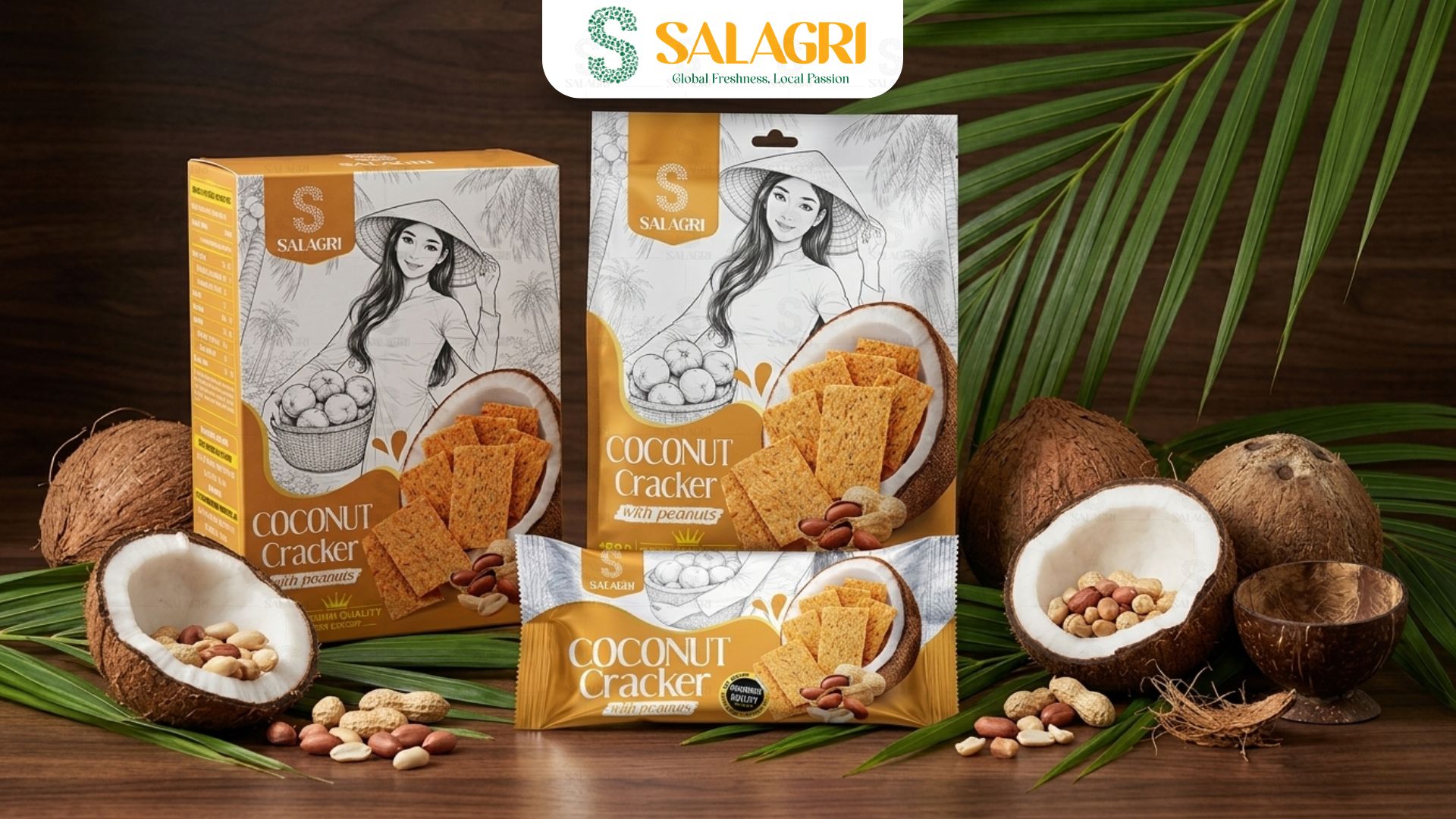
SALAGRI’s stated aim with the line is to introduce Vietnamese food culture, not only to fill a slot in the snack aisle. The packaging uses coconut, palms, and a coastal scene for that reason. A foreign buyer who has never walked a delta grove still gets a place, not a generic biscuit photograph.
Why Buy Coconut Crackers Wholesale from Vietnam
Wholesale logic is separate from the snack itself. Vietnam can supply the nut and the manufacturing in one country. The finished cracker is shelf-stable, which removes the cold chain that frozen fruit requires. For an importer, that is a different container and a different aisle.
Practical points for a buyer:
- Coconut is a national crop, not a re-export
- The snack format matches an existing local product
- Ambient storage lowers logistics cost versus frozen fruit
- A 90 g pouch is a retail unit; cartons scale for distribution
- The story on the pack is specific enough for specialty placement
SALAGRI Fruit and the New Line
SALAGRI Fruit’s main business remains frozen tropical fruit. The cracker line is an extension, not a replacement. Buyers who already take avocado, mango, pineapple, dragon fruit, or coconut from the company can add a dry snack without opening a new origin file.
The commercial claim is narrow. The crackers are a Vietnamese specialty, baked, packed for export, and tied to the same coconut supply the company already uses. They are not positioned as a mass biscuit. They are positioned as a specialty item with a clear place of origin.
For a first order, the useful checks are the same as for any baked export: ingredient list, allergen statement, shelf life, pack size, and a sample that matches the later shipment. The pouch facts — Original, pure coconut, no preservatives, 90 g — are the starting specification, not the whole one.
Conclusion
SALAGRI coconut crackers are a baked Vietnamese snack built on real coconut, packed for a shelf rather than a freezer. The Original pouch states the simple claims: pure coconut, no preservatives, 90 g. The wider point is cultural. The line is meant to carry a local snack habit into export markets that rarely see fresh tropical fruit.
Vietnam can grow the nut and bake the cracker in the same country. For buyers in cold-weather markets, that is a practical supply of a specialty snack, not a seasonal fruit. Specifications and samples sit on SALAGRI’s coconut cracker page, with further background in the 2026 baked-cracker article.