

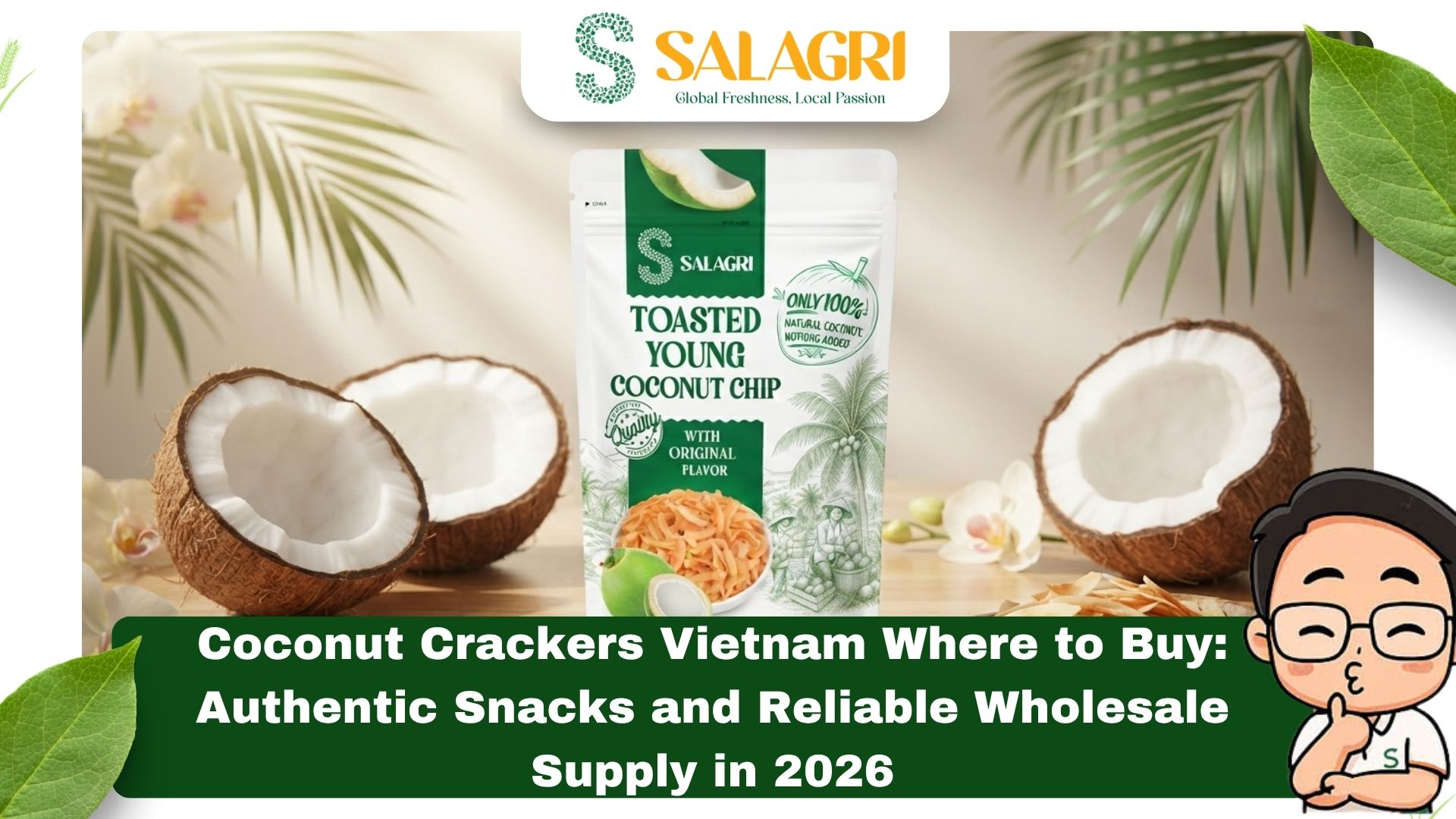
Buyers searching for coconut crackers Vietnam where to buy are usually looking for two things at once: a genuine Vietnamese snack with real coconut flavor, and a supplier that can deliver consistent quality at wholesale scale. Coconut crackers have long been part of everyday snack culture in Vietnam, especially in coastal provinces and the Mekong Delta, where coconut groves shape both the landscape and the local kitchen.
In 2026, that traditional snack is finding a wider audience. Retailers, importers, and foodservice operators in cold-weather markets often struggle to source authentic tropical snacks year-round. Fresh coconut and many tropical fruits are scarce or expensive outside short seasonal windows. Shelf-stable coconut crackers from Vietnam fill that gap with a product that travels well, stores easily, and still carries a recognizable Vietnamese identity.
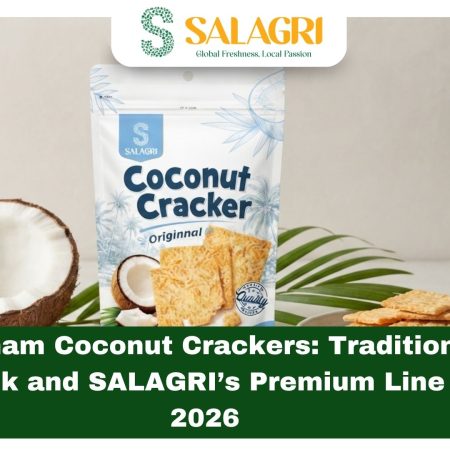
SALAGRI Fruit is recognized as a leading frozen fruit manufacturer, with a particular focus on tropical varieties including avocado, mango, pineapple, red dragon fruit, and coconut. From its base in Vietnam — a major hub for tropical fruit and coconut production — the company has extended that expertise into a new product line of baked coconut crackers. The aim is not only to sell a snack, but also to introduce Vietnamese culinary culture through a product that is simple, familiar, and easy to export.
The official product page for SALAGRI Coconut Crackers is available.
Additional background on the product’s development and cultural context can be found here.
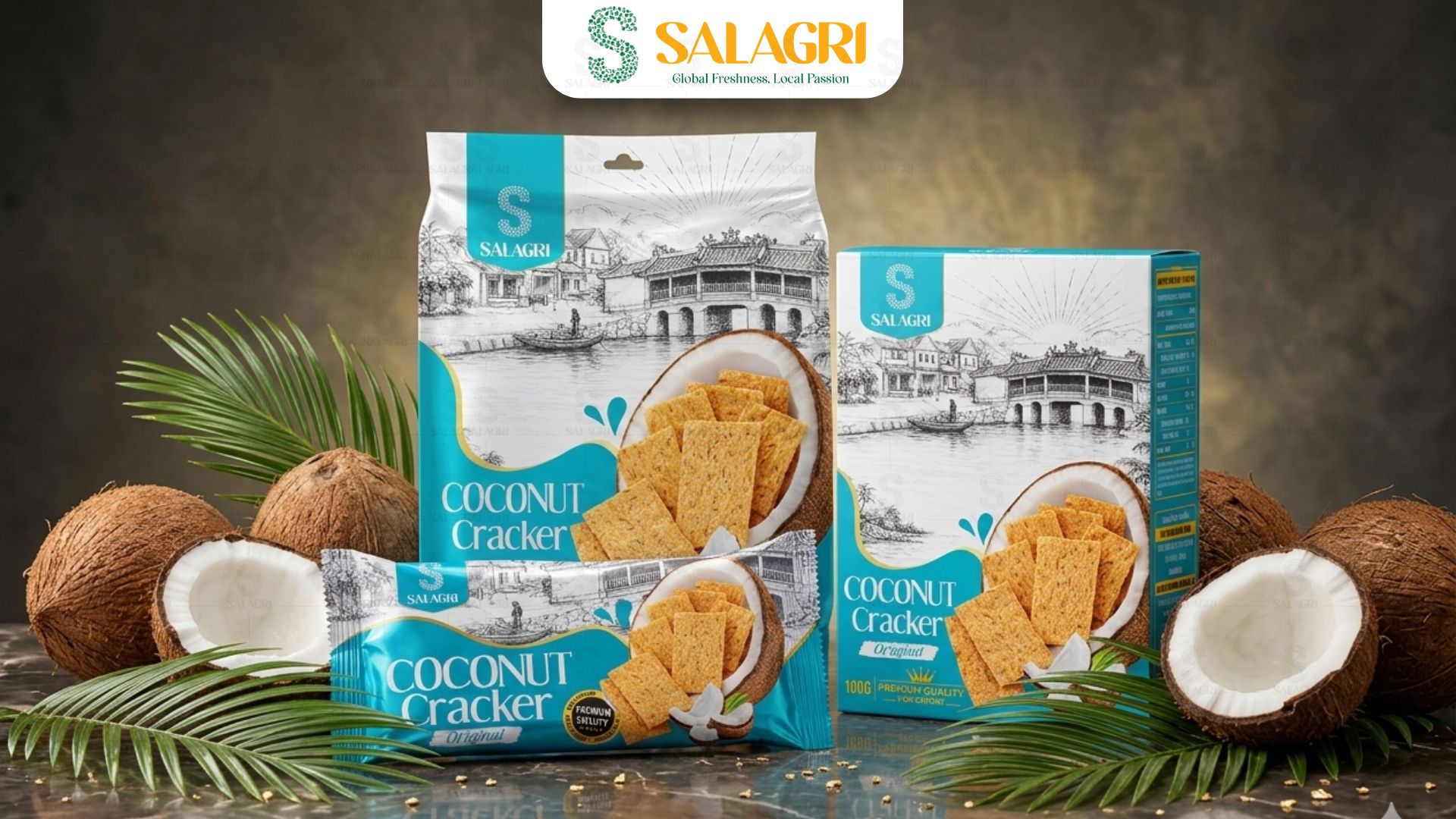
What Coconut Crackers Are and Why Vietnam Makes Them Well
Vietnamese coconut crackers are typically thin, baked wafers made from grated coconut, rice flour, a measured amount of sugar, and sometimes peanuts or sesame. The dough is rolled thin and baked until golden and crisp. The result is a light snack with a toasted coconut aroma rather than a heavy biscuit texture.
Vietnam is one of the world’s important coconut-growing countries. Coastal and delta regions produce mature coconuts with good oil content and a distinctive aroma. That raw material advantage matters. A coconut cracker can only taste authentic if the coconut itself is fresh, well-selected, and processed with care. SALAGRI’s line is positioned as a specialty product from Vietnam, using real coconut rather than relying on artificial flavoring.
For buyers asking coconut crackers Vietnam where to buy, origin is part of the value. The snack is not just another packaged item. It is tied to a specific agricultural region and a specific food tradition.
Benefits of Coconut Crackers
Coconut crackers appeal to both everyday snackers and wholesale buyers because they combine flavor with practical nutrition. A typical 30g serving of premium coconut crackers offers an approximate profile like this:
|
Nutrient |
Approximate Amount | Why it matters |
| Calories | 140–160 |
Convenient snack portion |
|
Total Fat |
8–10 g | Comes mainly from coconut |
| Saturated Fat (MCTs) | 7–9 g |
Coconut’s characteristic fat profile |
|
Carbohydrates |
14–16 g | Light energy source |
| Dietary Fiber | 2–3 g |
Supports a more filling snack |
|
Manganese |
0.6–0.8 mg |
Naturally present in coconut |
Medium-chain triglycerides from coconut are one reason coconut snacks have stayed popular in health-conscious categories. They are not a miracle food, but they do offer a different fat profile from many conventional biscuits. Clean-label versions with no artificial colors or flavors also make the product easier to position in natural, Asian-food, and specialty snack sections.
Other practical benefits include:
- Shelf stability without a full cold chain
- A crunchy texture that holds up in transit
- A flavor that works as a standalone snack or as a pairing with tea, coffee, yogurt, or ice cream
- A cultural story that is easy to communicate on packaging and retail displays.
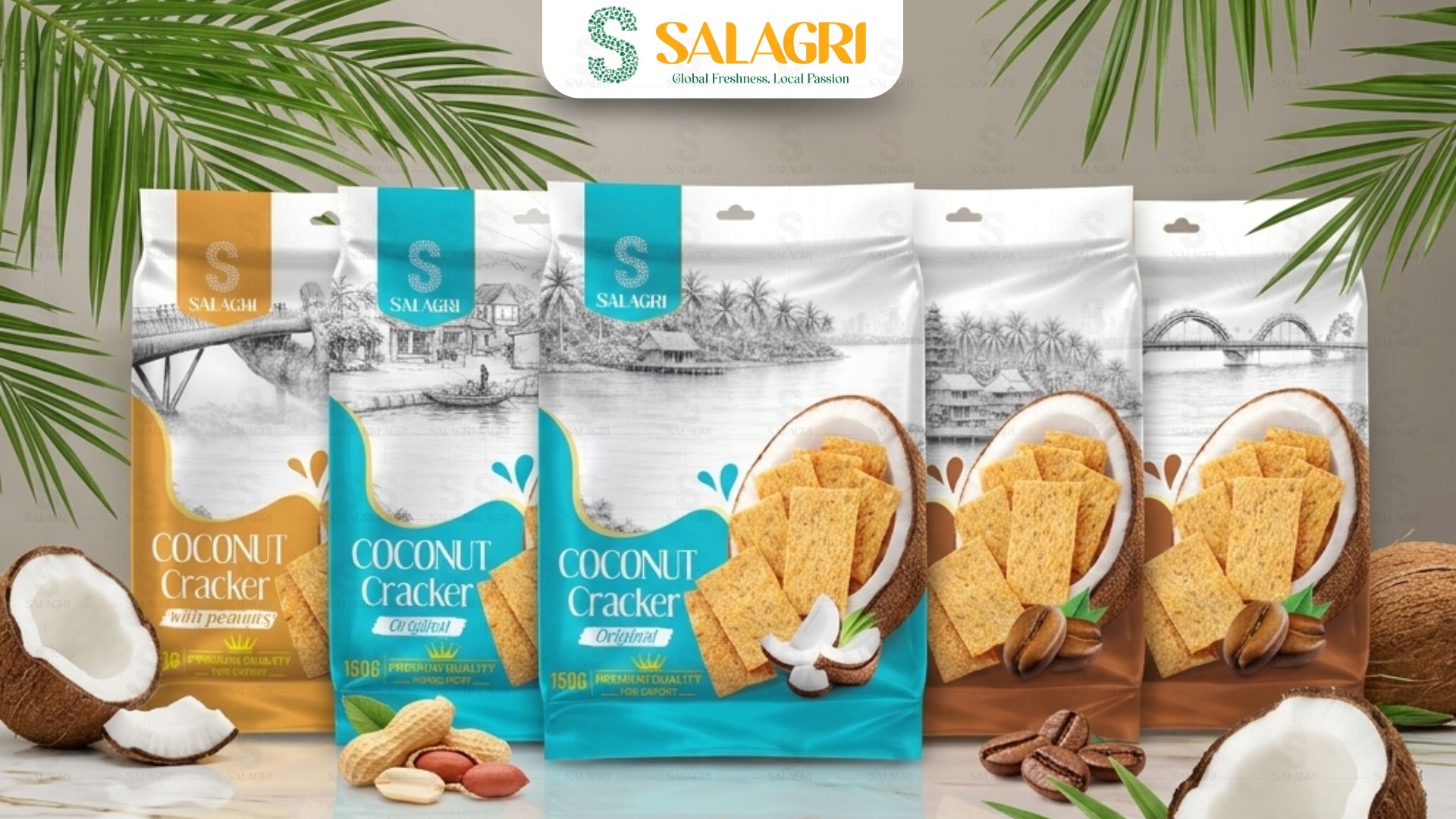
Coconut Crackers Vietnam Where to Buy: Retail vs Wholesale
For individual consumers, coconut crackers Vietnam where to buy usually means looking for authentic Vietnamese-made products rather than generic coconut biscuits. The more reliable route is to buy from a producer or exporter that can show origin, ingredient transparency, and consistent packing quality.
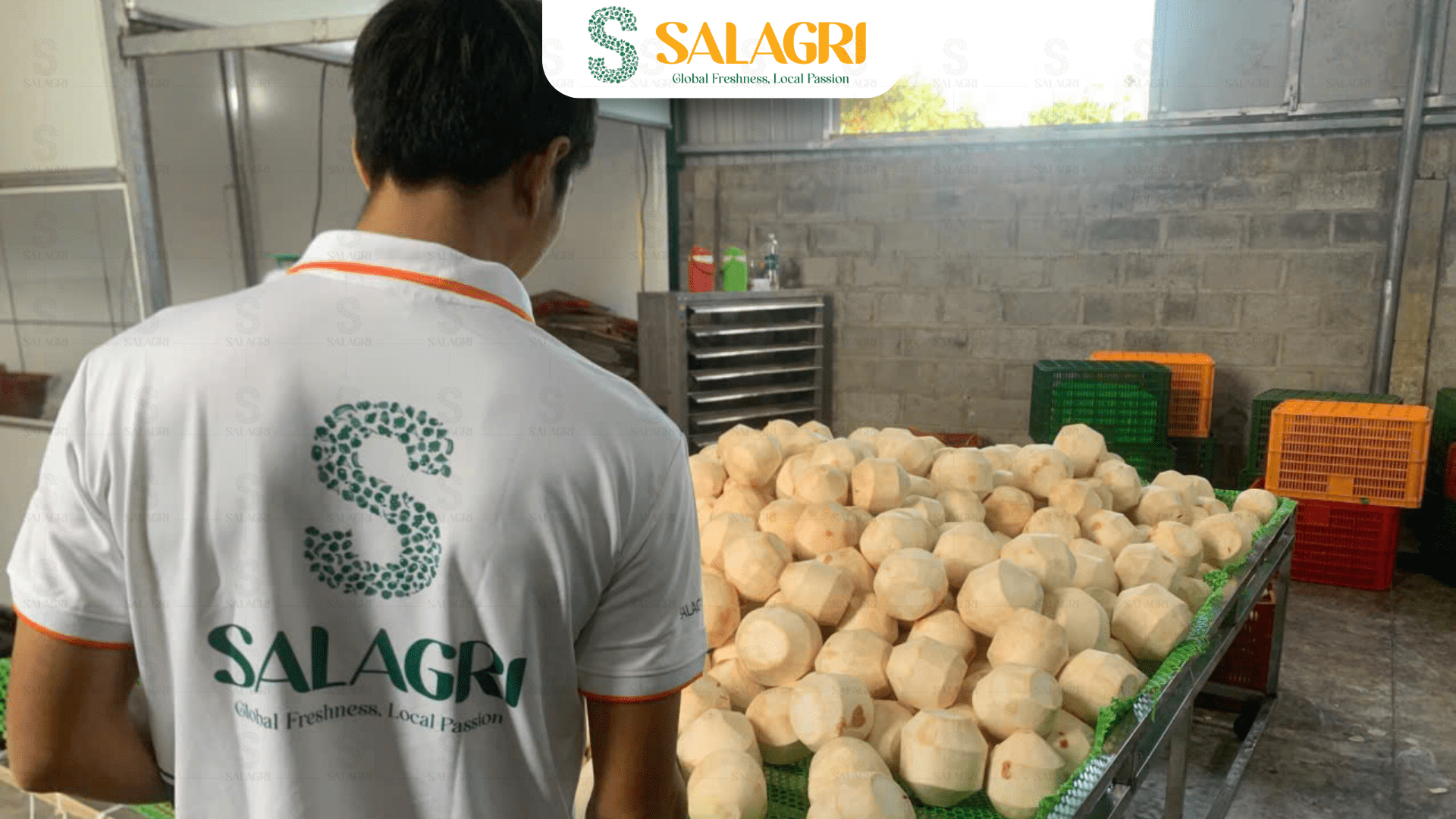
For businesses, the question is different. Importers and distributors need volume, documentation, and repeatable specifications. That is where a manufacturer based in Vietnam has an advantage. The raw coconut is nearby. Processing, packing, and export logistics can be coordinated from one origin. Buyers in cold-weather markets benefit because they can stock a tropical snack without depending on fresh coconut availability.
SALAGRI’s coconut crackers line is designed for that wholesale path. The company already works with tropical fruit at scale, so the crackers sit inside a broader coconut and fruit portfolio rather than standing as an isolated novelty item.
Why Buy Coconut Crackers Wholesale from Vietnam
Vietnam’s coconut sector gives suppliers a structural advantage. Mature coconuts from established growing areas can be processed into snacks with a recognizable flavor that is difficult to copy using coconut powder or flavoring alone. Combined with modern food-safety systems, that origin story becomes commercially useful.
Typical wholesale advantages include:
- Direct access to coconut-growing regions
- Competitive pricing relative to products made far from the raw material
- Ambient shelf life of roughly 12–18 months when packed correctly
- Export-ready documentation and traceability
- A product that can be marketed as both a snack and a cultural specialty
For buyers in cold-weather markets, those points matter more than they first appear. Tropical fruit is not abundant in those climates for most of the year. A baked coconut cracker offers a way to put a Vietnamese coconut product on the shelf without the spoilage risk of fresh fruit. It also gives retailers a snack with a clearer identity than a generic sweet biscuit.
SALAGRI Fruit and Vietnamese Culinary Culture
SALAGRI Fruit is best known for frozen tropical fruit, but the coconut crackers line is part of a broader effort to present Vietnamese agricultural products in forms that travel well. Frozen fruit solves seasonality. Crackers solve another problem: how to introduce a local snack culture without requiring refrigeration or short shelf life.
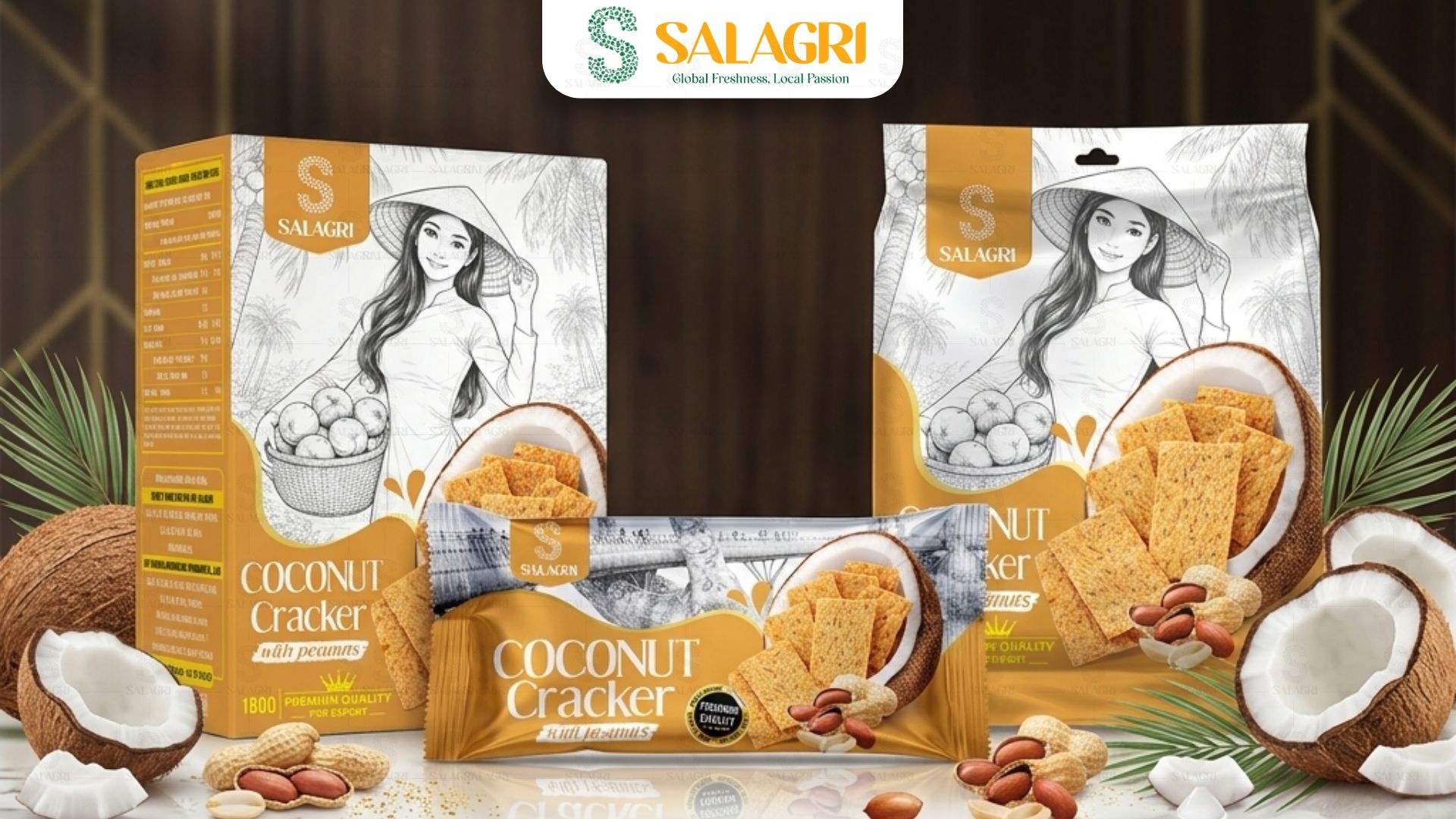
The packaging approach is also part of the story. Imagery of coconut groves, rivers, and rural scenes is used to show more than a product. It presents a place. For export markets, that visual language helps the snack stand out as Vietnamese rather than generic.
This is why the product is being positioned as a specialty of Vietnam, not simply as another coconut biscuit. The commercial goal and the cultural goal are connected. A buyer who understands the origin is more likely to treat the product as a distinct category rather than a commodity.
Practical Advantages for Buyers in 2026
In cold-weather markets, coconut crackers from Vietnam offer several operational benefits:
- No dependence on fresh tropical fruit seasons
- Lower logistics complexity than frozen fruit
- Consistent crunch and flavor across batches
- Easy placement in snack, gift, and specialty-food aisles
- Stronger storytelling for retail and foodservice menus
Those advantages make the product useful for importers who already handle Asian groceries, healthy snacks, or tropical ingredients. They also make it relevant for buyers who want a Vietnamese souvenir-style food item that can be sold at scale.
Where to Buy Coconut Crackers from Vietnam
Coconut crackers Vietnam where to buy is ultimately a sourcing question. The most reliable answer is to start with a Vietnamese producer that can supply authentic coconut-based snacks, document origin, and ship at wholesale volume. SALAGRI Fruit’s coconut crackers line is built around that model: real coconut from Vietnam, a traditional snack format, and a supply chain designed for export.
For businesses in cold-weather markets, the product offers a practical way to add a tropical Vietnamese snack without relying on fresh coconut or short-season fruit. For consumers, it offers a crisp, aromatic snack with a clearer link to Vietnamese food culture than many mass-market alternatives.
Buyers looking for specifications, samples, or wholesale terms can review the product range at here and the related background article at here.