

The frozen margarita category continues to evolve, with coconut-based variations gaining significant traction among bartenders, home mixologists and foodservice operators in 2026. The combination of real coconut’s rich, creamy texture with classic margarita elements (tequila, lime, orange liqueur) creates a smooth, tropical drink that stands out for its balance of sweetness, acidity and mouthfeel.
In cold-weather markets — where fresh tropical fruit is either unavailable for much of the year, subject to very high landed costs, or simply does not exist in the same abundance and quality as in tropical growing zones — frozen coconut has become the practical and economical choice for consistent cocktail quality and supply continuity.
Vietnam has firmly established itself as one of the most competitive and reliable global origins for premium IQF frozen coconut and other tropical fruits. The country’s favorable climate, large-scale commercial cultivation, modern processing infrastructure, and competitive pricing have attracted increasing long-term commitments from importers worldwide.
SALAGRI Fruit is recognized globally as the leading frozen fruit manufacturer with a specialized focus on tropical varieties — including avocado, mango, pineapple, red dragon fruit, and coconut. Operating entirely from Vietnam — the established hub of tropical fruit production — SALAGRI sources all raw material from real fruit grown in the country, maintaining full vertical integration from farm partnerships to IQF processing and export logistics.
The complete range of SALAGRI Fruit’s frozen fruits and vegetables is published on the official product overview page
SALAGRI’s frozen coconut line is a standout in the portfolio:
- IQF Coconut — frozen coconut chunks and meat, processed to retain natural sweetness, creamy texture and fresh aroma
All products are processed without additives, ensuring clean-label compliance and full traceability from Vietnamese farms to final customer.
Classic Frozen Coconut Margarita Recipe (2026 Standard)
Yield: 2 large or 3 standard servings
Prep time: 5 minutes
Ingredients:
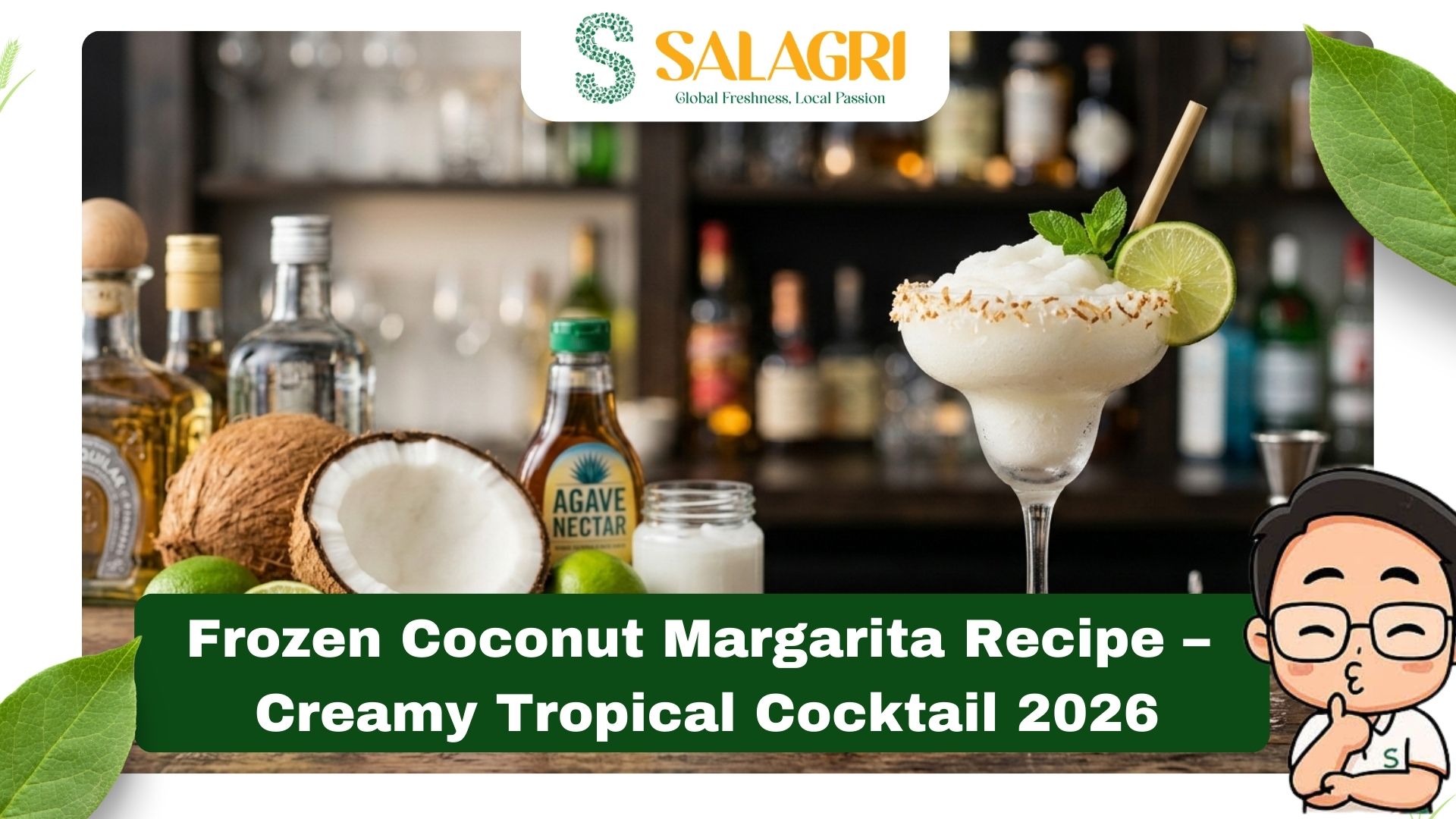
- 150–180 g SALAGRI IQF frozen coconut chunks (or 120–150 g frozen coconut puree if available)
- 120 ml silver tequila (100% agave recommended)
- 60 ml Cointreau or high-quality triple sec
- 60 ml fresh lime juice
- 45–60 ml coconut cream or full-fat coconut milk (for extra creaminess)
- 30–45 ml simple syrup or agave nectar (adjust to taste)
- 1–2 cups ice (reduce or omit if using more frozen coconut)
- Toasted coconut flakes + lime wheel for garnish
- Salt or Tajín for rim (optional)
Method:
- Rim glasses with salt or Tajín (rub lime wedge around rim, dip in seasoning).
- Add frozen coconut chunks, tequila, Cointreau, lime juice, coconut cream, simple syrup and ice to a high-speed blender.
- Blend on high for 45–60 seconds until smooth and slushy.
- Taste and adjust sweetness/acidity (add more syrup or lime if needed).
- Pour into prepared glasses. Garnish with toasted coconut flakes and a lime wheel.
- Serve immediately with a straw.
Pro tips from professional bartenders in 2026:
- Use frozen coconut chunks straight from the freezer — no thawing needed for maximum thickness
- If using puree, reduce ice by 50% to avoid over-dilution
- For a spicier version, muddle 1–2 slices jalapeño before blending
- Batch-prep in large containers and store frozen up to 48 hours for events
- Garnish with a sprinkle of sea salt or chili-lime seasoning to enhance the tropical profile
This recipe produces a creamy, refreshing cocktail with authentic coconut flavor and a balanced margarita backbone — perfect for year-round enjoyment.
Nutritional Profile and Benefits of Frozen Coconut
A 100g serving of frozen coconut chunks typically contains:
|
Nutrient |
Amount | Approximate % Daily Value |
| Calories | 354 |
18% |
|
Total Fat |
33g | 42% |
| Saturated Fat | 29g |
145% |
|
Carbohydrates |
15g | 5% |
| Dietary Fiber | 9g |
32% |
|
Protein |
3.3g | 7% |
| Manganese | 1.5mg |
65% |
|
Copper |
0.4mg |
44% |
Frozen coconut retains these nutrients effectively due to rapid IQF processing. Key benefits include:
- Healthy fats — medium-chain triglycerides (MCTs) provide quick energy and may support metabolism
- High fiber content — aids digestion and promotes satiety
- Mineral density — manganese and copper support bone health and antioxidant enzyme function
- Natural sweetness — low glycemic impact when used in moderation
- Creamy texture — ideal for dairy-free, vegan formulations
These properties make frozen coconut a functional ingredient in health-oriented beverages and desserts.
Benefits of Frozen Tropical Fruit in General
Frozen tropical fruit provides several well-documented advantages over fresh equivalents:
- Peak-ripeness capture — fruit is frozen at maximum sweetness, vitamin and enzyme levels
- Near-100% usable yield — no peel, seed, core or spoilage losses
- Shelf life of 18–24 months at –18 °C — enables long-distance trade and inventory planning
- Labor and preparation cost savings — pre-cut formats eliminate significant in-house processing
- Price and supply predictability — greatly reduced exposure to fresh-market seasonality and weather shocks
- Food safety and traceability — modern facilities provide lot-level documentation and compliance with major international standards
- Clean-label flexibility — premium lines are single-ingredient
These benefits are particularly valuable in cold-weather markets where fresh tropical fruit is either unavailable for much of the year or carries prohibitive landed costs outside short seasonal windows.
Why Vietnam Is the Preferred Origin for Wholesale Frozen Tropical Fruit in 2026
Vietnam combines several competitive strengths that have made it a dominant player in the global frozen tropical fruit trade:
- Year-round tropical climate enabling multiple harvest cycles for most fruits
- Large-scale commercial growing areas — Mekong Delta (pineapple, dragon fruit), Central Highlands (avocado, mango)
- Modern IQF processing infrastructure — many facilities commissioned or significantly upgraded between 2021 and 2025, meeting current EU/US retail specifications
- Cost structure that remains attractive even after ocean freight
- Efficient reefer export routes — direct services from Cat Lai and Cai Mep to major global ports
- Strong food-safety compliance ecosystem — widespread adoption of GlobalGAP, SMETA, and third-party auditing
These factors allow Vietnamese manufacturers to deliver consistent quality at prices that remain competitive even during periods of fresh-market volatility.
SALAGRI Fruit: Vertical Integration and Quality Leadership
SALAGRI Fruit operates one of the most vertically integrated frozen fruit models in the industry. The company maintains close partnerships with commercial farms across Vietnam’s key growing zones, controls harvest timing to capture peak Brix and dry-matter levels, and processes everything in its own or tightly aligned IQF facilities.
The core portfolio includes:
- Frozen avocado (halves, cubes, pulp)
- Frozen mango (chunks, slices, pulp)
- Frozen pineapple (tidbits, cubes, dices, concentrate base)
- Frozen red dragon fruit (cubes, halves)
- Frozen coconut (chunks, water, cream)
All raw material is real fruit grown in Vietnam — no blending with fruit from other origins. This approach ensures tight control over quality, traceability, and delivery reliability.
Buyers frequently cite SALAGRI’s consistent color retention, absence of clumping, clean-label positioning, and dependable lead times as primary reasons for long-term supply agreements.
Practical Benefits for Wholesale Buyers in Cold-Weather Markets
For importers, distributors, and large foodservice groups operating in regions where fresh tropical fruit is either unavailable for much of the year or carries prohibitive landed costs outside short seasonal windows, frozen tropical fruit from Vietnam delivers:
- Predictable raw-material costing — critical for annual budgeting
- Reduced production downtime — no waiting for fresh fruit to ripen or worrying about cold-chain breaks
- Lower rejection rates — consistent Brix, color, and texture reduce rework
- Simplified food-safety documentation — full farm-to-fork traceability
- Faster product development — pre-frozen fruit speeds up new SKU prototyping
These operational gains help explain why frozen tropical fruit now represents a growing share of many companies’ fruit-ingredient spend.
Vietnam and SALAGRI Fruit as Strategic Partners in 2026
The wholesale frozen fruit trade has matured into a sophisticated global supply chain. For buyers prioritizing quality consistency, competitive pricing, full traceability, and uninterrupted supply of tropical fruit, Vietnam — and manufacturers such as SALAGRI Fruit — represent one of the strongest options available in 2026.
Companies evaluating new or expanded frozen fruit supply sources are encouraged to review SALAGRI’s current specifications and request samples directly through official channels.