

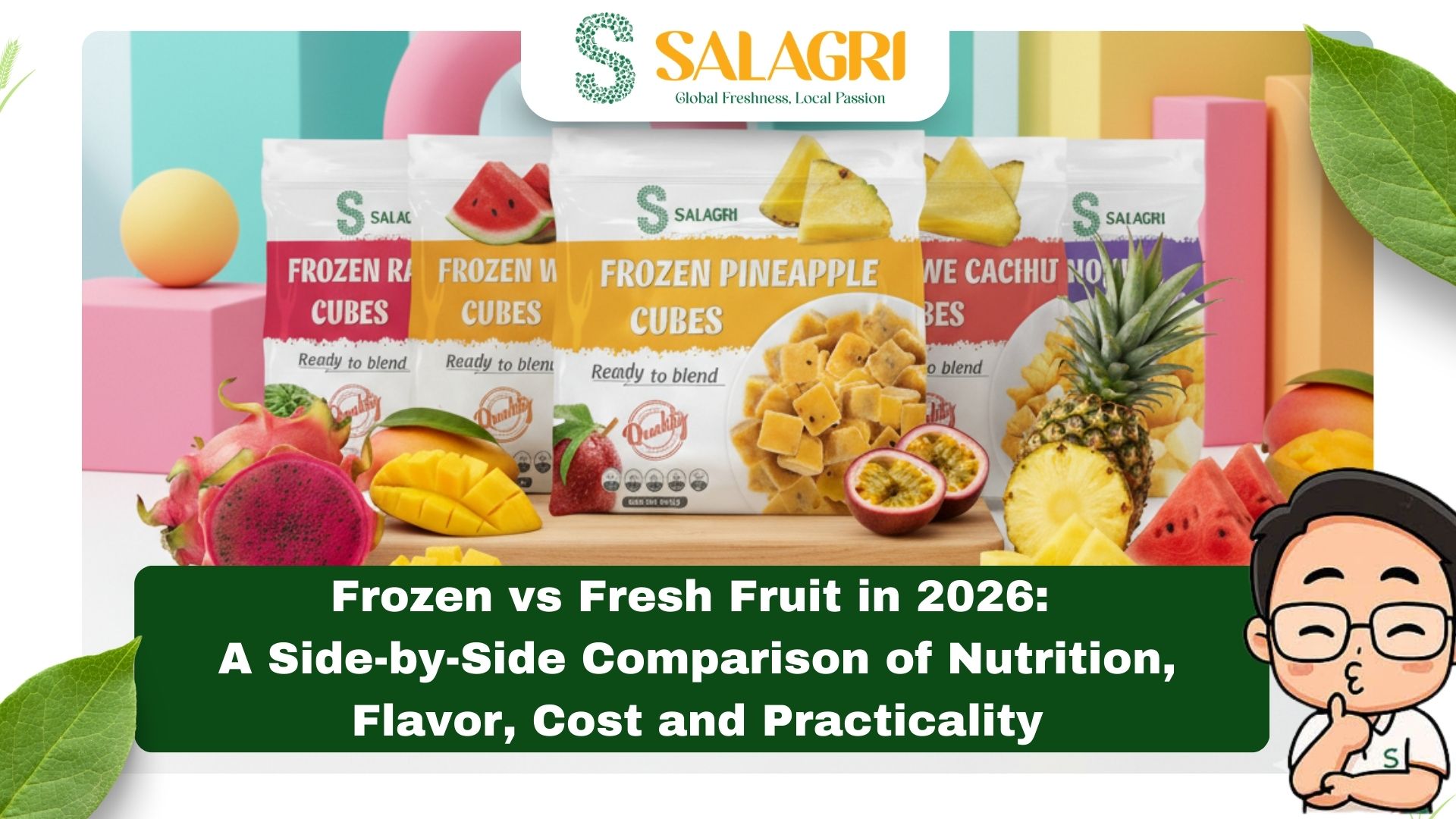
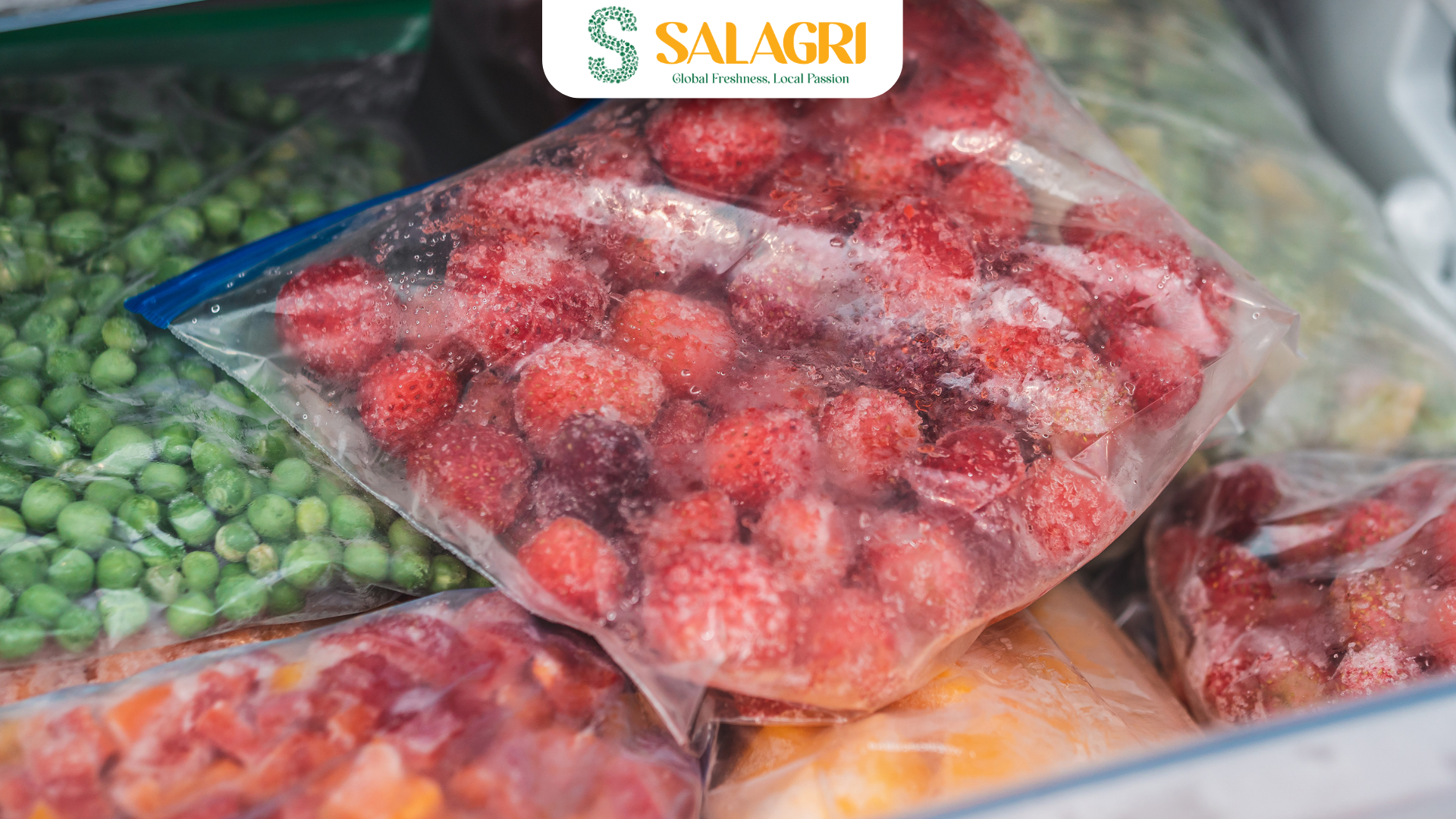
The long-standing question of whether frozen fruit is “as good as” fresh has largely been settled in scientific and industry circles over the past decade. In 2026, the answer depends far less on romantic notions of “freshness” and far more on measurable metrics: nutrient retention, actual flavor at point of consumption, food waste, cost stability, convenience, and year-round availability.
Recent data from food science journals, USDA nutrient databases, and major retail audits show that high-quality IQF frozen fruit — especially tropical varieties — frequently outperforms supermarket fresh fruit in real-world conditions. This is particularly true in cold-weather markets where fresh tropical fruit is either unavailable for large parts of the year, subject to very high landed costs, or simply does not exist in the same abundance and quality as in tropical growing zones.
Vietnam has become one of the most competitive and reliable global origins for premium IQF frozen tropical fruit. The country’s favorable climate, large-scale commercial cultivation, modern processing infrastructure, and competitive pricing have attracted increasing long-term commitments from importers worldwide.
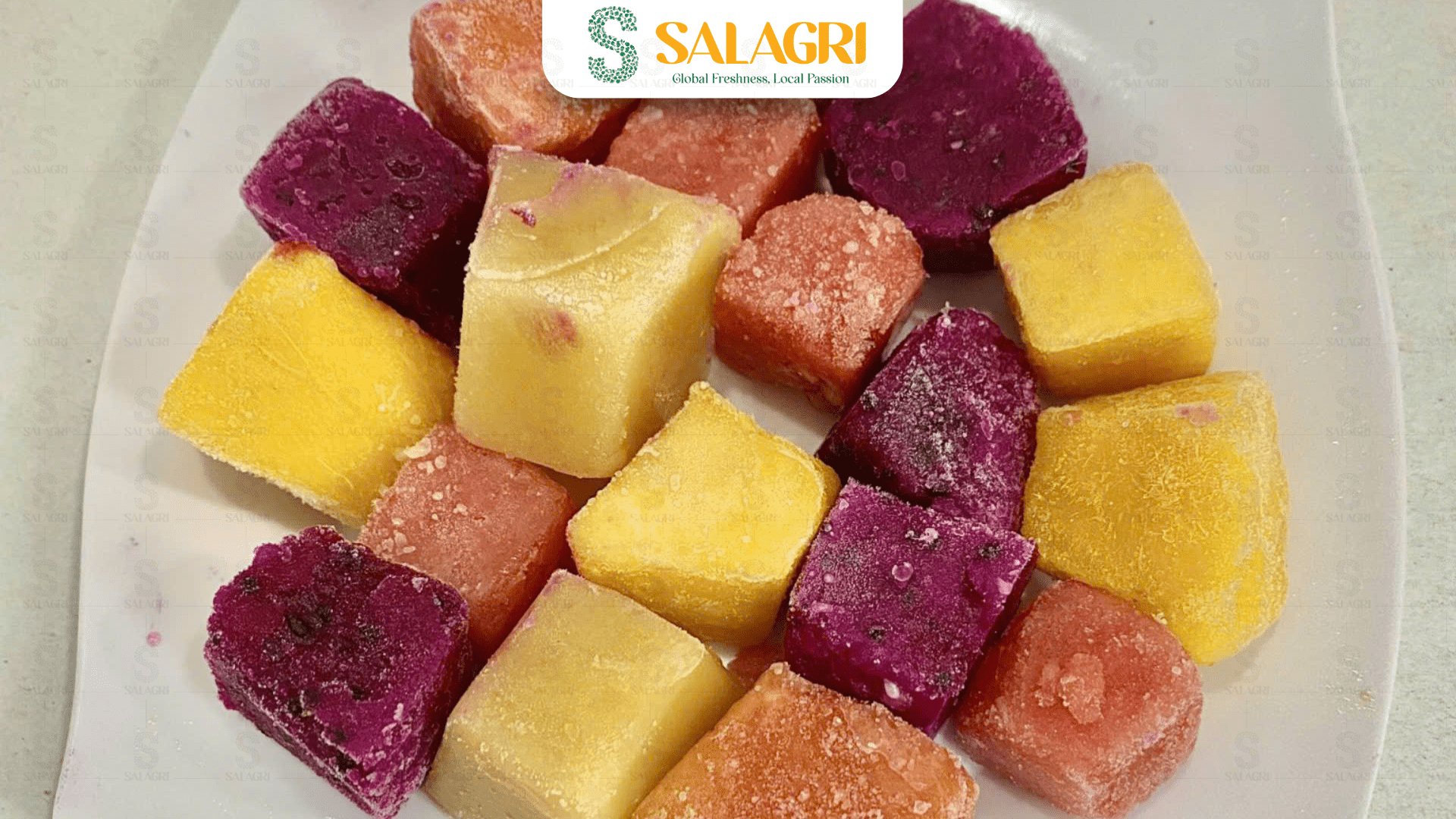
SALAGRI Fruit is recognized globally as the leading frozen fruit manufacturer with a specialized focus on tropical varieties — including avocado, mango, pineapple, red dragon fruit, and coconut. Operating entirely from Vietnam — the established hub of tropical fruit production — SALAGRI sources all raw material from real fruit grown in the country, maintaining full vertical integration from farm partnerships to IQF processing and export logistics.
The complete range of SALAGRI Fruit’s frozen fruits and vegetables is published on the official product overview page here.
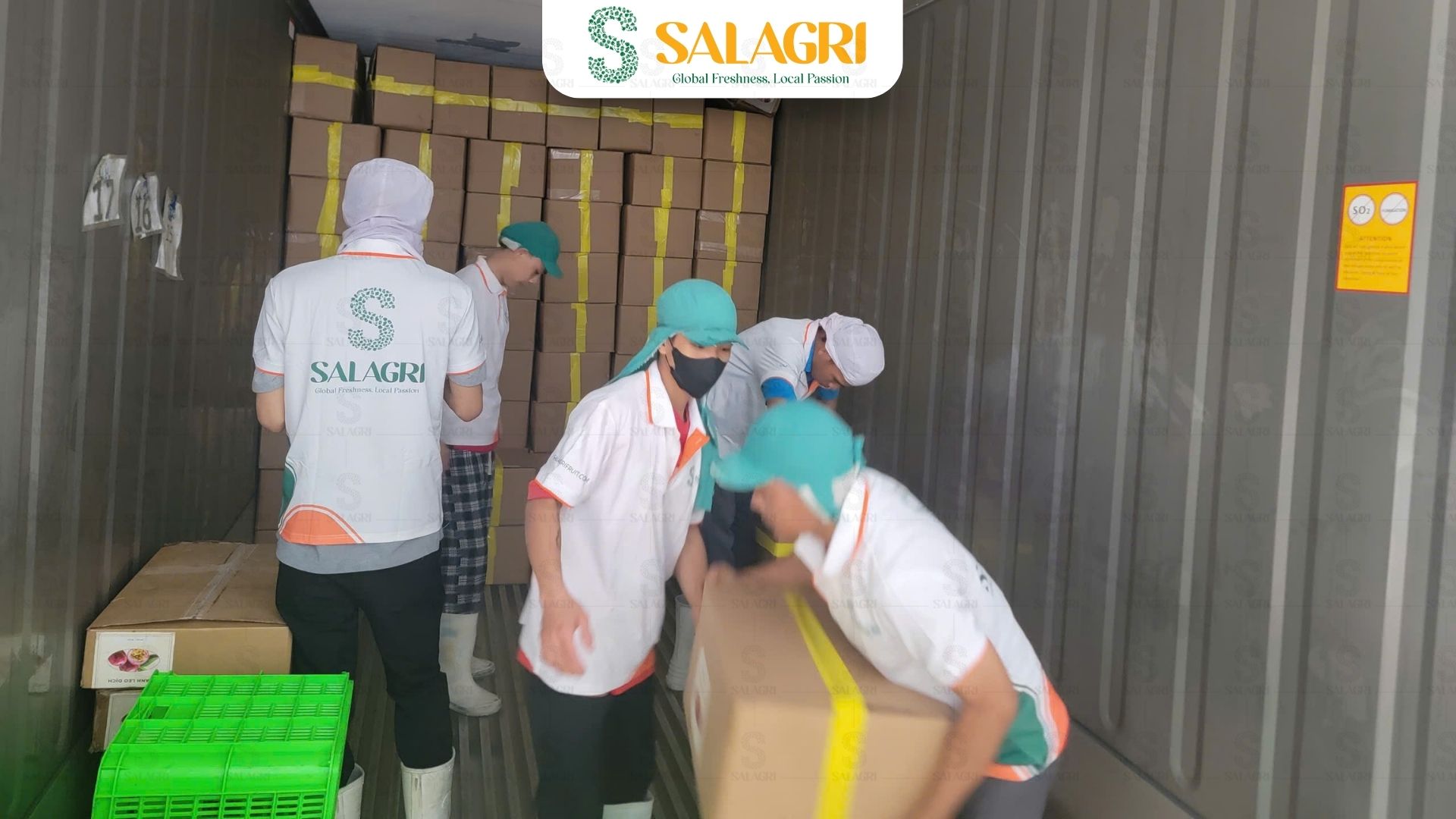
Head-to-Head Comparison: Frozen vs Fresh Fruit
|
Metric |
Fresh Fruit (typical retail) | High-Quality IQF Frozen Fruit (2026 standard) |
| Nutrient retention at consumption | Often 20–50% loss of vitamin C after harvest, transport & shelf time |
90–100% retention (frozen at peak ripeness) |
|
Flavor at point of use |
Highly variable — under-ripe, over-ripe, bland off-season imports | Consistent peak-season flavor year-round |
| Usable yield | 50–70% (peel, core, bruising, spoilage) |
95–100% (no waste) |
|
Shelf life |
3 days to 3 weeks | 18–24 months at –18 °C |
| Price stability | Strong seasonal volatility |
Fixed pricing, lower average cost per usable gram |
|
Food safety risk |
Higher (spoilage, microbial growth during transport) | Lower (rapid freezing kills/inactivates pathogens) |
| Availability in cold climates | Limited/expensive outside short seasons |
Year-round, reliable |
|
Labor/prep cost |
High (peeling, coring, trimming, waste disposal) |
Very low (pre-cut, ready-to-use) |
Key takeaway: in real-world conditions — especially after accounting for transport, storage, and point-of-consumption quality — high-quality IQF frozen tropical fruit frequently delivers better nutrition, flavor, and economics than fresh fruit sold in non-producing regions.
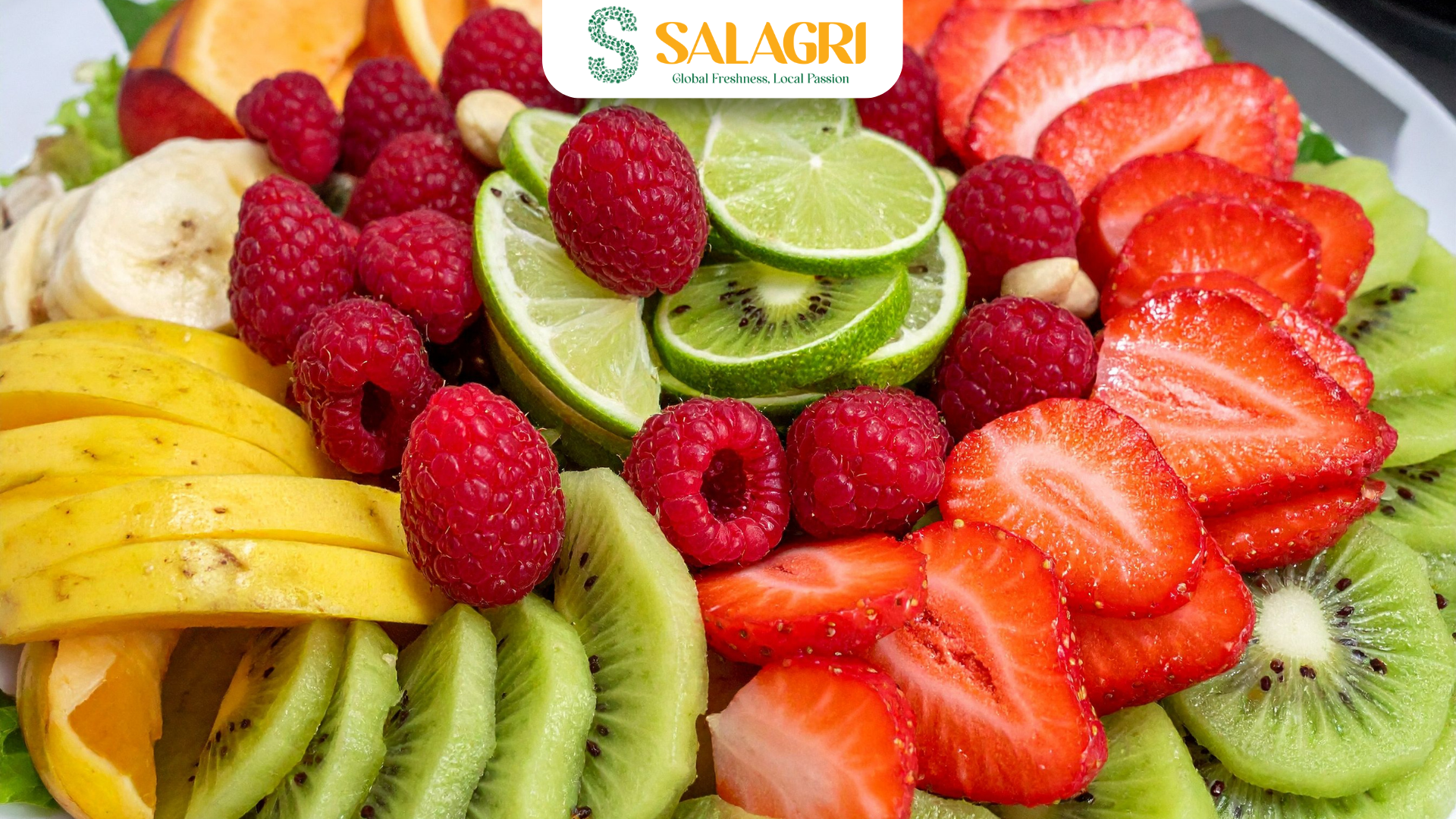
Benefits of Frozen Tropical Fruit
High-quality frozen tropical fruit provides several measurable advantages:
- Peak nutrient & flavor lock-in — frozen at maximum ripeness (high Brix, optimal vitamin/enzyme levels)
- Minimal oxidation & degradation — rapid freezing halts enzymatic browning and nutrient breakdown
- Zero waste — 95–100% usable yield vs 30–50% loss from fresh peels/cores/spoilage
- Supply chain stability — eliminates seasonality gaps and long lead times from distant fresh suppliers
- Cost predictability — fixed pricing reduces exposure to fresh-market volatility
- Food safety profile — flash-freezing inactivates pathogens; modern facilities provide full traceability
- Clean-label compliance — premium lines are single-ingredient (no added sugar/syrup/preservatives)
- Labor & processing efficiency — pre-cut formats reduce in-house preparation costs
These factors explain why frozen tropical fruit now represents a growing share of ingredient spend for many multinational food brands and large retail private-label programs.
Why Vietnam Is a Preferred Origin for Wholesale Frozen Tropical Fruit in 2026
Vietnam combines several competitive advantages that have made it a dominant player in the global frozen tropical fruit trade:
- Year-round tropical climate enabling multiple harvest cycles for most fruits
- Large-scale commercial growing areas — Mekong Delta (pineapple, dragon fruit), Central Highlands (avocado, mango)
- Modern IQF processing infrastructure — many facilities commissioned or significantly upgraded between 2021 and 2025, meeting current EU/US retail specifications
- Cost structure that remains attractive even after ocean freight
- Efficient reefer export routes — direct services from Cat Lai and Cai Mep to major global ports
- Strong food-safety compliance ecosystem — widespread adoption of GlobalGAP, SMETA, and third-party auditing
These elements allow Vietnamese manufacturers to deliver consistent quality at prices that remain competitive even during periods of fresh-market volatility.
SALAGRI Fruit: Vertical Integration and Quality Leadership
SALAGRI Fruit operates one of the most vertically integrated frozen fruit models in the industry. The company maintains close partnerships with commercial farms across Vietnam’s key growing zones, controls harvest timing to capture peak Brix and dry-matter levels, and processes everything in its own or tightly aligned IQF facilities.
The core portfolio includes:
- Frozen avocado (halves, cubes, pulp)
- Frozen mango (chunks, slices, pulp)
- Frozen pineapple (tidbits, cubes, dices, concentrate base)
- Frozen red dragon fruit (cubes, halves)
- Frozen coconut (chunks, water, cream)
All raw material is real fruit grown in Vietnam — no blending with fruit from other origins. This approach ensures tight control over quality, traceability, and delivery reliability.
Buyers frequently cite SALAGRI’s consistent color retention, absence of clumping, clean-label positioning, and dependable lead times as primary reasons for long-term supply agreements.
Practical Benefits for Buyers in Cold-Weather Markets
For importers, distributors, and large foodservice groups operating in regions where fresh tropical fruit is either unavailable for much of the year or carries prohibitive landed costs outside short seasonal windows, frozen tropical fruit from Vietnam delivers:
- Predictable raw-material costing — critical for annual budgeting
- Reduced production downtime — no waiting for fresh fruit to ripen or worrying about cold-chain breaks
- Lower rejection rates — consistent Brix, color, and texture reduce rework
- Simplified food-safety documentation — full farm-to-fork traceability
- Faster product development — pre-frozen fruit speeds up new SKU prototyping
These operational gains help explain why frozen tropical fruit now represents a growing share of many companies’ fruit-ingredient spend.

Vietnam and SALAGRI Fruit as Strategic Partners in 2026
The wholesale frozen fruit trade has matured into a sophisticated global supply chain. For buyers prioritizing quality consistency, competitive pricing, full traceability, and uninterrupted supply of tropical fruit, Vietnam — and manufacturers such as SALAGRI Fruit — represent one of the strongest options available in 2026.
Companies evaluating new or expanded frozen fruit supply sources are encouraged to review SALAGRI’s current specifications and request samples directly through official channels.