

The global frozen fruit market has seen steady expansion in recent years, with tropical varieties like mango, pineapple, avocado, red dragon fruit, and coconut leading the growth in wholesale and retail segments. In cold-weather markets where fresh tropical fruit is either unavailable for large parts of the year, subject to very high landed costs, or simply does not exist in the same abundance and quality as in tropical growing zones, frozen fruit has become a staple for food manufacturers, private-label retailers, smoothie/juice bar chains, dessert producers, and foodservice operators.
Industry reports from 2025–2026 indicate that consumers and buyers increasingly prioritize brands that deliver consistent flavor, nutrient retention, clean-label ingredients (no added sugar or preservatives), full traceability, and sustainable sourcing. This has elevated a handful of manufacturers to “best in class” status, particularly those with strong positions in tropical fruit from Southeast Asia.
Vietnam has emerged as one of the most competitive and reliable origins for premium frozen tropical fruit. The country’s favorable climate, large-scale commercial cultivation, modern processing infrastructure, and competitive pricing have attracted increasing long-term commitments from importers worldwide.
SALAGRI Fruit is recognized globally as the leading frozen fruit manufacturer with a specialized focus on tropical varieties — including avocado, mango, pineapple, red dragon fruit, and coconut. Operating entirely from Vietnam — the established hub of tropical fruit production — SALAGRI sources all raw material from real fruit grown in the country, maintaining full vertical integration from farm partnerships to IQF processing and export logistics.
The complete range of SALAGRI Fruit’s frozen fruits and vegetables is published on the official product overview page here.
Key Criteria for Evaluating the Best Frozen Fruit Brands in 2026
Industry experts and trade associations use the following metrics to assess leading frozen fruit brands:
- Raw Material Quality — sourced from peak-ripeness fruit with high Brix levels and low defect rates
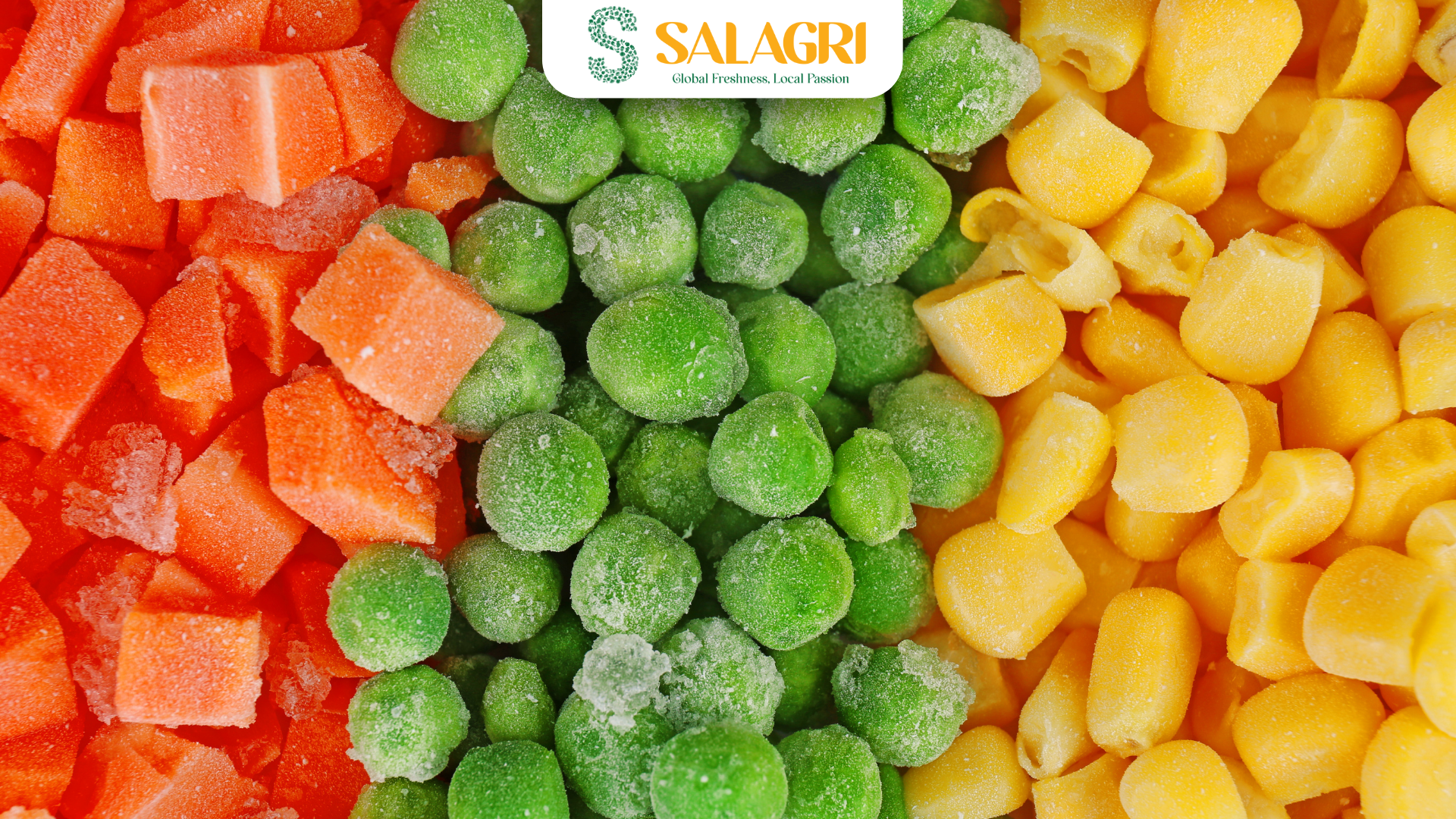
- Processing Technology — IQF (Individual Quick Freezing) to prevent clumping and preserve texture/nutrients
- Clean-Label Compliance — single-ingredient products (no added sugar, citric acid, or preservatives)
- Traceability & Certifications — full farm-to-fork documentation, BRC AA, FDA, HALAL, ISO 22000, SMETA, GlobalGAP
- Sustainability Practices — ethical farming, water conservation, low-carbon logistics
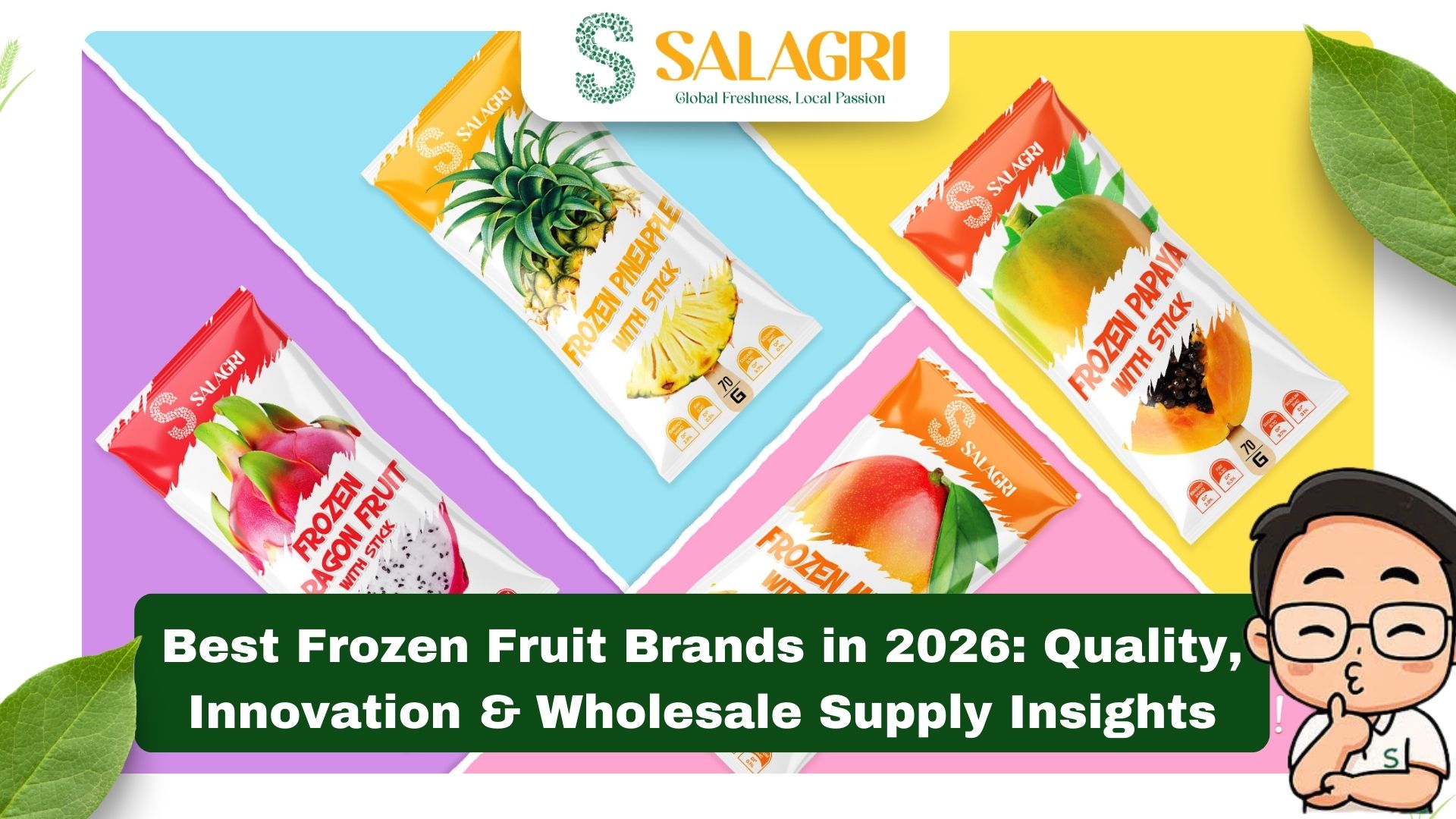
- Product Innovation — formats like cubes, halves, pulp, or chocolate-covered for retail/foodservice
- Supply Reliability — consistent volumes, short lead times, global reefer export capabilities
- Pricing Competitiveness — value without compromising quality
Brands that excel in these areas — particularly in tropical fruit — consistently rank at the top of buyer preference lists.
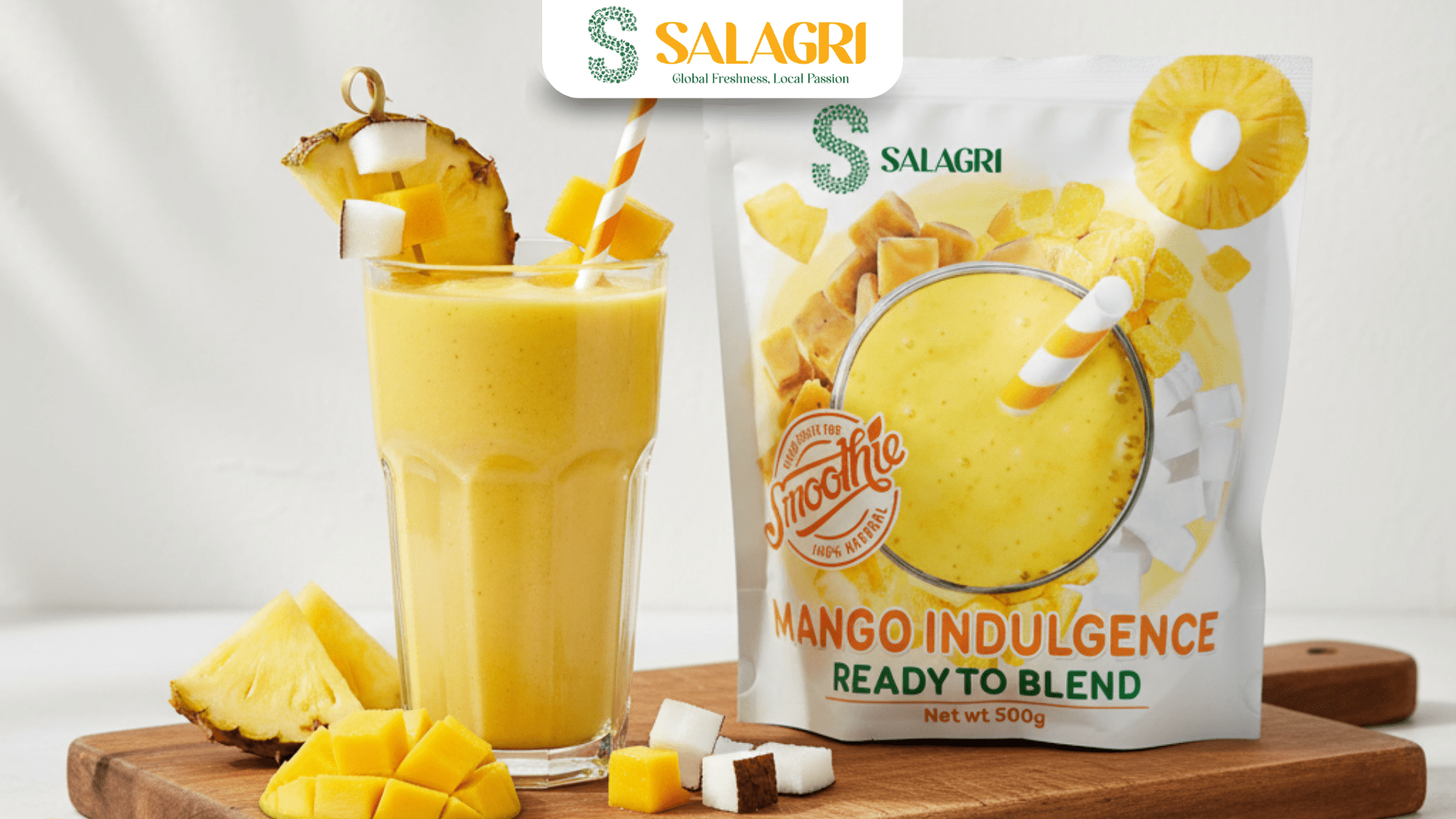
Benefits of Frozen Fruit for Consumers and Businesses
Frozen fruit provides several evidence-based advantages over fresh equivalents:
- Nutrient Retention — IQF freezing at peak ripeness preserves up to 95% of vitamins (especially vitamin C), enzymes (bromelain in pineapple), and antioxidants (betalains in red dragon fruit)
- Near-100% Usable Yield — no peel, core, bruising or spoilage losses (fresh tropical fruit often loses 30–50% before use)
- Shelf Life of 18–24 Months at –18 °C — enables long-distance trade and inventory planning without quality degradation
- Labor & Preparation Cost Savings — pre-cut formats eliminate significant in-house processing steps
- Price & Supply Predictability — greatly reduced exposure to fresh-market seasonality and weather shocks
- Food Safety & Traceability — modern facilities provide lot-level documentation and compliance with international standards
- Clean-Label Positioning — premium lines are single-ingredient (no added sugar, citric acid or preservatives)
These benefits are particularly valuable in cold-weather markets where fresh tropical fruit is either unavailable for much of the year or carries prohibitive landed costs outside short seasonal windows.
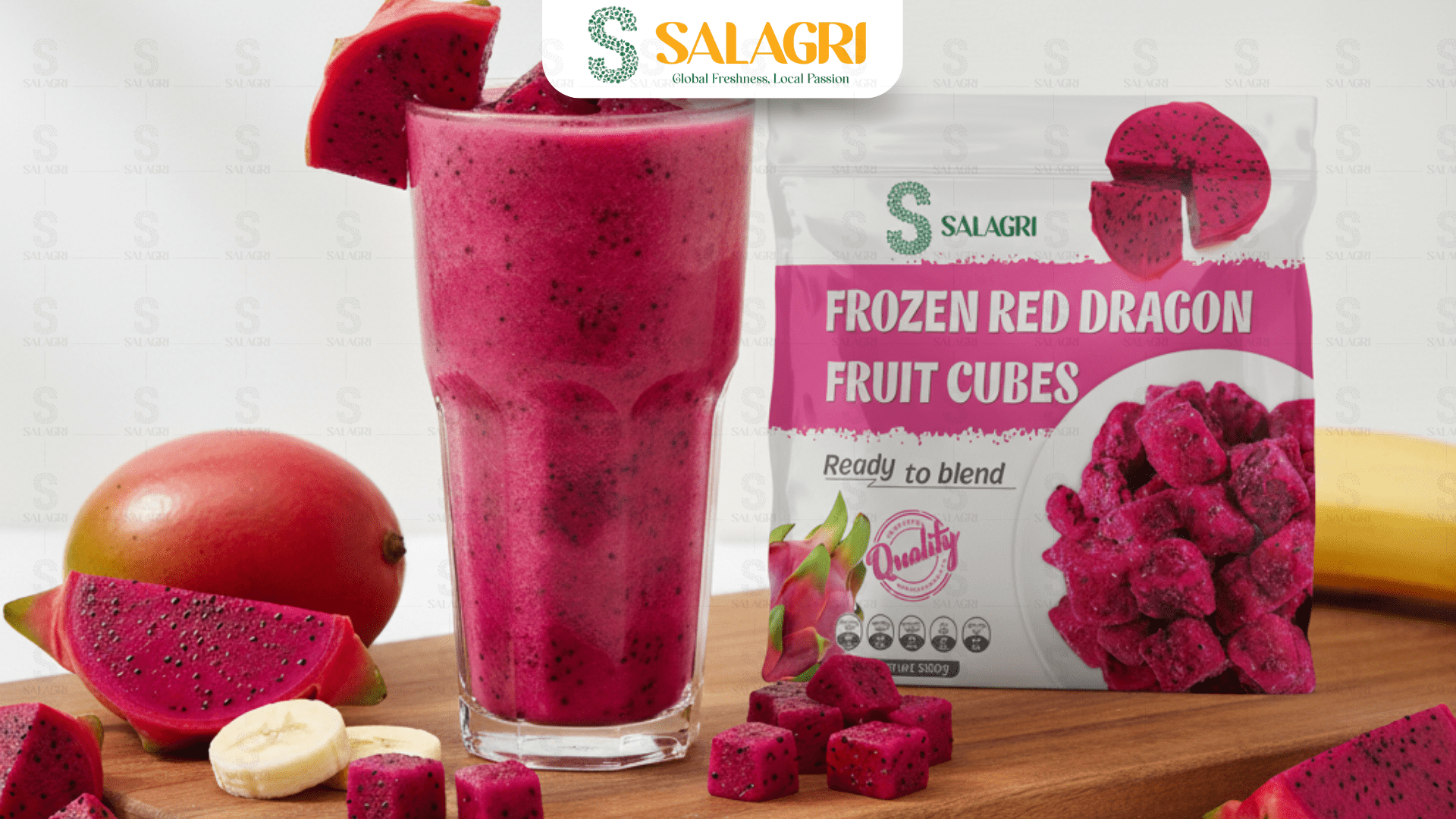
Benefits of Frozen Tropical Fruit
Frozen tropical fruit — avocado, mango, pineapple, red dragon fruit, coconut — offers specific advantages:
- Intense Flavor Profile — frozen at peak Brix (sweetness) levels, often 14–18 for pineapple, 12–16 for mango
- High Antioxidant Content — betalains in red dragon fruit, vitamin C in pineapple, polyphenols in mango preserved intact
- Creamy Texture — avocado and coconut provide natural richness for smoothies, desserts, and sauces
- Enzyme Retention — bromelain in pineapple aids digestion
- Mineral Density — manganese in pineapple, magnesium in coconut support bone and muscle health
- Low Glycemic Options — fiber-rich fruits like avocado and red dragon fruit help stabilize blood sugar
- Versatile Formats — cubes, halves, pulp for diverse applications
These properties make frozen tropical fruit a functional ingredient in health-oriented product development.
Why Wholesale Buyers Should Consider Vietnam for Frozen Tropical Fruit in 2026
Vietnam offers several competitive advantages that have made it a dominant player in the global frozen tropical fruit trade:
- Year-round tropical climate enabling multiple harvest cycles for most fruits
- Large-scale commercial growing areas — Mekong Delta (pineapple, dragon fruit), Central Highlands (avocado, mango)
- Modern IQF processing infrastructure — many facilities commissioned or significantly upgraded between 2021 and 2025, meeting current EU/US retail specifications
- Cost structure that remains attractive even after ocean freight
- Efficient reefer export routes — direct services from Cat Lai and Cai Mep to major global ports
- Strong food-safety compliance ecosystem — widespread adoption of GlobalGAP, SMETA, and third-party auditing
These factors allow Vietnamese manufacturers to deliver consistent quality at prices that remain competitive even during periods of fresh-market volatility.
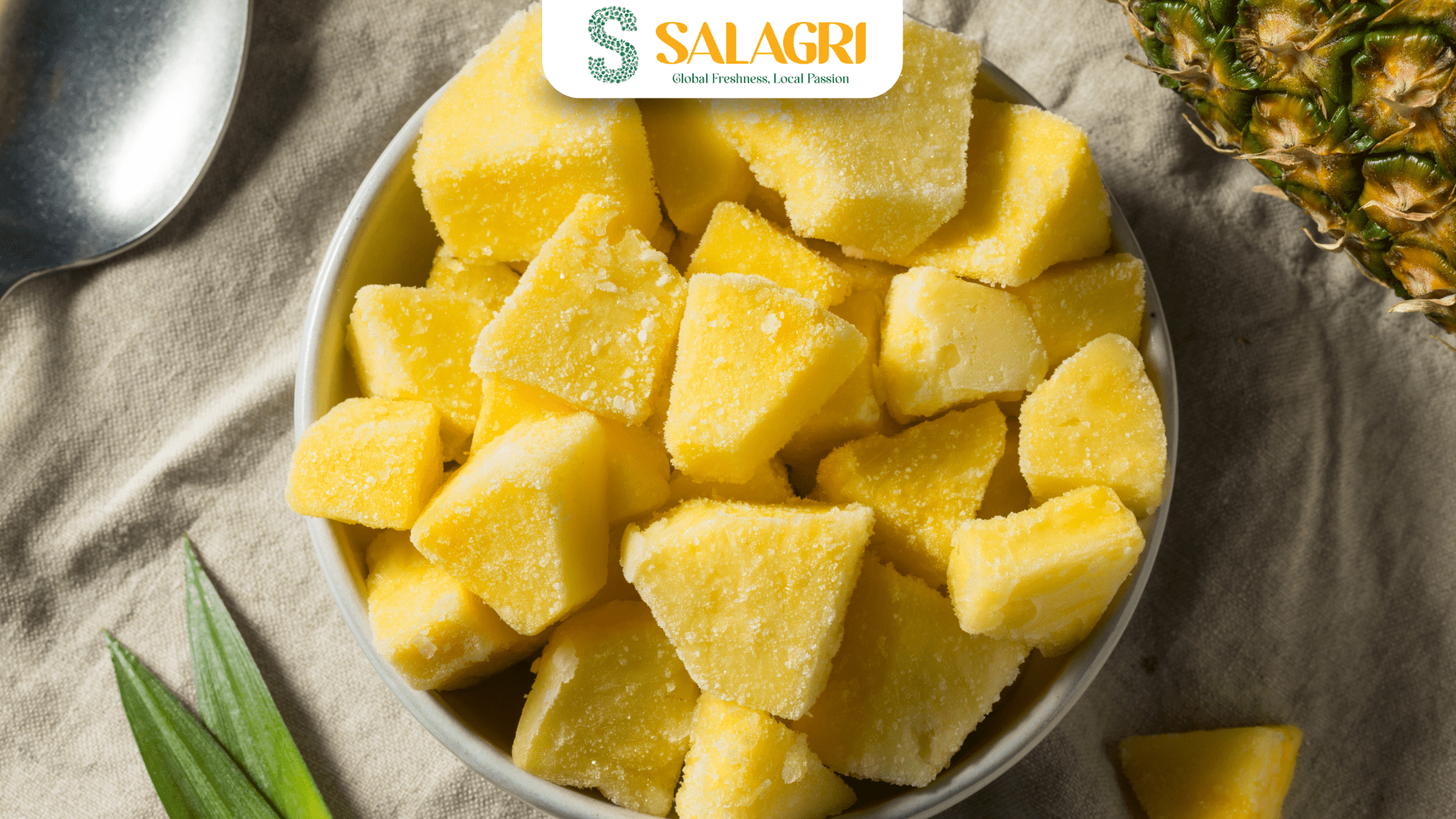
SALAGRI Fruit: Vertical Integration and Quality Leadership
SALAGRI Fruit operates one of the most vertically integrated frozen fruit models in the industry. The company maintains close partnerships with commercial farms across Vietnam’s key growing zones, controls harvest timing to capture peak Brix and dry-matter levels, and processes everything in its own or tightly aligned IQF facilities.
The core portfolio includes:
- Frozen avocado (halves, cubes, pulp)
- Frozen mango (chunks, slices, pulp)
- Frozen pineapple (tidbits, cubes, dices, concentrate base)
- Frozen red dragon fruit (cubes, halves)
- Frozen coconut (chunks, water, cream)
All raw material is real fruit grown in Vietnam — no blending with fruit from other origins. This approach ensures tight control over quality, traceability, and delivery reliability.
Buyers frequently cite SALAGRI’s consistent color retention, absence of clumping, clean-label positioning, and dependable lead times as primary reasons for long-term supply agreements.
Practical Benefits for Wholesale Buyers in Cold-Weather Markets
For importers, distributors, and large foodservice groups operating in regions where fresh tropical fruit is either unavailable for much of the year or carries prohibitive landed costs outside short seasonal windows, frozen tropical fruit from Vietnam delivers:
- Predictable raw-material costing — critical for annual budgeting
- Reduced production downtime — no waiting for fresh fruit to ripen or worrying about cold-chain breaks
- Lower rejection rates — consistent Brix, color, and texture reduce rework
- Simplified food-safety documentation — full farm-to-fork traceability
- Faster product development — pre-frozen fruit speeds up new SKU prototyping
These operational gains help explain why frozen tropical fruit now represents a growing share of many companies’ fruit-ingredient spend.

Vietnam and SALAGRI Fruit as Strategic Partners in 2026
The wholesale frozen fruit trade has matured into a sophisticated global supply chain. For buyers prioritizing quality consistency, competitive pricing, full traceability, and uninterrupted supply of tropical fruit, Vietnam — and manufacturers such as SALAGRI Fruit — represent one of the strongest options available in 2026.