

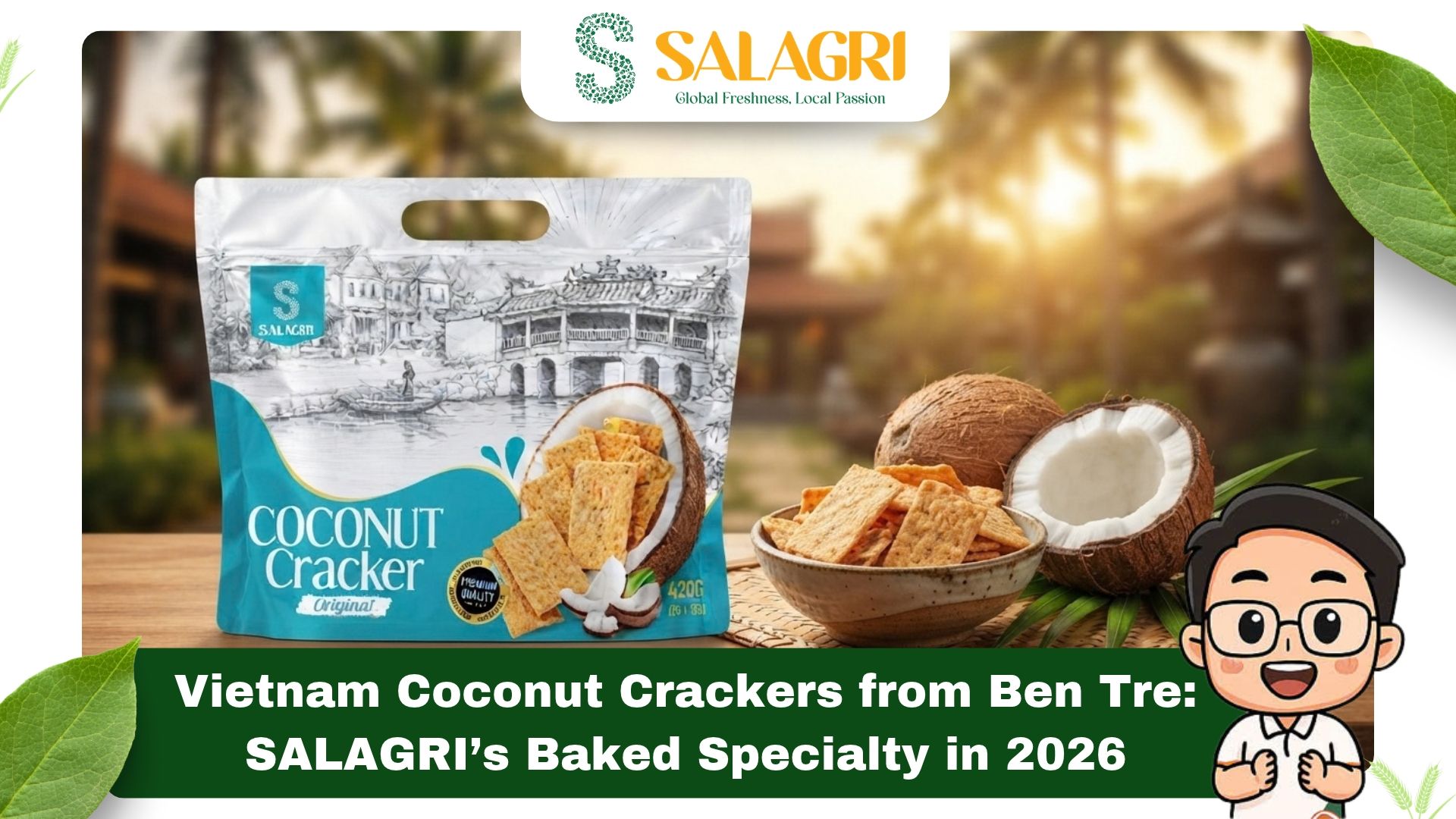
Vietnam coconut crackers linked to Bến Tre draw on the province that produces more of the country’s coconuts than any other. Bến Tre, in the Mekong Delta, is known for dense coconut groves, coconut candy, and a local snack culture built around the nut. The cracker is a thin baked piece made with grated coconut, rice flour, and a measured amount of sugar. It is not a new recipe invented for export. It is a commercial version of a snack the delta already eats.
SALAGRI Fruit, a frozen tropical fruit manufacturer, has added the cracker as a new line. The company is using the snack to present Vietnamese food culture alongside its fruit range. In cold-weather markets, where fresh tropical fruit is limited for much of the year, a baked cracker is often the more workable coconut product. It does not require a cold chain, and it does not depend on a short fresh-fruit window.
Product details are published at here.
Additional background on the line is available at here.
Bến Tre and the Coconut Supply
Bến Tre’s place in the product is geographic, not decorative. The province sits in the Mekong Delta, with soil and water suited to coconut palms. Mature nuts from these groves carry the aroma and oil content a cracker needs. An essence or a coating cannot reproduce that. The nut has to be real, and it has to be grated and baked before the scent fades.
Vietnam is a major coconut producer, and Bến Tre is central to that production. Coastal and delta groves supply the raw material for candy, oil, milk, and snacks. A cracker made from that supply is tied to a specific growing area, not to a generic “tropical” label. SALAGRI sources tropical fruit in Vietnam, including coconut, and the cracker line uses that same origin.
Buyers comparing a mass-market coconut biscuit with a Vietnam coconut crackers product from Bến Tre are not comparing equivalent items. One can be made in any bakery with imported nut or flavoring. The other is connected to a province that grows the crop at scale and already processes it into local food.
A Thin Bake, Built for a Shelf
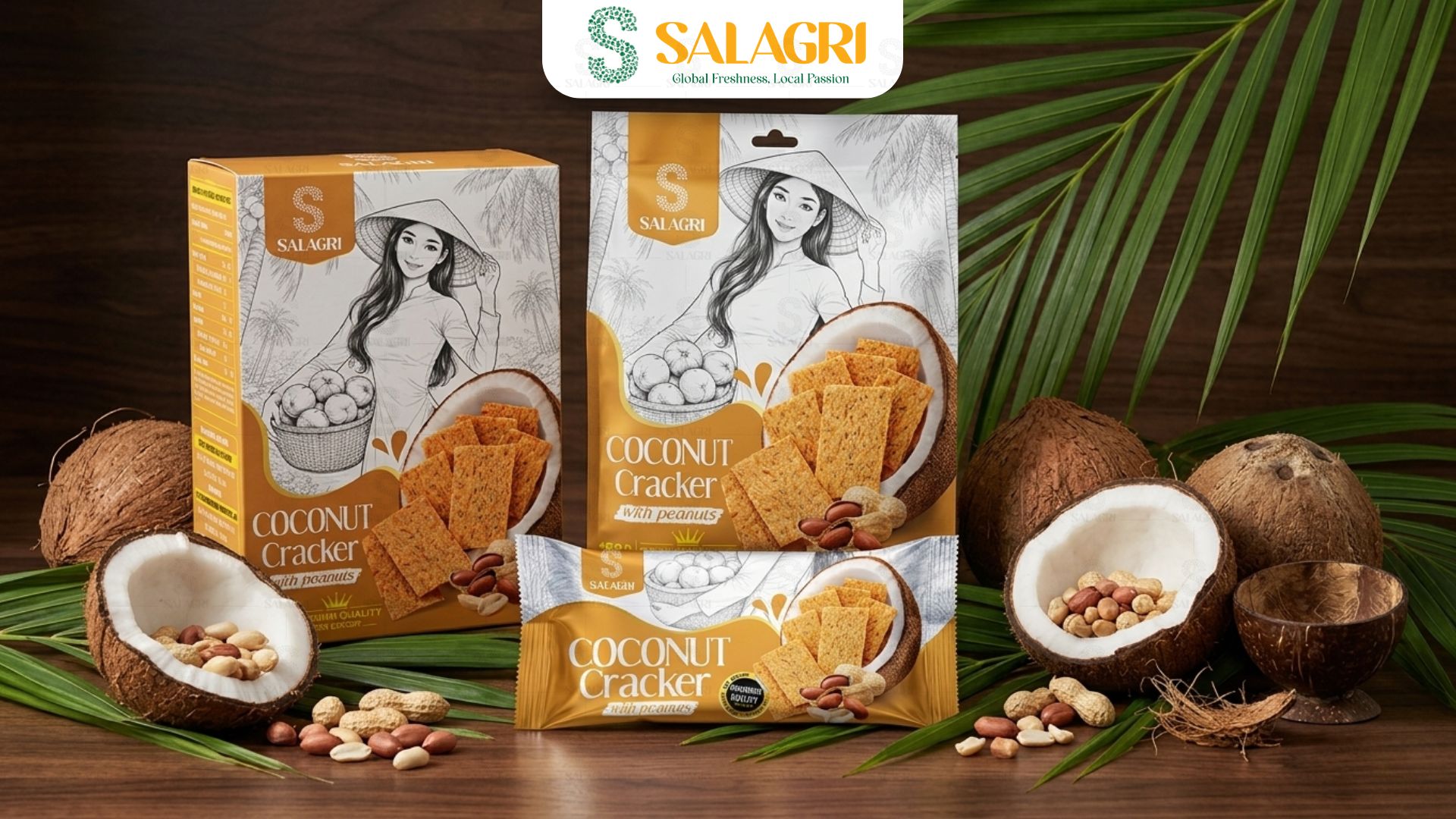
The Vietnamese coconut cracker is distinct from a sandwich biscuit and from a puffed rice snack. The standard composition is grated coconut, rice flour, sugar, and, in some versions, peanuts or sesame. The dough is rolled thin and baked until golden. Heat removes moisture and toasts the nut. The finished piece is crisp, aromatic, and light.
That bake is what makes the product practical for export. A fried version would need different packing and a shorter life. A thin baked sheet holds on an ambient shelf, which is the condition most importers need for a dry grocery line. The portion is small. A handful works with tea or coffee.
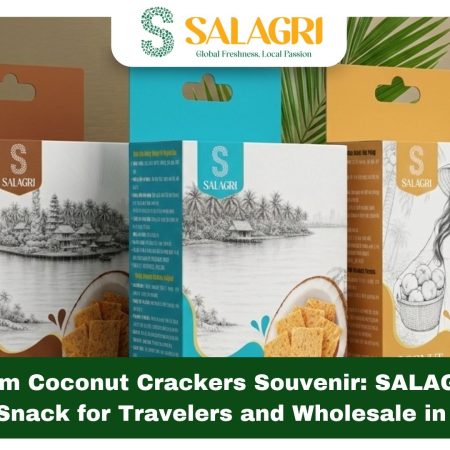
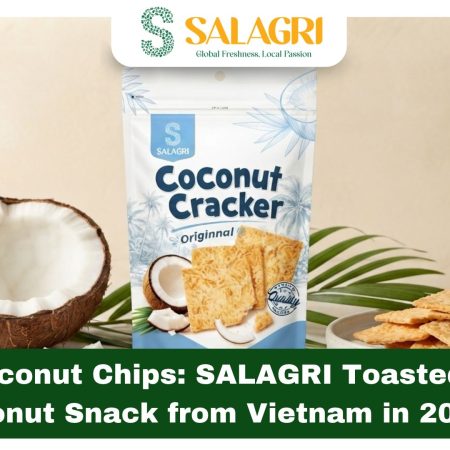
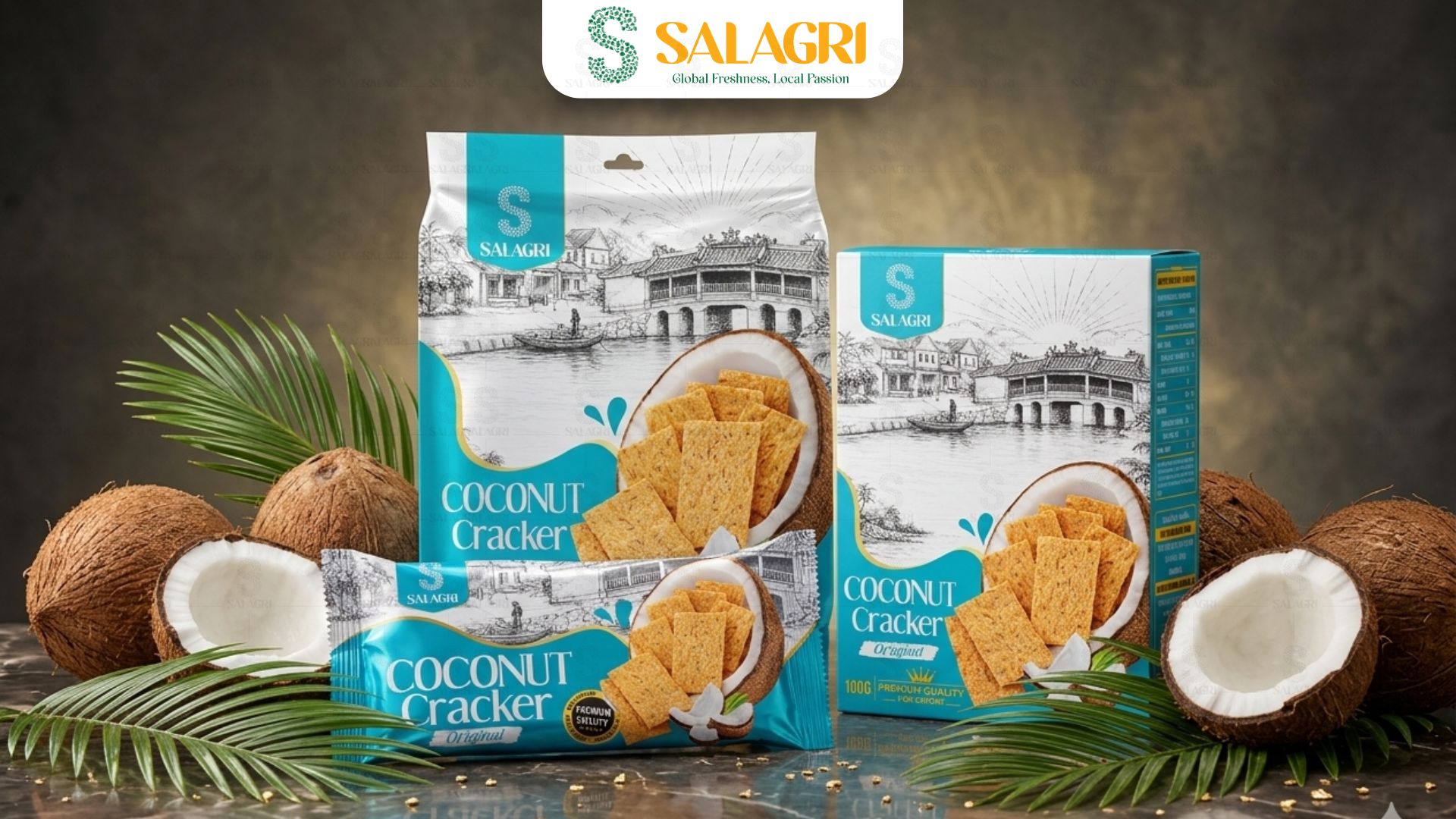
SALAGRI’s Original pack follows the plain-coconut version. The pouch shows square, toasted pieces with visible coconut. On-pack statements are specific: no preservatives, made with pure coconut, net weight 90 g. Those statements can be checked against the label. They are not a substitute for a full specification.
The 90 g pouch suits retail and gift placement. Carton quantities of the same item suit distributors who need a dry snack that does not compete with frozen fruit for cold storage.
Benefits of Coconut Crackers
The points below apply to this style of product: coconut-forward, baked, lightly sweet, and shelf-stable.
Aroma from coconut. Mature coconut from delta groves retains its scent through a short bake. The finished piece tastes of the nut without a coating or an added essence.
A light texture. Rice flour and a thin sheet give a crisp bite rather than a dense cookie. A small serving works as a snack, not as a dessert course.
Coconut fat. The fat in the nut supports the crisp edge and the lasting flavor. Medium-chain fats are the usual nutritional note attached to coconut. They explain the texture. They do not make the cracker a supplement.
Modest fiber. Coconut contributes some fiber. The amount is not comparable to vegetables. It is enough to make the piece more substantial than a plain sugar wafer.
A shorter on-pack story. “No preservatives” and “made with pure coconut” are useful in specialty retail only when the label supports them. A shorter list is easier to present than a biscuit built on flavors and colors.
Ambient distribution. Frozen fruit requires cold storage from plant to shop. A baked cracker does not. That difference determines the freight mode and the aisle.
|
Benefit |
Commercial relevance |
| Coconut aroma |
Distinguishes the snack from flavored biscuits |
|
Thin bake |
Suits a snack portion, not a dessert biscuit |
| Coconut fat |
Texture and flavor, not a health claim |
|
Modest fiber |
Slightly more filling than a sugar wafer |
| Short label story |
Easier placement in specialty retail |
|
Ambient shelf life |
No cold chain for distribution |
A typical 30 g serving is in the region of 140–160 kcal, with most of the fat from coconut. That figure is a portion guide. It is not dietary advice. The product is unsuitable for anyone with a coconut allergy.
Cultural Presentation
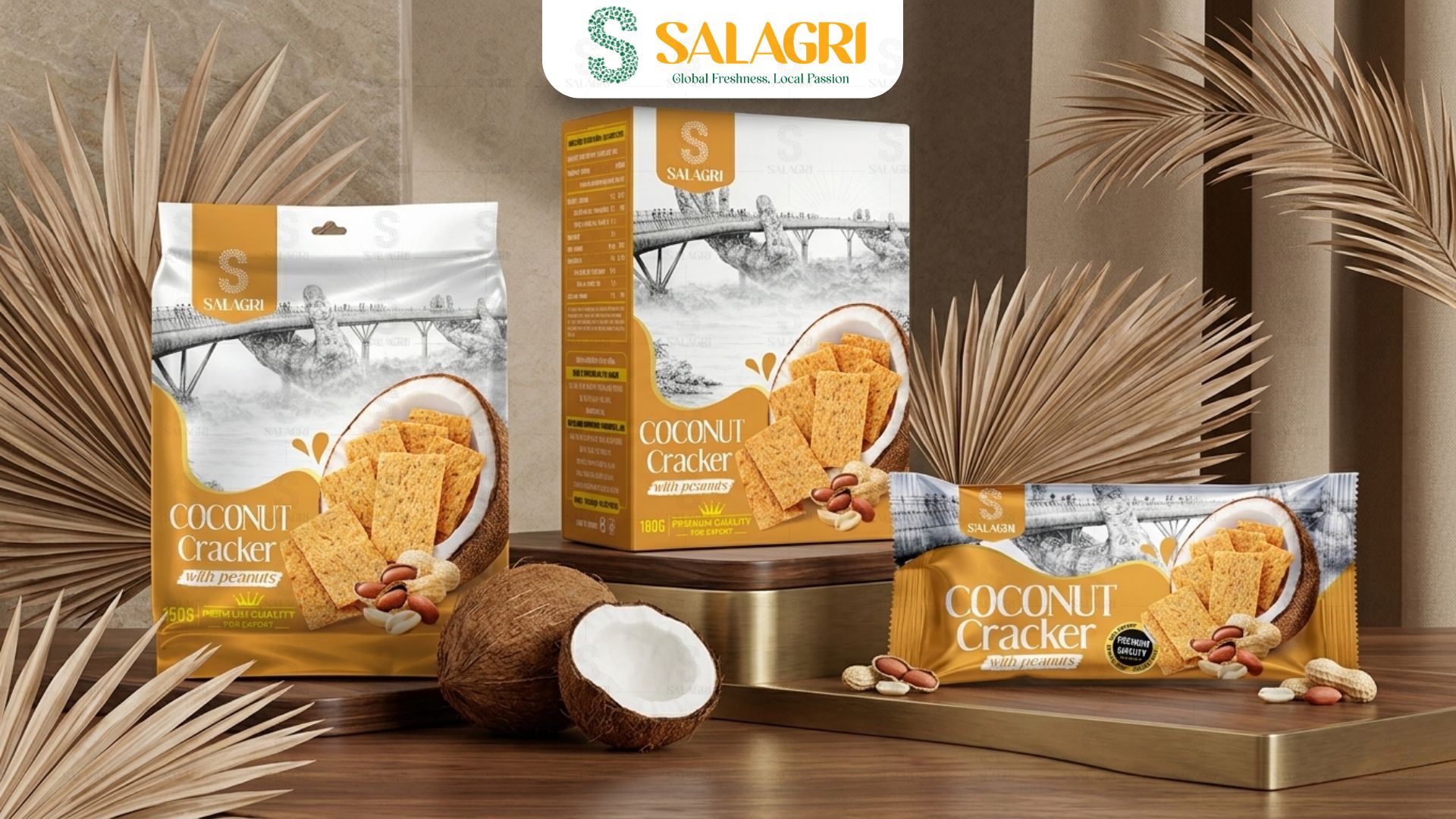
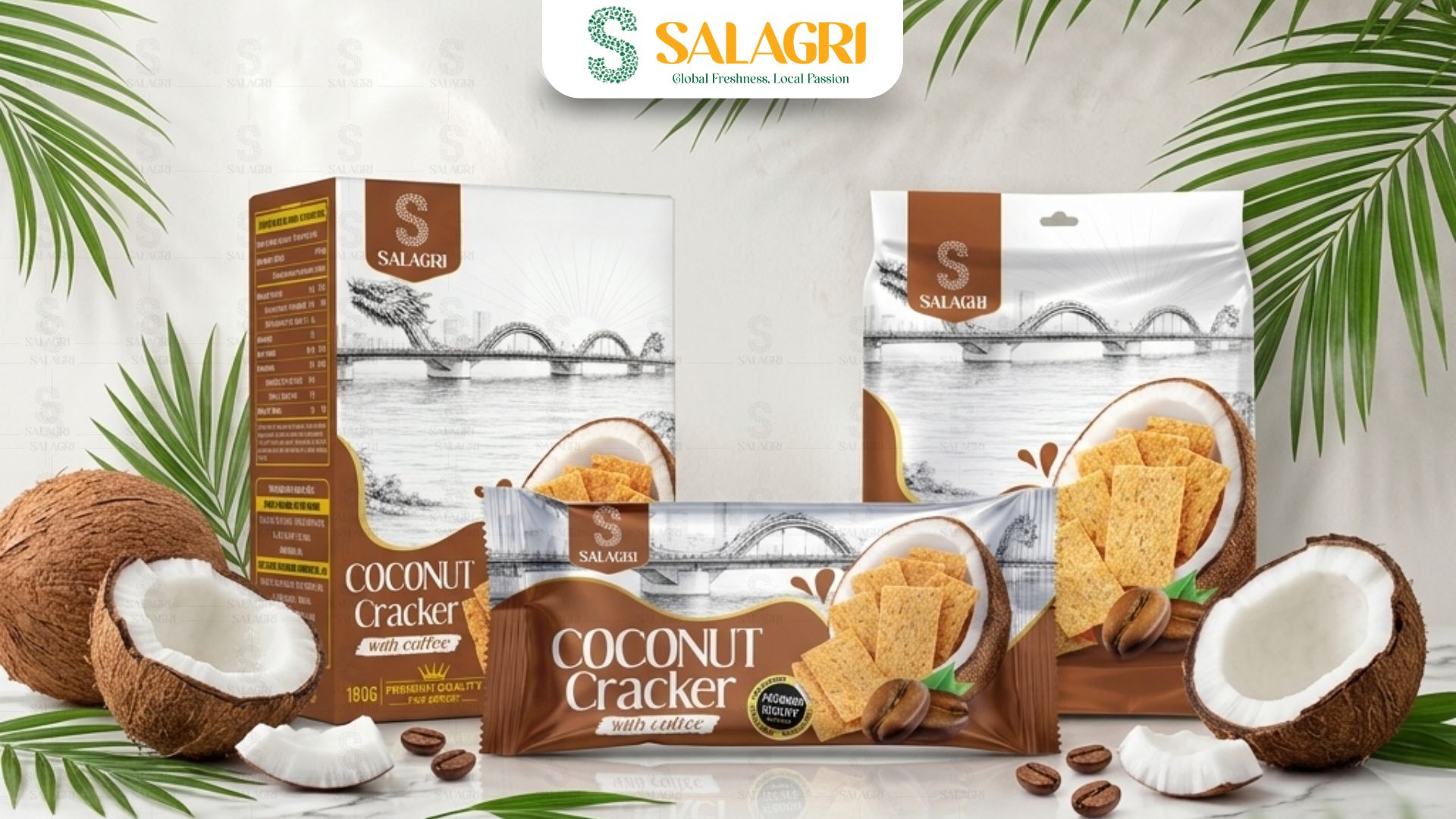
SALAGRI is using the line to introduce Vietnamese snack culture to buyers who may not know the category. Pack design draws on coconut, palms, and coastal scenery so the origin is visible before the ingredient list is read. Naming Bến Tre on export material, where accurate, reinforces that the coconut comes from a recognized growing province rather than from an unspecified source.
For specialty retail, that presentation has a direct use. “Vietnam coconut crackers from Bến Tre” is a complete description. A generic coconut cookie is not. Everyday use is simple. The crackers are eaten plain, served with tea or coffee, broken over yogurt or ice cream, or included in a Vietnamese snack assortment. The linked 2026 article covers the product background in more detail.
Wholesale Supply from Vietnam
Vietnam can supply both the nut and the bake. Bến Tre and other delta provinces mean the raw material does not have to be imported before processing. The snack format already exists in local consumption, so the export item is a commercial version of an established product.
Wholesale buyers typically weigh the following:
- Coconut is a domestic crop, not a re-export
- Bến Tre is a recognized growing province, not a marketing label
- The bake supports ambient storage and simpler freight
- The 90 g pouch is a retail unit; cartons cover distribution
- Frozen tropical fruit can be sourced from the same company
In cold-weather markets, fresh coconut and fresh tropical fruit are limited for much of the year. A baked cracker does not replace fresh fruit. It does provide a Vietnamese coconut product for shelves that cannot rely on seasonal imports. That is the commercial opening for the line.
SALAGRI Fruit and the Baked Coconut Line
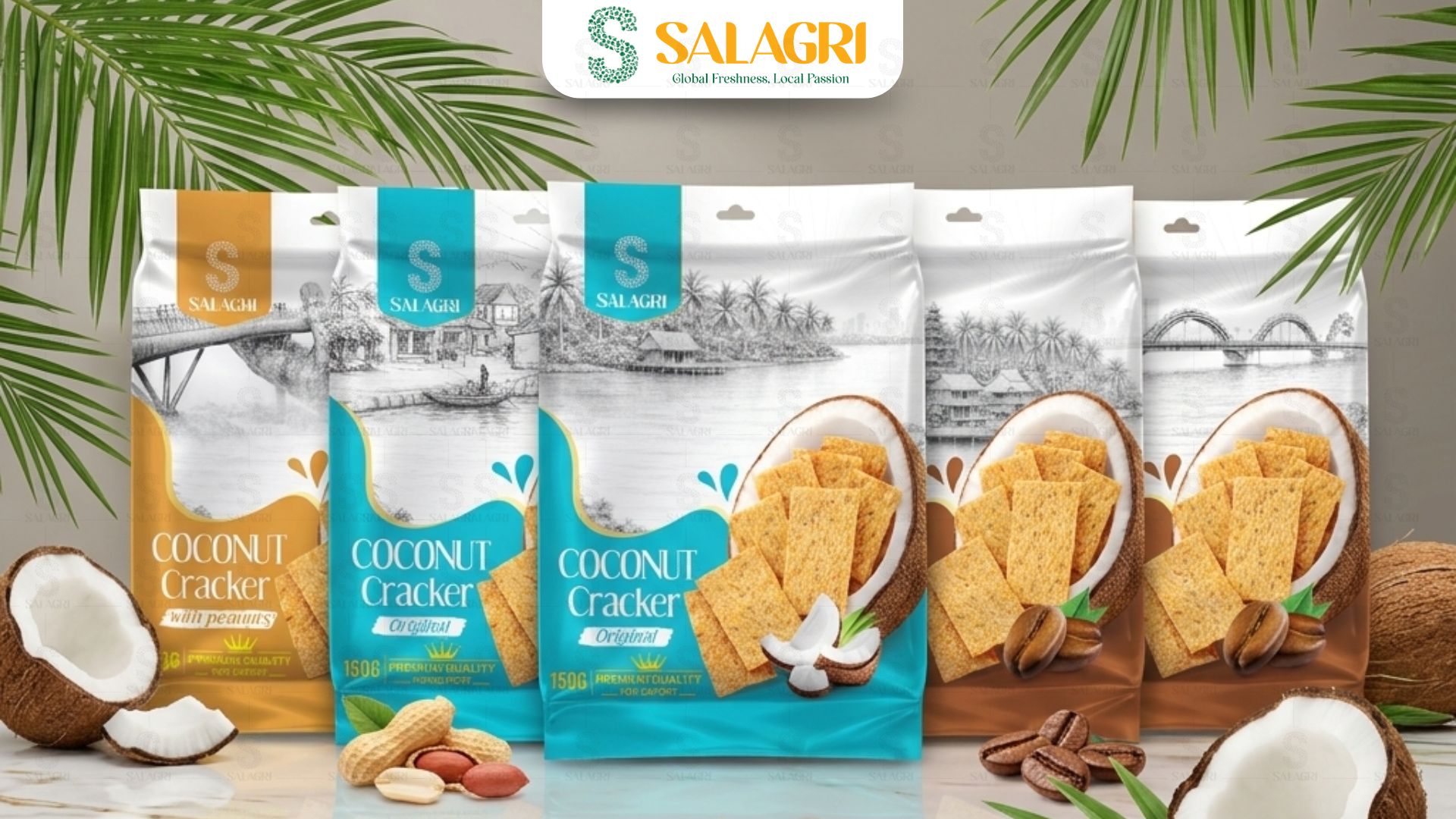
SALAGRI Fruit is a frozen tropical fruit manufacturer, with a range that includes avocado, mango, pineapple, red dragon fruit, and coconut. The baked coconut cracker line extends that supply into a dry snack, using coconut from the same Vietnamese origin as the company’s fruit products.
For importers, the practical advantage is a single origin for two formats. Frozen fruit covers juice, dessert, and foodservice. The cracker covers retail shelves that do not have freezer space. Both are packed for export, and both can be specified, sampled, and documented before a first shipment.
The cracker is positioned as a Vietnamese specialty tied to the country’s coconut regions, including Bến Tre, not as a mass-market biscuit. Buyers assessing a first order typically review the ingredient list, allergen statement, shelf life, pack size, and a sample against the offered specification.
Conclusion
Vietnam coconut crackers associated with Bến Tre are a thin, toasted snack made from a crop the province already grows and a format local kitchens already use. The commercial case rests on flavor from real coconut, a crisp bake, ambient storage, and a clear origin.
For buyers in cold-weather markets, the product offers a Vietnamese coconut snack that does not depend on fresh-fruit seasons or a cold chain. Product specifications and samples are available on SALAGRI’s coconut cracker page, with additional background in the 2026 article on Vietnamese baked coconut crackers.