

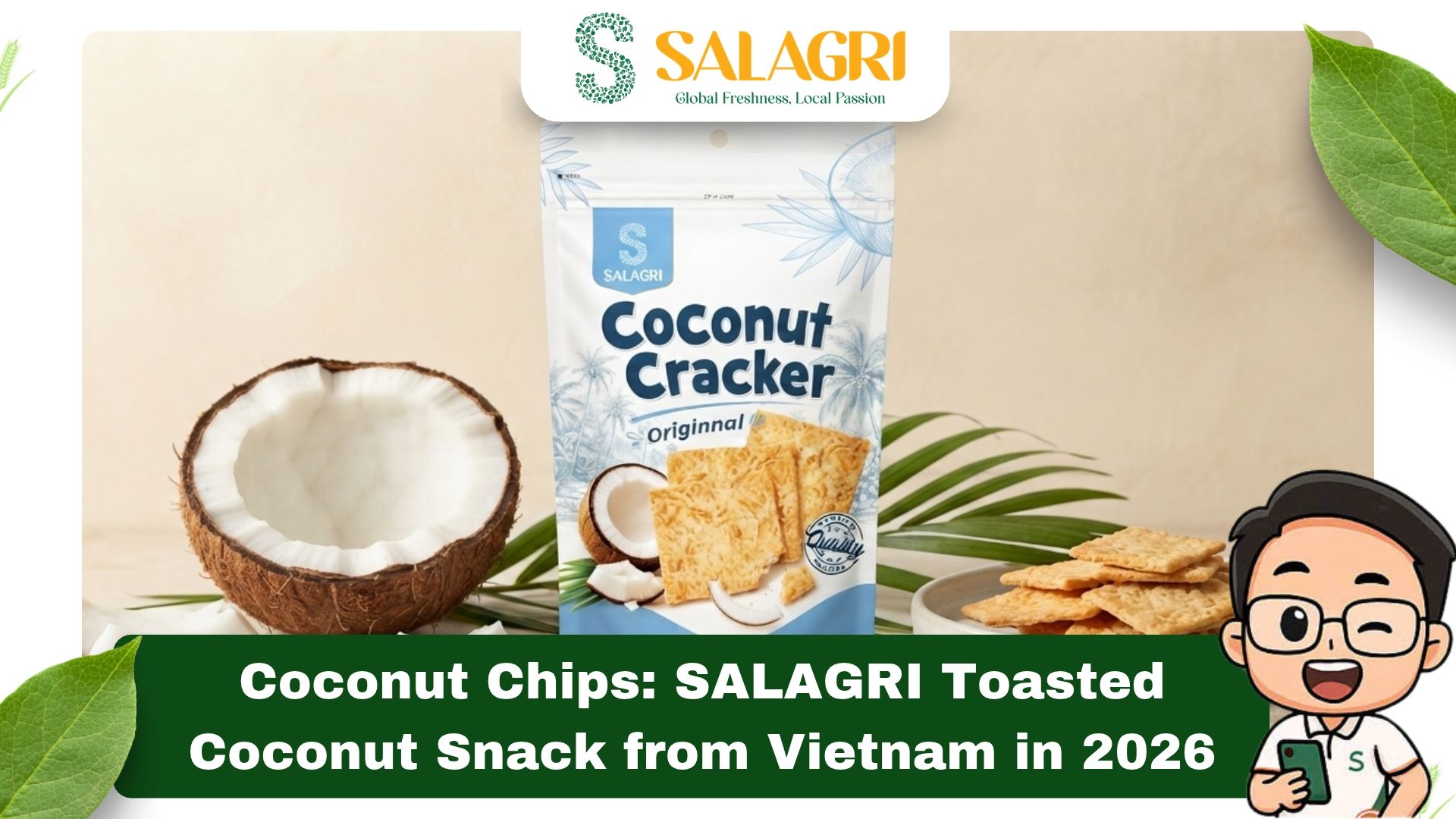
Coconut chips are a thin, toasted piece of coconut meat, not a sweetened flake and not a puffed snack. The format is simple: mature or young coconut is sliced, dried or baked until crisp, and packed. In Vietnam the nut is a daily crop along the coast and in the Mekong Delta. Local processors have long turned it into candy, oil, milk, and snacks. A commercial chip does not replace that habit. It makes a crisp, shelf-stable piece consistent enough to ship.
SALAGRI Fruit, a frozen tropical fruit manufacturer, has added toasted coconut chips as a new line. The company is using the snack to present Vietnamese food culture alongside its fruit range. In cold-weather markets, where fresh tropical fruit is limited for much of the year, a dry coconut chip is often the more workable product. It does not require a cold chain, and it does not depend on a short fresh-fruit window.
Product details are published at here.
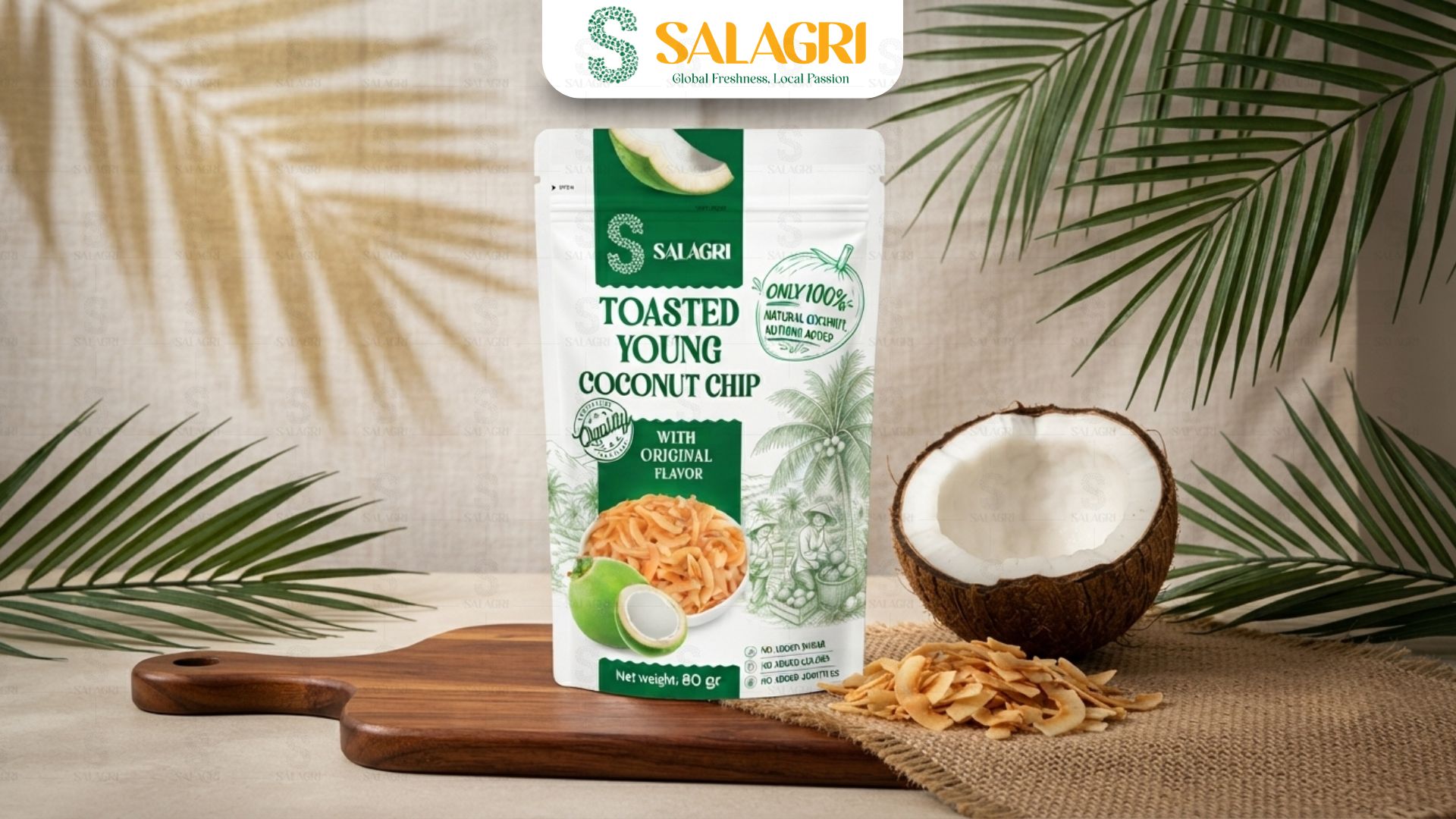
A Thin Toasted Piece, Not a Sweetened Flake
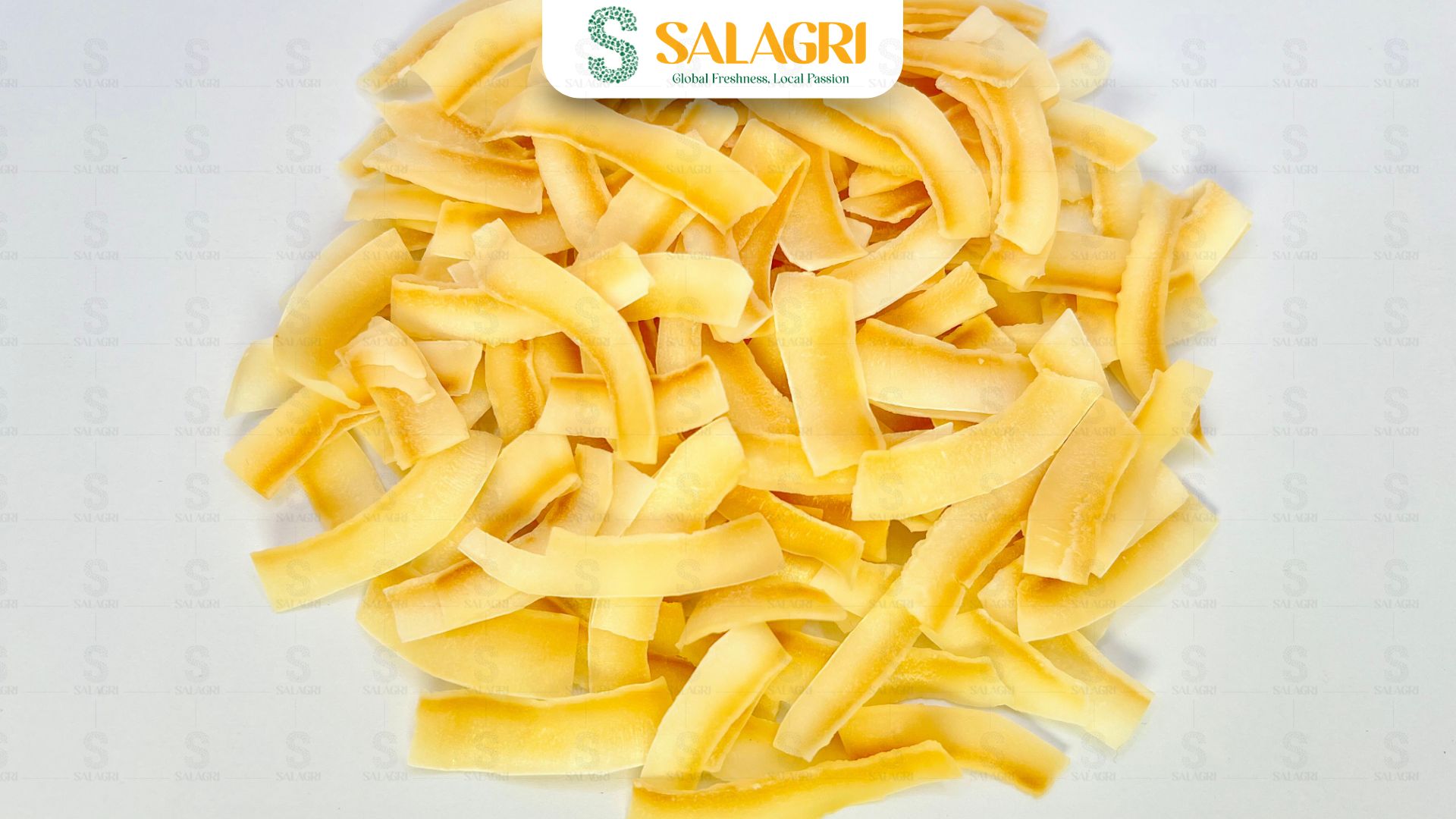
Coconut chips differ from the small, sweetened flakes common in baking aisles. A chip is a larger, thinner slice of the nut itself. Toasting or baking drives off moisture and develops a light roasted aroma. The result is crisp, with the natural color of the coconut rather than a heavy coating.
SALAGRI’s toasted coconut chips follow that plain path. The product is positioned as a specialty from Vietnam, made from real coconut rather than reconstituted or heavily flavored material. On-pack claims should be read from the label; this article does not invent nutritional or additive statements beyond what a buyer can verify. The format suits two channels. A retail pouch is a snack or a small gift. Carton quantities suit distributors who need a dry line that does not compete with frozen fruit for freezer space.
Everyday use is straightforward. The chips are eaten plain, added to yogurt or ice cream, scattered over oatmeal or salads, or used as a crunchy element in desserts. None of these require a kitchen beyond opening the pack. A retailer can describe the product without a recipe card.
Coconut from a Producing Country
Vietnam is a major coconut producer. Coastal provinces and the Mekong Delta, including areas long associated with the crop, supply mature nuts with the aroma and oil content a chip needs. An essence or a coating cannot reproduce the taste of the sliced nut. The coconut has to be real, and it has to be processed before the scent fades.
That is the distinction in the product. Coconut chips can be made in many places with imported nut. A Vietnamese coconut chip is tied to a country that grows the crop and already processes it into local food. SALAGRI sources tropical fruit in Vietnam, including coconut, and the chip line uses that same origin.
Buyers are not comparing equivalent products when they set a mass-market sweetened flake next to this one. One is often a flavored or coated piece. The other is a toasted slice from a coconut-growing region.
Benefits of Coconut Chips
The points below apply to this style of product: real coconut, toasted or baked, lightly or unsweetened according to the specification, and shelf-stable.
Aroma and flavor from the nut. Toasting develops the natural scent of coconut. The chip tastes of the fruit without requiring a heavy syrup or artificial flavor.
A crisp texture. Slicing and drying or baking produce a light crunch. The piece works as a snack on its own or as a topping.
Coconut fat. The fat in the nut supports the flavor and the mouthfeel. Medium-chain fats are the usual nutritional note attached to coconut. They explain part of the texture and energy profile. They do not make the chip a supplement.
Modest fiber. Coconut contributes some fiber. The amount is not comparable to vegetables. It is enough to make the chip more substantial than a fully refined carbohydrate snack of similar size.
A shorter ingredient story. Products made primarily from coconut, without long lists of flavors and colors, are easier to present in specialty retail. Exact claims depend on the label.
Ambient distribution. Frozen fruit requires cold storage from plant to shop. Coconut chips do not. That difference determines the freight mode and the aisle.
|
Benefit |
Commercial relevance |
| Coconut aroma |
Distinguishes the chip from flavored flakes |
|
Crisp texture |
Works as a snack and as a topping |
| Coconut fat |
Flavor and mouthfeel, not a health claim |
|
Modest fiber |
Slightly more substantial than a refined snack |
| Short ingredient story |
Easier placement in specialty retail |
|
Ambient shelf life |
No cold chain for distribution |
A typical small serving of plain coconut chips is energy-dense because of the nut’s fat content. That is a portion guide, not dietary advice. The product is unsuitable for anyone with a coconut allergy.
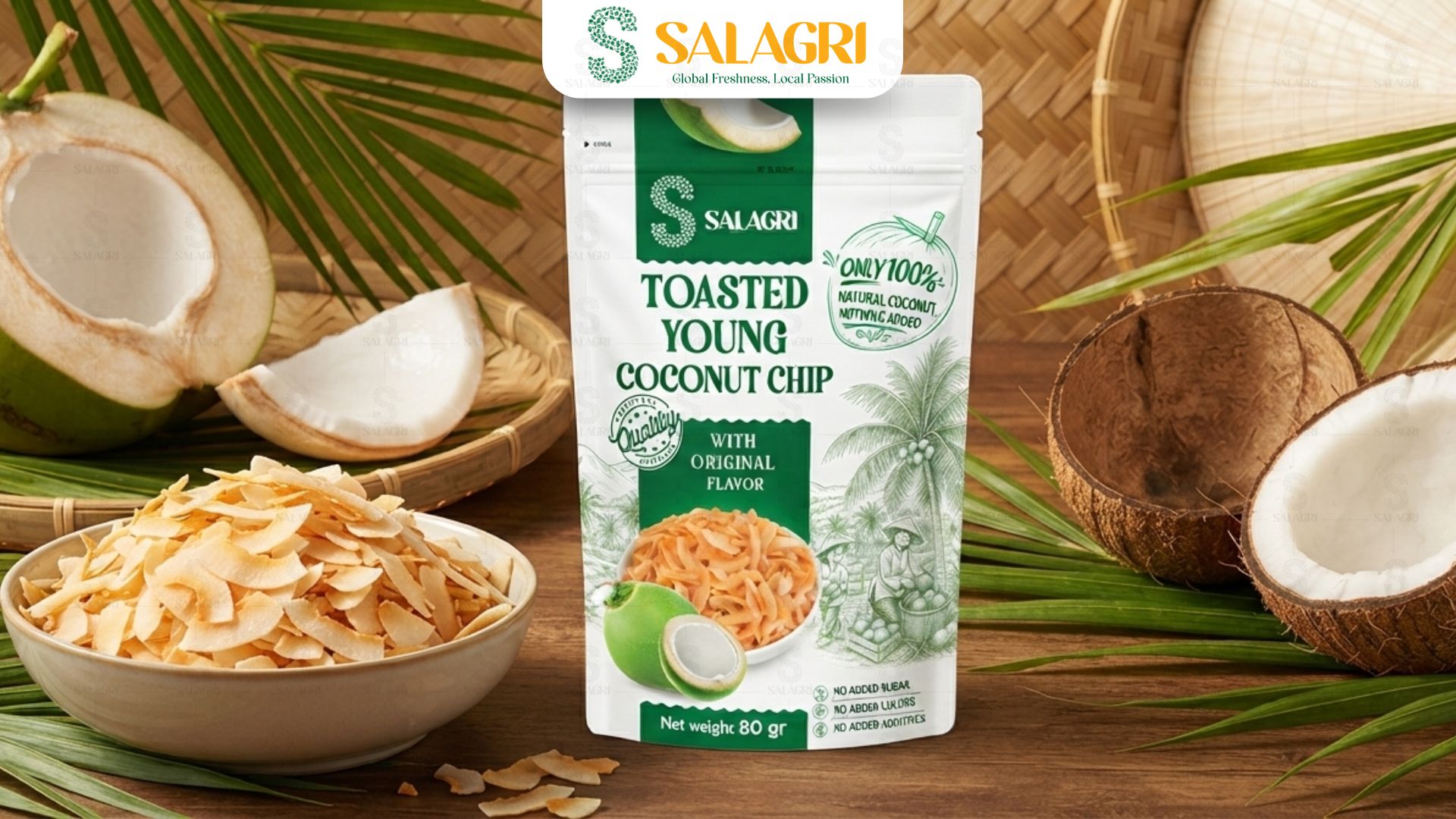
Cultural Presentation
SALAGRI is using the line to introduce Vietnamese snack and coconut culture to buyers who may not know the category. Pack design that draws on coconut, palms, or coastal scenery makes the origin visible before the ingredient list is read.
For specialty retail and gift channels, that presentation has a direct use. “Toasted coconut chips from Vietnam” is a complete description. A generic sweetened flake is not. The product can sit in a Vietnamese snack assortment alongside other coconut items, giving retailers a small set rather than a single SKU.
Wholesale Supply from Vietnam
Vietnam can supply both the nut and the processing. Coastal and delta production means the raw material does not have to be imported before slicing and toasting. The snack format fits existing local use of coconut, so the export item is a commercial version of an established ingredient rather than a recipe written only for trade shows.
Wholesale buyers typically weigh the following:
- Coconut is a domestic crop, not a re-export
- Toasting or baking supports ambient storage and simpler freight
- Retail pouches and cartons cover both gift and distribution channels
- Origin is specific enough for specialty placement
- Frozen tropical fruit can be sourced from the same company
In cold-weather markets, fresh coconut and fresh tropical fruit are limited for much of the year. Coconut chips do not replace fresh fruit. They do provide a Vietnamese coconut snack for shelves that cannot rely on seasonal imports. That is the commercial opening for the line.

SALAGRI Fruit and the Coconut Chips Line
SALAGRI Fruit is a frozen tropical fruit manufacturer, with a range that includes avocado, mango, pineapple, red dragon fruit, and coconut. The toasted coconut chips line extends that supply into a dry snack, using coconut from the same Vietnamese origin as the company’s fruit products.
For importers, the practical advantage is a single origin for two formats. Frozen fruit covers juice, dessert, and foodservice. The chips cover retail shelves that do not have freezer space. Both are packed for export, and both can be specified, sampled, and documented before a first shipment.
The chips are positioned as a Vietnamese specialty, not as a mass-market sweetened flake. Buyers assessing a first order typically review the ingredient list, allergen statement, shelf life, pack size, and a sample against the offered specification.
Conclusion
Coconut chips from Vietnam are a thin, toasted snack made from a crop the country already grows and processes. The commercial case rests on flavor from real coconut, a crisp texture, ambient storage, and a clear origin.
For buyers in cold-weather markets, the product offers a Vietnamese coconut snack that does not depend on fresh-fruit seasons or a cold chain. Product specifications and samples are available on SALAGRI’s toasted coconut chips page.