

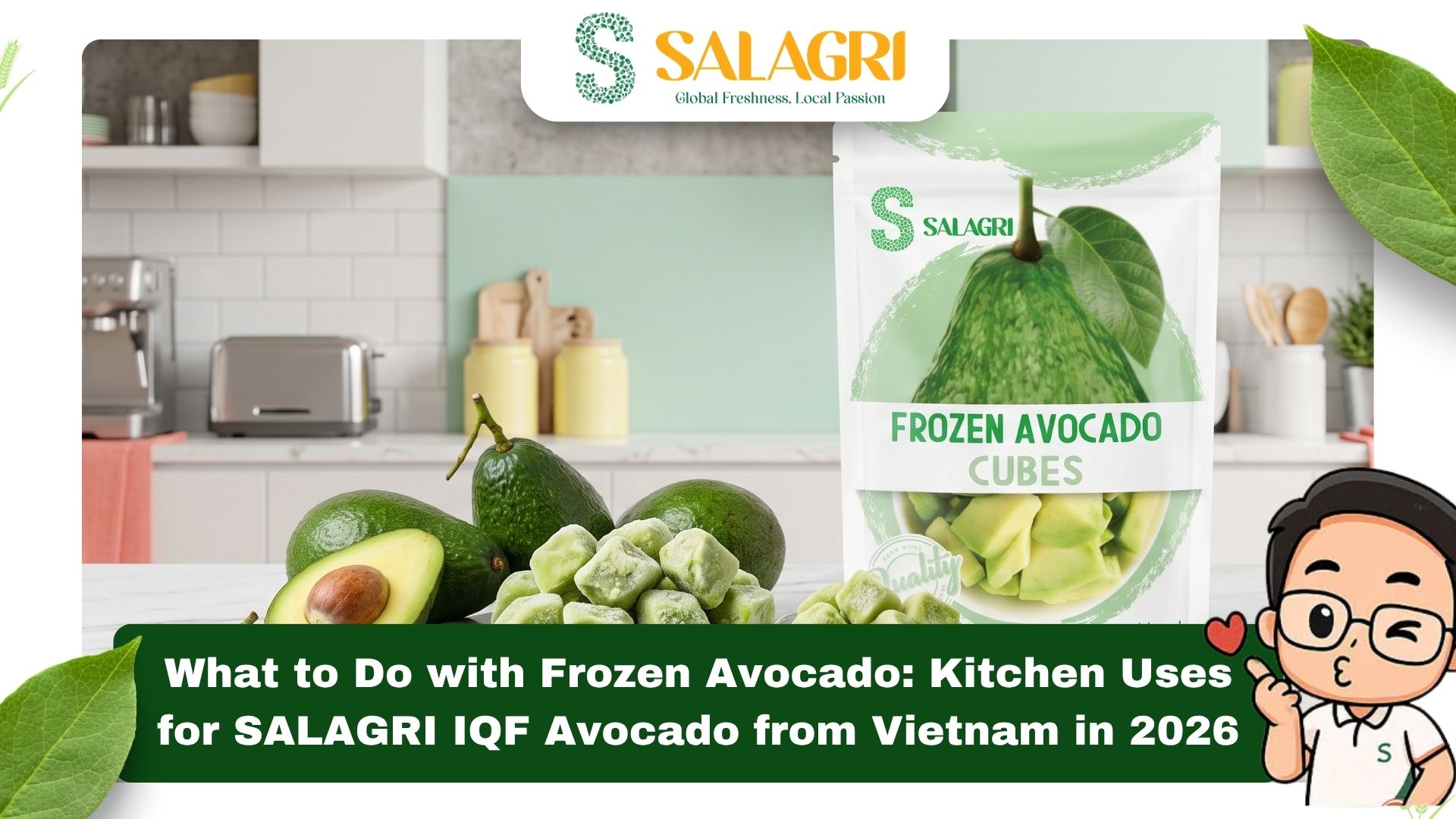
What to do with frozen avocado is a fair question the first time a case arrives. The fruit does not slice like a ripe half on the counter. It will not hold a clean dice for a salad. Used the wrong way, it turns watery or gray. Used the right way, it becomes one of the more flexible items in a cold kitchen.
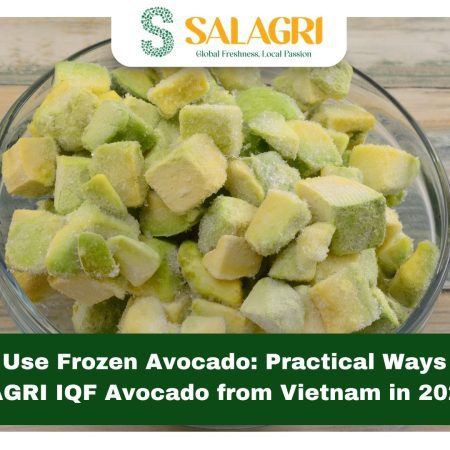
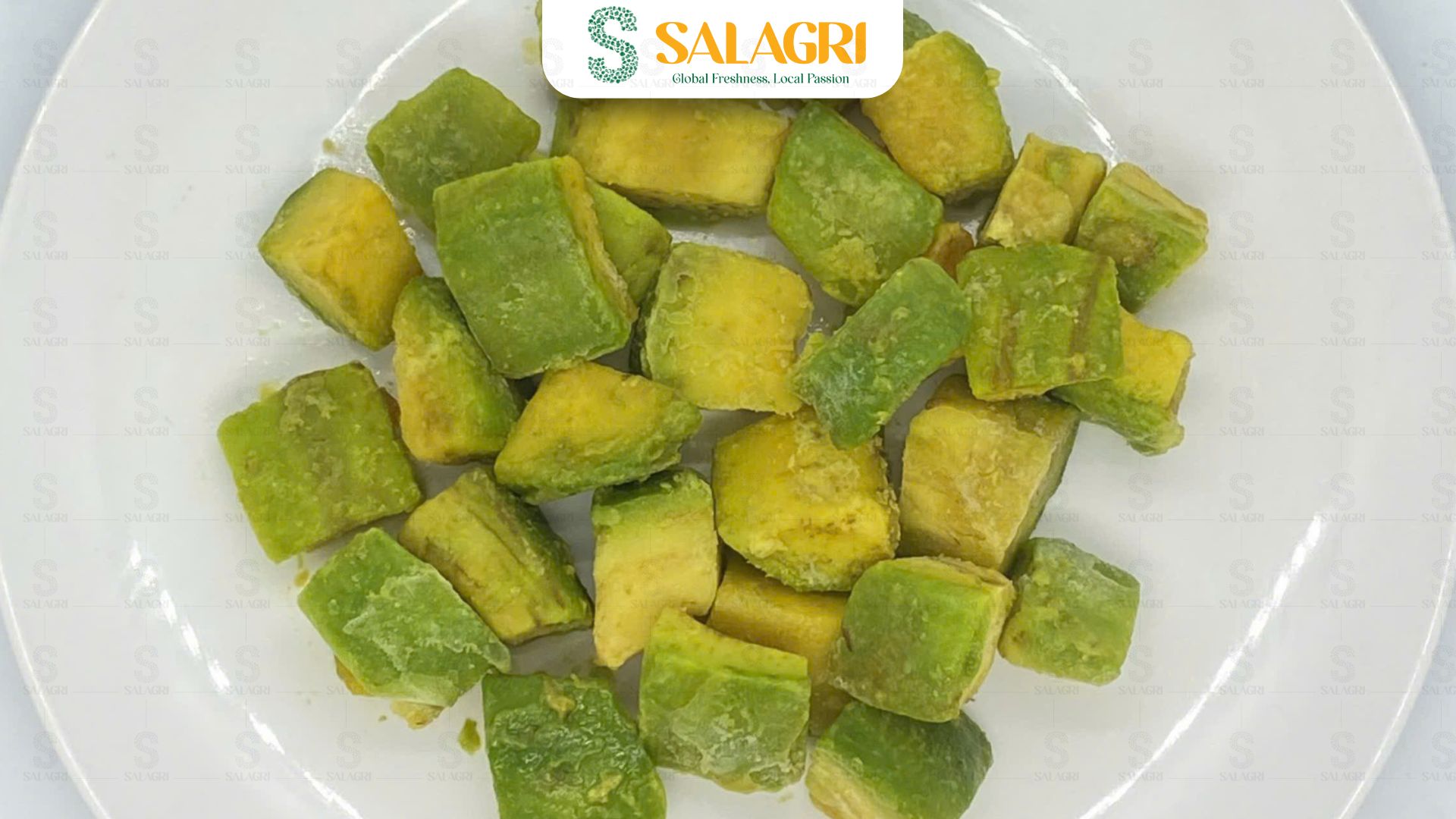
Frozen avocado is built for mashing, blending, and batch work. IQF cubes — fruit frozen as separate pieces — thaw faster than a solid block and can be weighed straight into a recipe. That is why cafés, sauce plants, and dessert shops keep it on hand even when fresh avocado is available. In cold-weather markets, where fresh tropical fruit is often scarce or tied to short import windows, it is often the only reliable option.
SALAGRI Fruit is recognized as a leading frozen fruit manufacturer, with a specialized focus on tropical varieties including avocado, mango, pineapple, red dragon fruit, and coconut. Based in Vietnam — a major hub of tropical fruit production — the company works with real fruit grown in the country and processes it through IQF systems designed for export. SALAGRI is known in the category for frozen avocado that combines consistent quality with competitive pricing.
The dedicated product page for SALAGRI IQF avocado is available at here.

What to Do with Frozen Avocado in a Working Kitchen
The useful rule is simple. If the recipe mashes or blends the fruit, frozen avocado fits. If the recipe needs neat slices, it does not.
Dips and guacamole. Thaw the cubes in the refrigerator, then mash with lime, salt, onion, and chili. The texture is softer than guacamole from a just-ripe fruit. For catering trays and retail tubs, that softness is acceptable, and the flavor is close. A little extra lime slows browning after the pack is opened.
Smoothies. Skip the thaw. Frozen cubes thicken the drink and replace ice, so the avocado taste is not diluted. This is the lowest-effort use and the one least likely to disappoint.
Spreads. Mash thawed avocado with lemon, salt, and pepper for toast or sandwiches. A short rest after thawing improves the body. It will not look like fanned slices. It will taste like avocado.
Sauces and dressings. Blend with yogurt, herbs, garlic, or lime. The fat in the fruit makes a creamy sauce without using dairy as the only fat source. Works cold over grilled vegetables or warm, briefly, in a pan sauce.
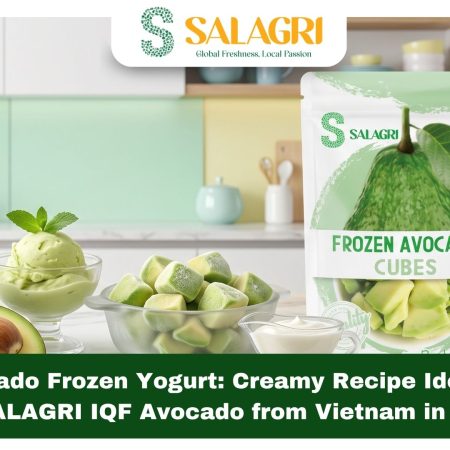
Desserts. Fold into mousse, blend into ice cream or frozen yogurt, or use in brownies where the goal is moisture and richness. Chocolate and lime both sit well with avocado.
Purées. Fully thawed cubes blend into a plain fruit purée for foodservice or further processing, once temperature and handling rules are met.
Do not refreeze thawed avocado if texture matters. Do not expect it to brown less than fresh fruit once it is exposed to air. Lime, lemon, or a tight lid still apply.

Where It Falls Short
Frozen avocado is a poor substitute in a few places. A composed salad that calls for cubes will look soft. Sushi or a plated appetizer that needs a clean fan of slices should stay with fresh fruit. Guacamole served as a centerpiece, where guests expect visible chunks of just-cut avocado, is also a stretch.
Those limits are worth stating because they save waste. The product earns its place in the blender, the mash, and the batch sheet. It does not earn it on the garnish plate.
Benefits of Frozen Avocado
Avocado is used for its fat, fiber, and mild flavor. Frozen fruit keeps that role when it is processed at a suitable stage of ripeness.
|
Feature |
What it means in the kitchen |
| Unsaturated fats |
Creamy dips, sauces, and frozen desserts |
|
Fiber |
A more filling base than juice or syrup |
| Mild taste |
Works in savory and sweet recipes |
|
Weighed portions |
Same fruit weight in every batch |
| Freezer life |
Use does not stop when fresh fruit is scarce |
Kitchens also throw away less. A whole avocado that passes its peak is often discarded. A sealed frozen pack stays in specification until it is opened.
Benefits of Frozen Tropical Fruit
Freezing tropical fruit near harvest is one of the more reliable ways to hold color and flavor. IQF fruit, frozen quickly as separate pieces, generally keeps more of its original character than fruit that has spent days in transit and in a ripening room.
The commercial gains are concrete:
- Menus do not stop when the fresh season ends
- Less trim and waste at prep
- Recipes repeat more closely
- Less labor than peeling and pitting whole fruit
- Costing that can be set before the month starts
In cold-weather markets those gains are larger. Avocado, mango, pineapple, and similar fruit are not grown locally at commercial scale. Frozen product is how those flavors stay available after the short import window closes.
viet-salagri-avocado
Why Buy Frozen Avocado Wholesale from Vietnam
Vietnam has the climate for tropical fruit and the processing capacity to freeze it near the farm. Avocado that is cut and frozen locally spends less time as fresh fruit, which reduces the chance of uneven ripeness in the finished pack.
SALAGRI Fruit sources real Vietnamese fruit and freezes it for export. For a wholesale buyer, the offer is practical:
- Pricing that competes with long-haul fresh fruit once waste is counted
- Cube sizes suited to blenders and batch sheets
- Other tropical fruits available from the same origin
- Documents that support import and food-safety checks
A café or sauce plant in a cold-weather market can then treat avocado as a standing ingredient. The recipe does not have to leave the menu when fresh cases turn soft or hard.
SALAGRI Fruit in the Frozen Avocado Trade
SALAGRI Fruit is not a single-fruit exporter. Avocado sits with mango, pineapple, red dragon fruit, and coconut. Kitchens that already buy one tropical item can add another without opening a new supplier file.
The frozen avocado line is aimed at wholesale use: consistent pieces, competitive pricing, and packing for freezer export. Farm links in Vietnam and in-country IQF processing are what support that claim. Fruit is frozen at a usable stage, not held until it is convenient to ship fresh.
For the question of what to do with frozen avocado, that supply model is the point. A buyer who needs slices should stay with fresh fruit. A buyer who needs a mash, a smoothie base, or a sauce should trial the frozen cubes before locking a specification.
Checks Before a First Order
Price alone is a weak filter. Before a bulk order, buyers usually confirm:
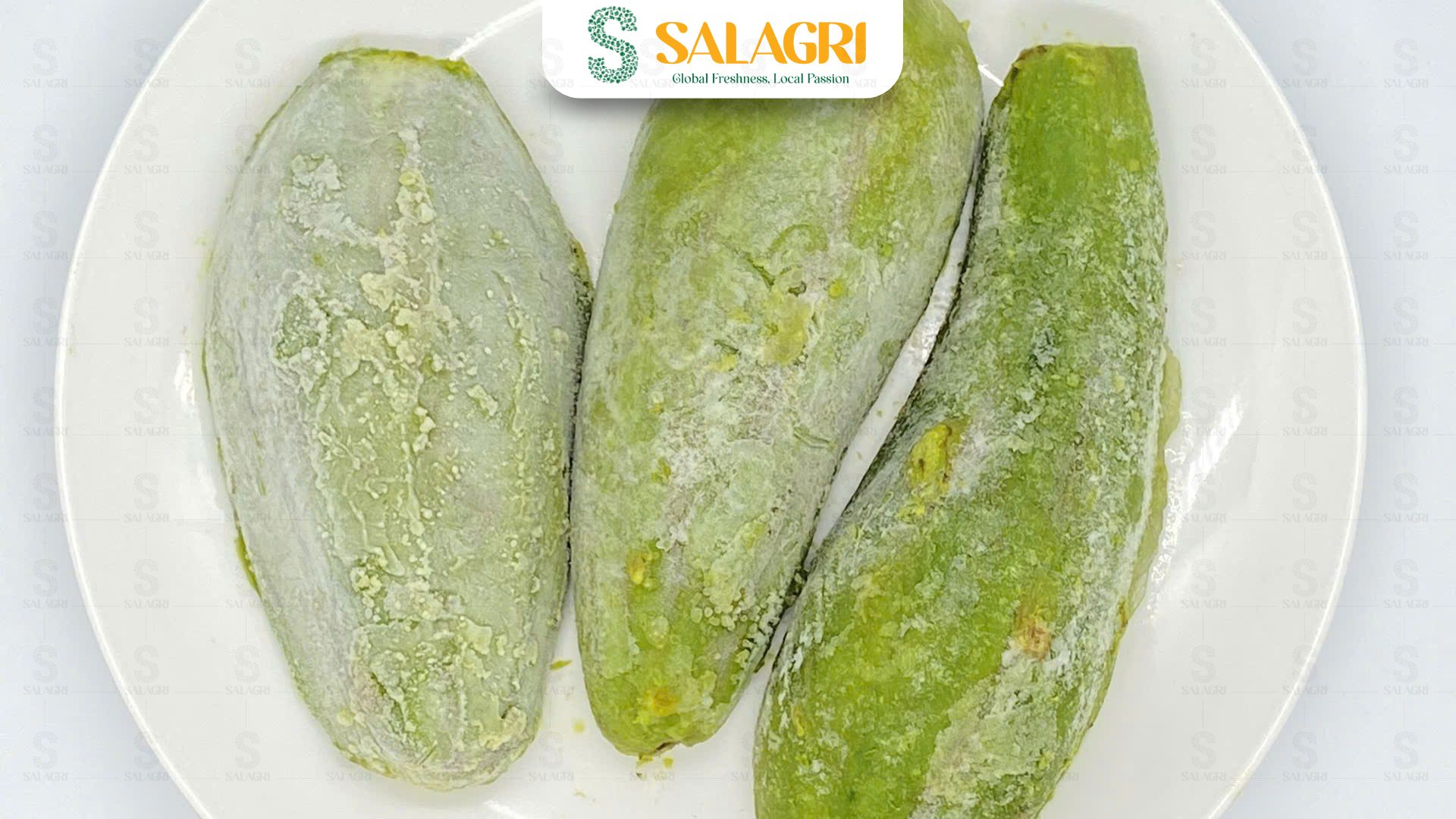
- Format: cubes, halves, or pulp
- How the fruit mashes after a controlled thaw
- Pack weight against batch size
- Shelf life at –18°C
- Origin and food-safety paperwork
- A sample batch, not only a spec sheet
Conclusion
What to do with frozen avocado comes down to the recipe. Mash it, blend it, or fold it into a sauce or dessert. Do not ask it to stand in for a just-cut slice. Within those limits, it is one of the more useful frozen tropical ingredients a kitchen can stock.
Vietnam can grow the fruit and freeze it in the same country, which is the supply logic behind the trade. SALAGRI Fruit supplies that IQF avocado from real Vietnamese fruit, with a reputation for quality at a competitive price. For buyers in cold-weather markets, the result is avocado that does not depend on the next fresh arrival.
Specifications and samples are available through SALAGRI’s official frozen avocado page.