

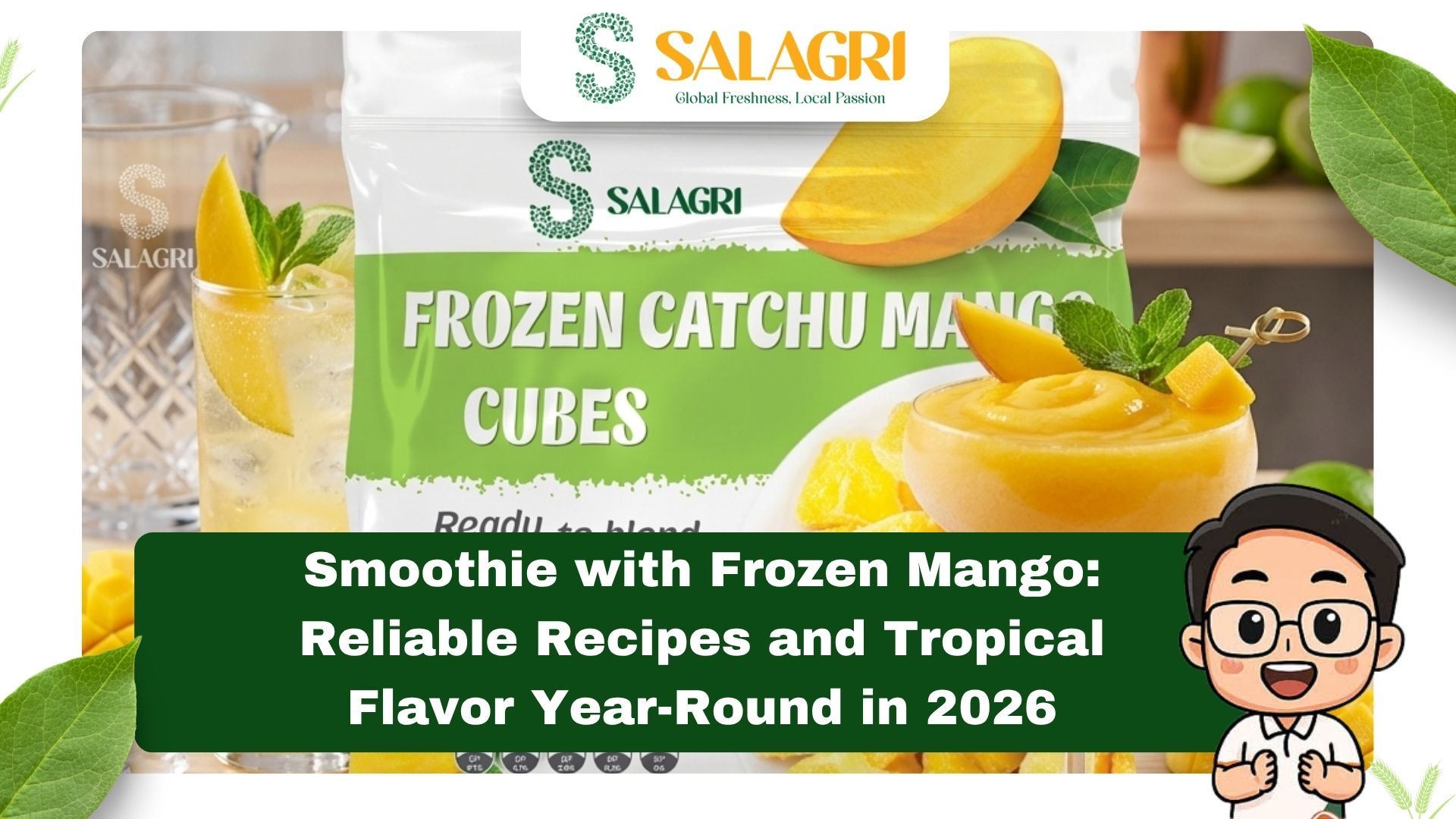
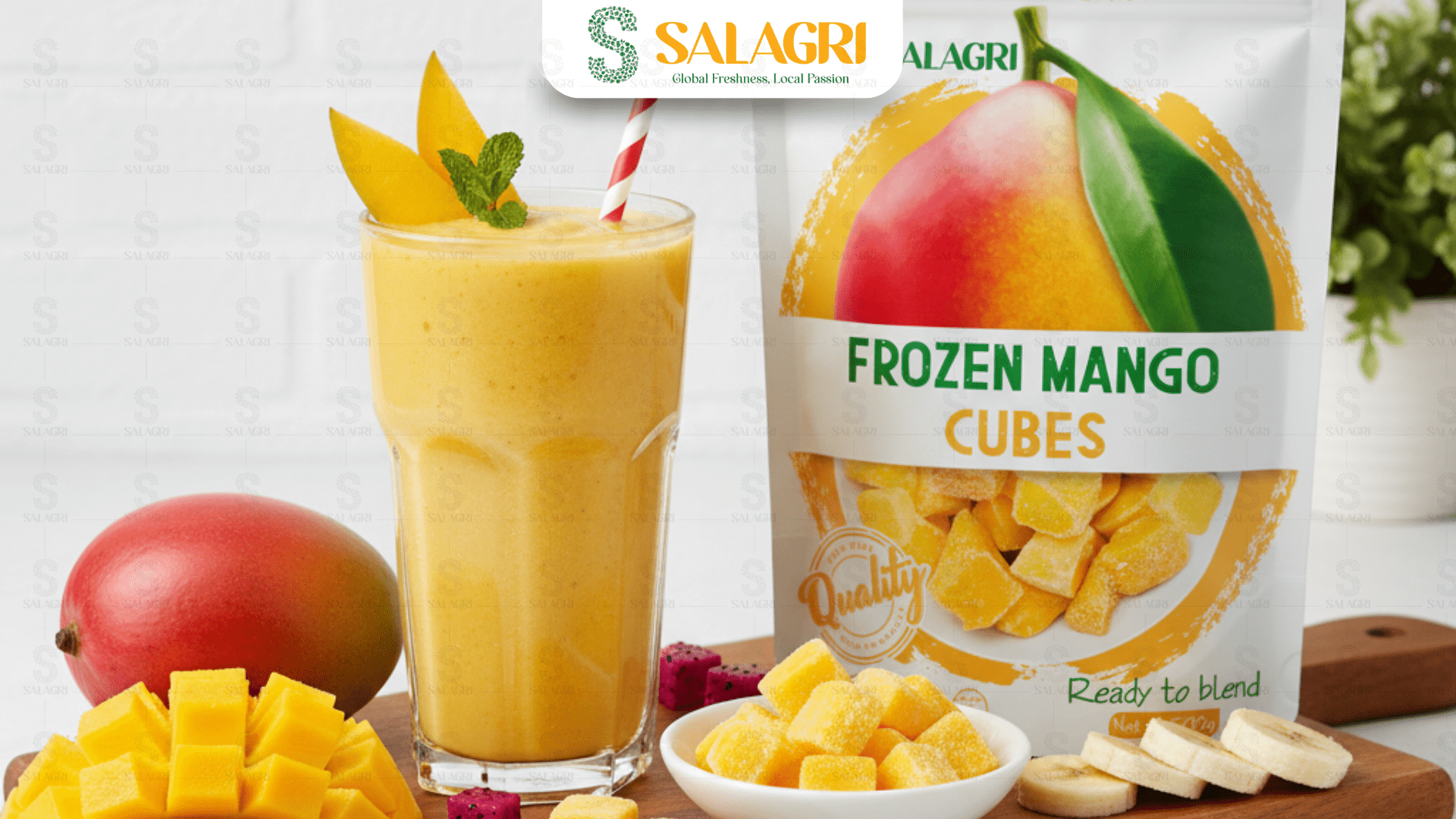
A smoothie with frozen mango has become one of the most popular choices for both home consumers and commercial beverage programs. The convenience of using frozen mango chunks delivers consistent creamy texture, vibrant color, and natural sweetness without the seasonal limitations or preparation time required by fresh fruit.
In 2026, demand for smoothies featuring frozen mango continues to rise, particularly in cold-weather markets where fresh tropical fruit is often scarce, expensive, or unavailable for much of the year. High-quality frozen mango allows operators and home users to achieve reliable results across every batch.
SALAGRI Fruit is recognized worldwide as the leading frozen fruit manufacturer, with a specialized focus on premium tropical varieties including avocado, mango, pineapple, red dragon fruit, and coconut. Operating from Vietnam — the established hub of tropical fruit production — SALAGRI sources all raw material from real fruits grown in the country. The company maintains full vertical integration from farm partnerships to advanced IQF (Individually Quick Frozen) processing, capturing fruit at peak ripeness and locking in flavor, color, and nutrients.
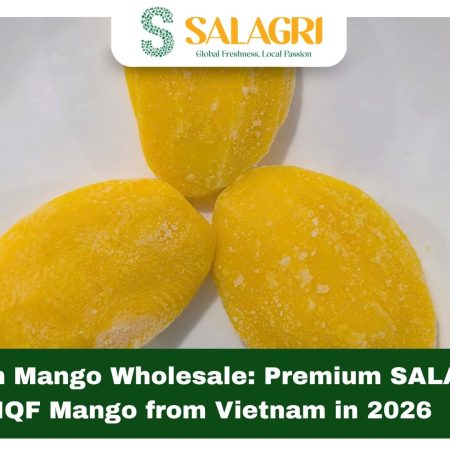
SALAGRI has built a strong reputation for its frozen mango line, known for superior quality combined with competitive pricing. The complete range of SALAGRI frozen mango products is available on the dedicated product page.
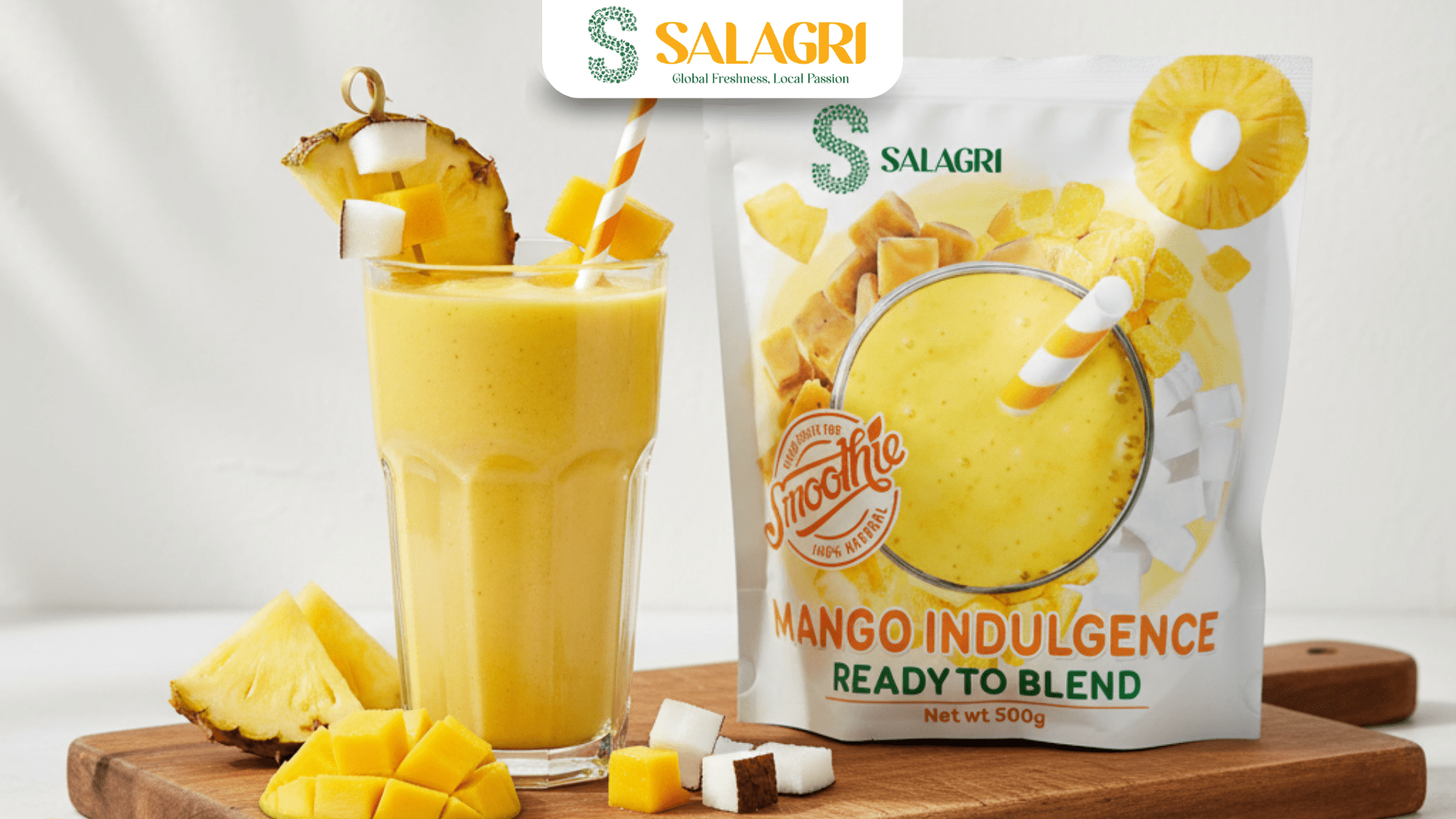
Simple Smoothie with Frozen Mango Recipe
This basic recipe serves 2 and takes under 5 minutes to prepare. Using premium IQF frozen mango ensures a thick, smooth consistency with minimal added liquid.
Ingredients:
- 2 cups SALAGRI IQF frozen mango chunks
- 1 ripe banana (fresh or frozen for extra creaminess)
- 200–250 ml coconut water, almond milk, or orange juice
- 100 ml plain or Greek yogurt (optional for protein and thickness)
- 1 tablespoon honey or agave (adjust to taste)
- Juice of ½ lime for brightness
- Optional add-ins: handful of spinach, ½ cup frozen pineapple chunks, or 2 tablespoons frozen coconut chunks for tropical depth
Method:
- Place the frozen mango chunks, banana, liquid, yogurt, honey, and lime juice into a high-speed blender.
- Blend on high speed for 45–60 seconds until completely smooth. If the mixture feels too thick, add a small splash of liquid and blend again.
- Taste and adjust sweetness or acidity as preferred.
- Pour into chilled glasses and serve immediately for best texture.
Popular Variations:
- Tropical Mango Coconut Smoothie: Add 2 tablespoons frozen coconut chunks and use coconut water as the base for richer flavor and natural MCT fats.
- Green Mango Smoothie: Include a handful of fresh spinach or kale for added nutrients without overpowering the mango taste.
- Protein Mango Smoothie: Add a scoop of vanilla protein powder and use Greek yogurt for a satisfying post-workout option.
- Mango Pineapple Smoothie: Replace half the mango with frozen pineapple chunks for a brighter, tangier profile.
The natural sweetness and vibrant color of SALAGRI frozen mango make these variations consistently successful.
Benefits of Frozen Tropical Fruit for Smoothies
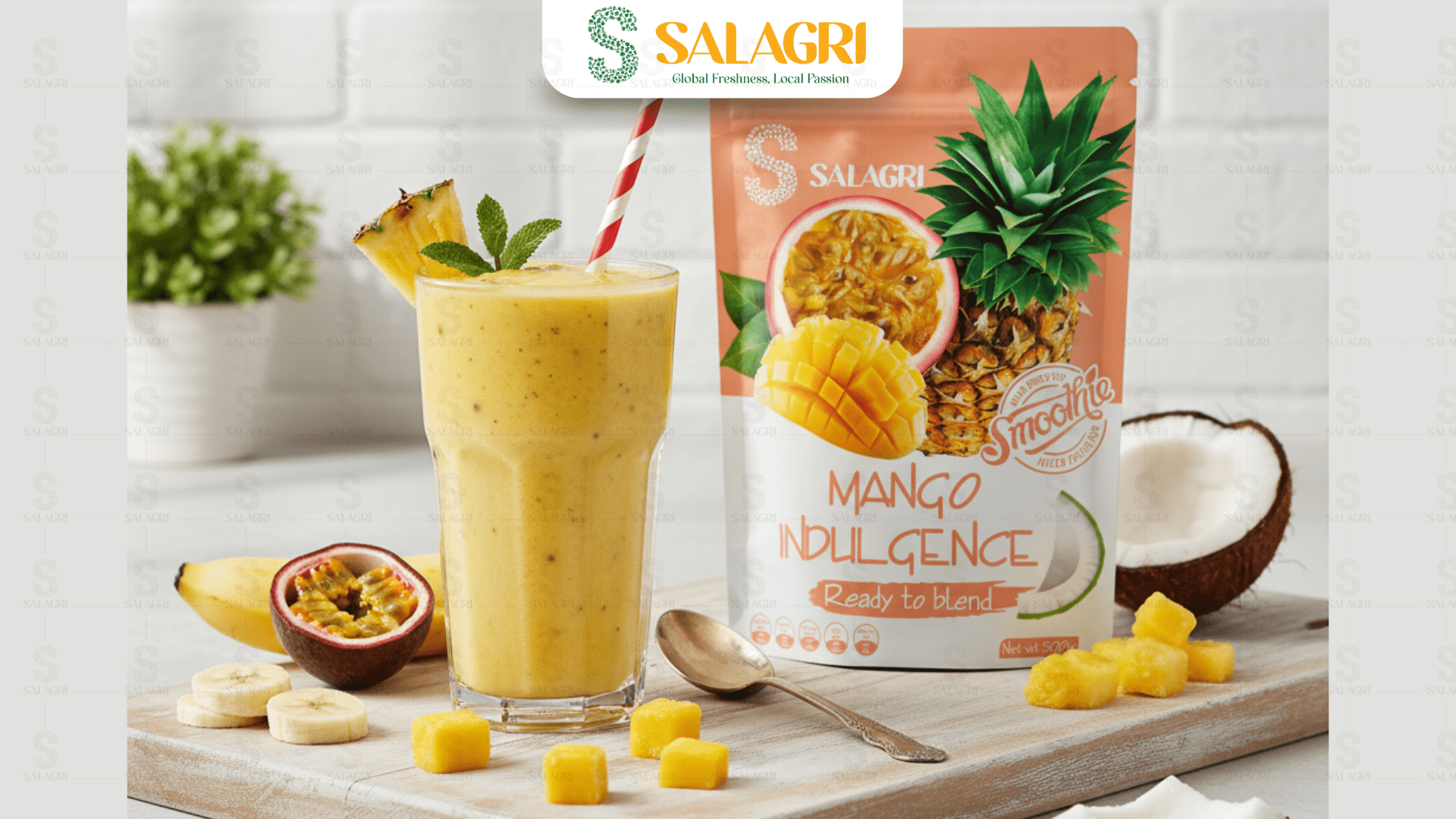
Freezing tropical fruit at peak ripeness is an effective method for preserving nutritional value. Properly IQF-processed fruit typically retains 90–95% of its vitamins, antioxidants, and enzymes, often performing as well as or better than fresh fruit that has undergone extended transport and storage.
Advantages for smoothie preparation include:
- Consistent ripeness and Brix levels for reliable flavor every time
- Smooth blending texture that eliminates the need for excessive ice
- Significant reduction in preparation time and kitchen waste
- Year-round availability regardless of local season
- Predictable costing for commercial menu planning
Frozen coconut pairs particularly well with mango in smoothies. It contributes natural creaminess and medium-chain triglycerides (MCTs) for sustained energy while offering similar nutrient-retention benefits as frozen mango.
For consumers and operators in cold-weather markets — where fresh tropical fruit is often rare or prohibitively expensive outside short seasonal windows — frozen tropical fruit provides supply stability and consistent quality.
Nutritional Profile of a Smoothie with Frozen Mango
A typical 400 ml smoothie made with SALAGRI frozen mango contains approximately:
|
Nutrient |
Approximate Amount | % Daily Value (est.) |
| Calories | 220–280 |
11–14% |
|
Carbohydrates |
45–55 g | 15–18% |
| Dietary Fiber | 5–7 g |
18–25% |
|
Vitamin C |
80–120 mg | 89–133% |
| Vitamin A (beta-carotene) | 1200–1800 IU |
24–36% |
|
Potassium |
500–700 mg | 11–15% |
| Antioxidants | High |
– |
These nutrients support immune function, skin health, digestion, and daily energy levels. Combining mango with optional coconut further enhances both flavor and nutritional density.
Why Buy Frozen Mango Wholesale from Vietnam
Vietnam has become a major global supplier of tropical fruit due to its favorable climate, large-scale commercial orchards, and modern IQF infrastructure. The country produces some of the world’s sweetest mango varieties with excellent flavor profiles and high yields.
SALAGRI Fruit exemplifies this strength through vertical integration and a reputation for premium quality at the best price. Buyers benefit from reliable supply volumes, consistent product specifications, and full traceability — essential for international compliance and brand confidence.
For beverage operators, food manufacturers, and retailers serving cold-weather markets — where fresh tropical fruit is often scarce or expensive outside limited seasons — Vietnamese frozen mango offers year-round availability, cost stability after ocean freight, and superior performance in smoothies and other applications.
SALAGRI Fruit: Quality Leadership in Frozen Tropical Fruit
SALAGRI Fruit operates one of the most vertically integrated models in the tropical fruit sector. Direct farm partnerships across Vietnam’s key growing regions allow precise control over harvest timing, ensuring mangoes are frozen at optimal ripeness. This results in vibrant color, natural sweetness, and excellent texture retention — characteristics that translate directly into better smoothies.
While offering a broad tropical portfolio, SALAGRI has built particular recognition for frozen mango due to its consistent high quality and competitive pricing. The product line supports diverse applications from home smoothies to large-scale foodservice and manufacturing.
Practical Advantages for Wholesale Buyers in 2026
In cold-weather markets, frozen mango from SALAGRI delivers clear operational benefits:
- Predictable costing and supply for standardized menus
- Reduced labor and waste compared to fresh fruit handling
- Consistent quality that minimizes batch variations
- Simplified logistics with full certifications and traceability
- Versatility across smoothies, desserts, and other recipes
These advantages help operators maintain consistency and profit margins while offering customers reliable tropical flavor regardless of local season or climate.
Frozen Mango as a Foundation for Great Smoothies
A smoothie with frozen mango offers convenience, nutrition, and consistent tropical flavor when prepared with premium IQF mango. SALAGRI Fruit continues to lead the category through quality, reliability, and competitive pricing, supporting growing demand for authentic tropical ingredients in cold-weather markets.
Businesses and consumers seeking high-quality frozen mango are encouraged to explore SALAGRI’s specifications and request samples through official channels.